We use Google Analytics to understand how visitors use this site. Analytics cookies are only activated with your consent. For details, read our Privacy Policy.
Profile lensThe same player, read from a different angle.
Athletic83
Acceleration
85
Pace
81
Agility
86
Strength
77
Balance
85
Jumping
73
Stamina
91
Fitness
89
Technical74
Dribbling
73
Short Passing
75
Long Passing
76
Finishing
52
Shot Accuracy
59
Shot Power
75
Shooting Technique
61
Heading
68
Tackling
76
Crossing
74
Free Kick
66
Penalties
68
First Touch
75
Mental83
Composure
78
Aggression
78
Consistency
86
Creativity
68
Leadership
84
Work Rate
91
Tactical79
Vision
73
Off the Ball
65
Defensive Positioning
80
Teamwork
86
Anticipation
86
Marking
83
Player Traits
Attacking64
Crossing
74
Finishing
52
Heading Accuracy
68
Shot Accuracy
59
Off the Ball
65
Technique71
Dribbling
73
Free Kick
66
Short Passing
75
Long Passing
76
First Touch
75
Shot Technique
61
Movement84
Acceleration
85
Pace
81
Agility
86
Balance
85
Physicality81
Shot Power
75
Jumping
73
Stamina
91
Strength
77
Fitness
89
Defending80
Marking
83
Tackling
76
Def. Positioning
80
Mentality & Game Reading80
Aggression
78
Composure
78
Penalties
68
Vision
73
Leadership
84
Work Rate
91
Teamwork
86
Anticipation
86
Consistency
86
Creativity
68
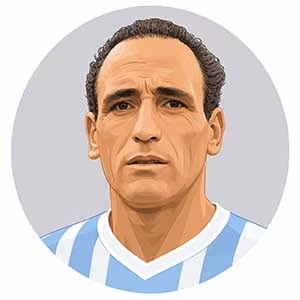
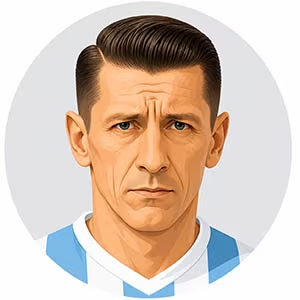
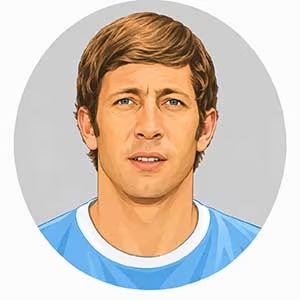
Uruguay - Left BackCaetano, Omar
An immovable physical roadblock down the left flank, bone-jarring sliding challenges, and an unyielding commitment to destructive containment defined Omar Caetano Otero as the defensive bedrock of Peñarol’s greatest global era. Emerging from the Manyas youth ranks to claim the starting left-back position in 1961, the man universally known as Cacho held an iron grip on the flank for fourteen uninterrupted seasons across more than 500 official appearances. Built with a low, stocky center of gravity, thick legs, and deceptive lateral recovery over short bursts, Caetano was the pure antithesis of the adventurous, overlapping South American full-back. His tactical assignment was singular and uncompromising: deny the touchline, force opposing right-wingers back into congested central channels, and strip possession through heavy, ball-and-all tackling. At Peñarol, he became one of the most decorated club legends in South American history, capturing eight Uruguayan Primera División championships, two Copa Libertadores titles (1961, 1966), and the 1966 Intercontinental Cup triumph over Real Madrid, alongside the 1969 Intercontinental Champions' Supercup. For Uruguay, across 29 caps, he was a key figure at both the 1966 World Cup in England and the 1970 World Cup in Mexico, where his defensive tenacity helped La Celeste reach the semi-finals against Pelé’s Brazil.
Yet his hyper-defensive profile came with pronounced tactical and technical limitations. In an era when modern full-backs like Nilton Santos and Giacinto Facchetti were revolutionizing wide attacking play, Caetano offered almost no forward dynamism: his crossing was rudimentary, his progression with the ball at his feet was strictly conservative, and he possessed virtually no combination play in the final third. When forced to chase rapid, elusive wingers in wide-open expanses over thirty yards, his lack of high-end straight-line sprint speed became an acute liability, often leaving him reliant on cynical fouls or last-ditch slide recoveries to prevent clean breakaways.
Stoic, severe, and forged in the uncompromising school of garra charrúa, Caetano approached every fixture with the grim seriousness of an existential trial. He had no interest in footballing elegance, theatrical flourishes, or personal celebrity; for Cacho, victory was achieved through physical attrition, absolute positional discipline, and psychological intimidation. On the pitch, his body language radiated dark, quiet hostility: he rarely spoke to opposing wingers, preferring to let a shuddering, perfectly timed shoulder charge or an early raking tackle down the shin establish immediate physical dominance. Inside the Peñarol locker room, he was a silent, immovable pillar of authority—deeply loyal to leaders like Pedro Rocha and Néstor Gonçalves, setting a standard of monastic defensive sacrifice that younger players were compelled to follow. When high-friction matches threatened to descend into chaos—a common occurrence in the hostile Copa Libertadores battles of the 1960s—Caetano never panicked or lost his composure; he embraced the violence of the contest, shielding his penalty box with cold, methodical focus. Referees found him a tough, uncompromising defender who walked right on the edge of legal physical contact, while generation after generation of right-wingers dreaded stepping into his zone, cementing an enduring legacy as one of the most feared, unyielding, and decorated classic full-backs in South American football history.


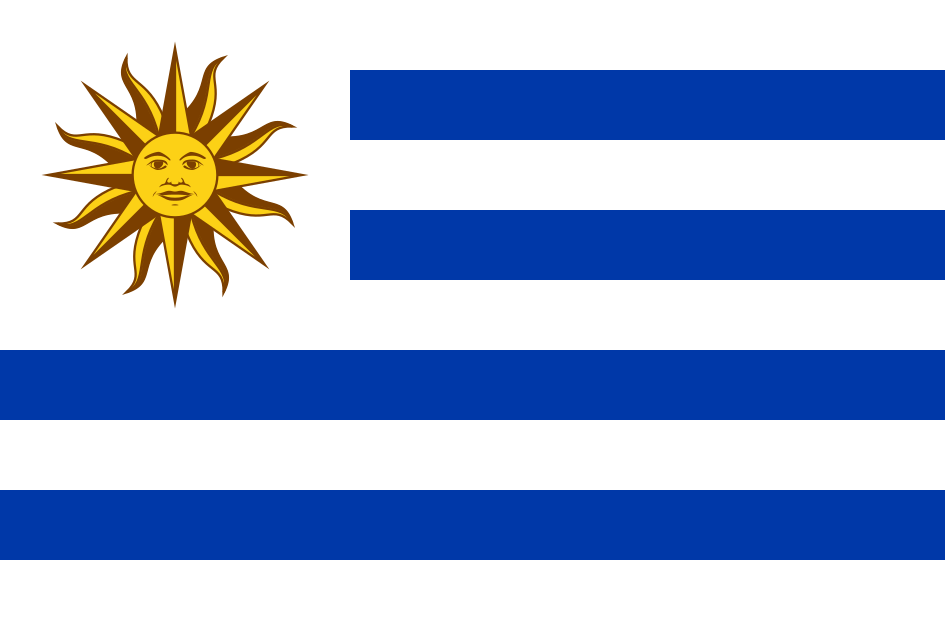 All Time UruguayNT