We use Google Analytics to understand how visitors use this site. Analytics cookies are only activated with your consent. For details, read our Privacy Policy.
Profile lensThe same player, read from a different angle.
Athletic79
Acceleration
87
Pace
81
Agility
82
Strength
77
Balance
75
Jumping
72
Stamina
83
Fitness
74
Technical72
Dribbling
72
Short Passing
72
Long Passing
70
Finishing
52
Shot Accuracy
59
Shot Power
73
Shooting Technique
57
Heading
66
Tackling
80
Crossing
74
Free Kick
68
Penalties
66
First Touch
75
Mental78
Composure
80
Aggression
75
Consistency
82
Creativity
60
Leadership
72
Work Rate
82
Tactical74
Vision
69
Off the Ball
66
Defensive Positioning
77
Teamwork
75
Anticipation
78
Marking
76
Player Traits
Attacking63
Crossing
74
Finishing
52
Heading Accuracy
66
Shot Accuracy
59
Off the Ball
66
Technique69
Dribbling
72
Free Kick
68
Short Passing
72
Long Passing
70
First Touch
75
Shot Technique
57
Movement81
Acceleration
87
Pace
81
Agility
82
Balance
75
Physicality76
Shot Power
73
Jumping
72
Stamina
83
Strength
77
Fitness
74
Defending78
Marking
76
Tackling
80
Def. Positioning
77
Mentality & Game Reading74
Aggression
75
Composure
80
Penalties
66
Vision
69
Leadership
72
Work Rate
82
Teamwork
75
Anticipation
78
Consistency
82
Creativity
60
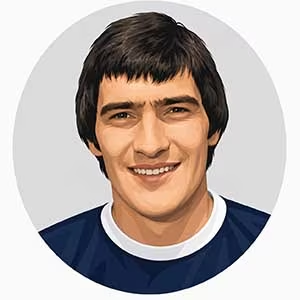
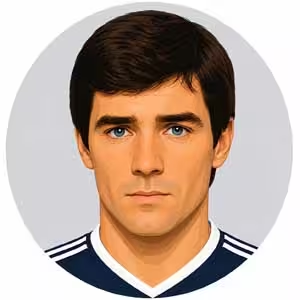
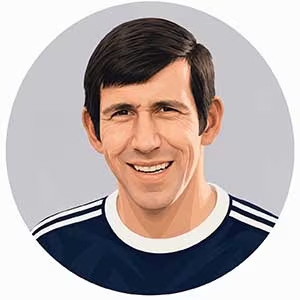
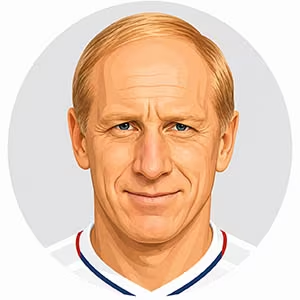
Scotland - Left BackBurns, Francis
Thrust into the unforgiving cauldron of Old Trafford as an eighteen-year-old during the golden sunset of Sir Matt Busby's reign, Francis Burns was a sharp, tenacious Scottish full-back whose early promise was repeatedly derailed by brutal physical misfortune. Hailing from Glenboig and converted from midfield to the left side of defense by Jimmy Murphy, Burns was a compact, highly disciplined marker standing at five-foot-nine. His game was built around textbook defensive fundamentals: aggressive lateral containment along the touchline, sharp front-foot tackling, and simple, low-risk distribution into the feet of George Best and Bobby Charlton ahead of him. He played a prominent role in Manchester United’s historic 1967–68 European Cup campaign—featuring in six matches up to the semi-finals against Real Madrid—before Busby opted for the veteran experience of Shay Brennan in the Wembley final. After earning a solitary Scotland cap in 1969 and enduring three grueling cartilage operations that curbed his explosive mobility, he moved to Southampton before finding stability and redemption under Bobby Charlton at Preston North End, where he made over 300 appearances and captured the club's 1973–74 Player of the Year award. Mentally and emotionally, Burns was a resilient, uncomplaining professional who navigated the sharp psychological contrasts of elite English football with quiet dignity. Having experienced the euphoria of European nights at a remarkably young age, he bore the devastating heartbreak of being left out of the 1968 final without public dissent or bitterness, channeling his energy back into training and competing for his place. Inside the dressing room, he was a grounded, unpretentious, and hard-working presence—typical of the Lanarkshire Scottish contingent of that era—earning genuine respect for his refusal to surrender to persistent knee and thigh injuries that repeatedly interrupted his momentum. As he dropped down the divisions to lead Preston’s defensive structure, his maturity and communicative leadership proved vital for developing youngsters. Toward referees and opposing wingers, Burns maintained an honest, full-blooded, but clean sporting approach: tackling hard within the limits of the law, absorbing physical blows without theatrics, and carving out an admirable, durable career in the English leagues despite the heavy physical toll on his body.