We use Google Analytics to understand how visitors use this site. Analytics cookies are only activated with your consent. For details, read our Privacy Policy.
Profile lensThe same player, read from a different angle.
Athletic85
Acceleration
86
Pace
84
Agility
87
Strength
64
Balance
84
Jumping
83
Stamina
95
Fitness
93
Technical80
Dribbling
85
Short Passing
85
Long Passing
78
Finishing
65
Shot Accuracy
64
Shot Power
75
Shooting Technique
79
Heading
74
Tackling
83
Crossing
76
Free Kick
70
Penalties
70
First Touch
85
Mental85
Composure
85
Aggression
87
Consistency
86
Creativity
78
Leadership
84
Work Rate
85
Tactical84
Vision
85
Off the Ball
76
Defensive Positioning
77
Teamwork
90
Anticipation
85
Marking
74
Player Traits
Attacking71
Crossing
76
Finishing
65
Heading Accuracy
74
Shot Accuracy
64
Off the Ball
76
Technique80
Dribbling
85
Free Kick
70
Short Passing
85
Long Passing
78
First Touch
85
Shot Technique
79
Movement85
Acceleration
86
Pace
84
Agility
87
Balance
84
Physicality82
Shot Power
75
Jumping
83
Stamina
95
Strength
64
Fitness
93
Defending78
Marking
74
Tackling
83
Def. Positioning
77
Mentality & Game Reading84
Aggression
87
Composure
85
Penalties
70
Vision
85
Leadership
84
Work Rate
85
Teamwork
90
Anticipation
85
Consistency
86
Creativity
78
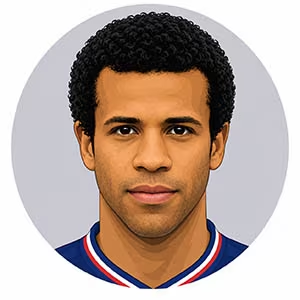
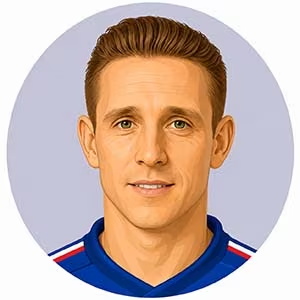
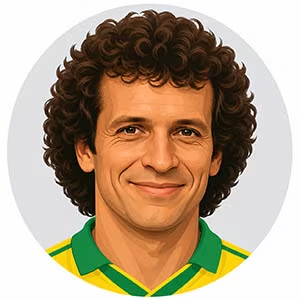
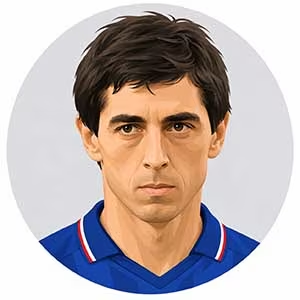
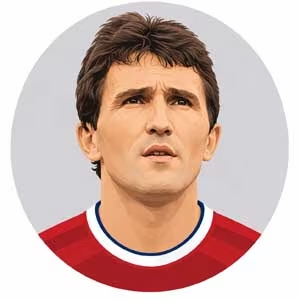
France - Centre MidfielderTigana, Jean
Raw physical stamina collided with refined, minimalist ball progression in the slender frame of Jean Amadou Tigana, the dynamic central dynamo who formed the structural heart of France’s celebrated Carré Magique in the 1980s. Born in Bamako, Mali, and raised in the working-class suburbs of Marseille, Tigana followed an unconventional path through Toulon and Lyon before achieving his tactical zenith under Aimé Jacquet at Bordeaux. Standing five-foot-eight with a light, sinewy build, he was the ultimate shuttle midfielder: a relentless ball-winner who rarely had to lunge, relying instead on elastic stride length, sudden lateral changes of direction, and an extraordinarily low lung-fatigue rate. In possession, Tigana eliminated unnecessary touches, driving through crowded central zones with sudden vertical accelerations before offloading crisp, ground-level passes to Michel Platini or Alain Giresse. His career masterpiece was the 1984 European Championship on home soil: crowned by his legendary 119th-minute surge against Portugal in the semi-final—where he drove past three defenders into the penalty area to cut the ball back for Platini's winner—he finished as the tournament's standout outfield force and runner-up in the 1984 Ballon d'Or. Over 52 caps for Les Bleus and three French Division 1 titles with Bordeaux (followed by two more with Marseille), he provided the crucial transitional engine across two World Cup semi-finals in 1982 and 1986.
Psychologically, Tigana was a quiet, fiercely proud stoic whose intense work ethic was forged through years of manual labor in spaghetti factories and post offices before turning professional. He had no appetite for media glamour or flamboyant self-promotion, treating the midfield battle as a serious test of personal endurance and collective responsibility. On the pitch, his leadership was purely kinetic; he did not scream or gestate theatrically, instead pulling teammates into his slipstream through the sheer volume of his defensive recoveries and fearless vertical runs into hostile territory. Inside the dressing room, he was an understated, deeply loyal presence who commanded unconditional respect from oversized personalities like Platini and Bernard Tapie due to his absolute honesty and unpretentious demeanor. When games boiled over into brutal physical wars of attrition—such as the traumatic 1982 Seville semi-final against West Germany—Tigana’s concentration remained ice-cold, absorbing heavy collisions without losing his technical clarity on the ball. Toward referees and aggressive opponents who tried to hack him out of games, he responded with complete indifference: dusting off his shorts, demanding the next pass, and running his markers into the ground with relentless, breathless elegance.