We use Google Analytics to understand how visitors use this site. Analytics cookies are only activated with your consent. For details, read our Privacy Policy.
Profile lensThe same player, read from a different angle.
Athletic75
Acceleration
66
Pace
68
Agility
67
Strength
86
Balance
71
Jumping
69
Stamina
86
Fitness
86
Technical80
Dribbling
79
Short Passing
85
Long Passing
83
Finishing
68
Shot Accuracy
66
Shot Power
78
Shooting Technique
72
Heading
74
Tackling
85
Crossing
79
Free Kick
75
Penalties
72
First Touch
80
Mental82
Composure
85
Aggression
76
Consistency
79
Creativity
77
Leadership
83
Work Rate
84
Tactical81
Vision
84
Off the Ball
66
Defensive Positioning
83
Teamwork
89
Anticipation
78
Marking
76
Attacking71
Crossing
79
Finishing
68
Heading Accuracy
74
Shot Accuracy
66
Off the Ball
66
Technique79
Dribbling
79
Free Kick
75
Short Passing
85
Long Passing
83
First Touch
80
Shot Technique
72
Movement68
Acceleration
66
Pace
68
Agility
67
Balance
71
Physicality81
Shot Power
78
Jumping
69
Stamina
86
Strength
86
Fitness
86
Defending81
Marking
76
Tackling
85
Def. Positioning
83
Mentality & Game Reading81
Aggression
76
Composure
85
Penalties
72
Vision
84
Leadership
83
Work Rate
84
Teamwork
89
Anticipation
78
Consistency
79
Creativity
77
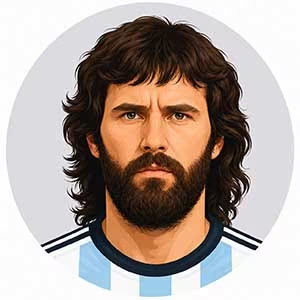
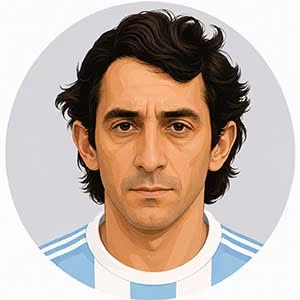
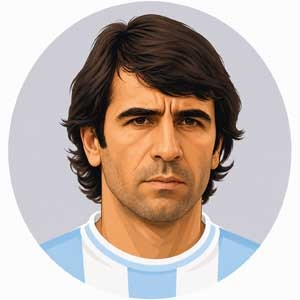
Argentina - Defensive MidfielderBatista, Sergio
A thick, dark beard and a low-slung, loping gait defined the central compass of Carlos Bilardo’s tactical laboratory during the high-altitude summer of Mexico 1986. Sergio Daniel Batista was the unhurried, positional fulcrum stationed directly in front of the back three, acting as the team's balance wheel. Operating as a pure cinco, El Checho did not chase after every loose ball; he patrolled a twenty-yard radius, snuffing out counter-attacks through clean interceptions, leaning his heavy frame into opponents to shield possession, and immediately feeding short, precise ground passes to Diego Maradona. He made his name at Argentinos Juniors during the club's greatest era, lifting the 1984 and 1985 Metropolitano titles and the 1985 Copa Libertadores before taking Juventus to penalties in an unforgettable Intercontinental Cup final in Tokyo. He later claimed the 1989–90 Argentine championship with River Plate. For Argentina, across 39 caps, he was an ever-present starter in the 1986 World Cup victory and anchored the midfield during their run to the 1990 final in Rome.
That statuesque positional discipline, however, came with severe athletic constraints. Batista was completely devoid of top-end sprint speed; whenever the midfield structure stretched and he was caught in wide-open footraces against dynamic dribblers, his turning radius was slow. Furthermore, he offered almost no vertical penetration, direct dribbling threat, or shooting range, remaining strictly a defensive recycler who left the creative burden entirely to others.
Stoic, quiet, and possessed of deep tactical self-awareness, Batista played with the calm assurance of a master mechanic who understood every cog in the machine. He had no interest in personal acclaim, taking satisfaction in the quiet labor of closing passing lanes and absorbing crunching tackles without complaint. On the pitch, his presence was unshakeable and grounding: steadying team-wide panic under heavy pressure by simply holding the ball, taking the foul, and resetting the tempo. Inside the locker room, his dry humor, loyalty, and unpretentious nature made him a trusted confidant for Bilardo and an essential ally to Maradona, cementing his legacy as the quintessential, selfless Argentine holding midfielder.