We use Google Analytics to understand how visitors use this site. Analytics cookies are only activated with your consent. For details, read our Privacy Policy.
Profile lensThe same player, read from a different angle.
Athletic73
Acceleration
65
Pace
70
Agility
66
Strength
84
Balance
73
Jumping
76
Stamina
77
Fitness
76
Technical83
Dribbling
80
Short Passing
83
Long Passing
85
Finishing
68
Shot Accuracy
66
Shot Power
78
Shooting Technique
71
Heading
86
Tackling
89
Crossing
77
Free Kick
65
Penalties
68
First Touch
81
Mental79
Composure
91
Aggression
72
Consistency
70
Creativity
77
Leadership
76
Work Rate
75
Tactical84
Vision
82
Off the Ball
72
Defensive Positioning
87
Teamwork
83
Anticipation
84
Marking
85
Player Traits
Attacking74
Crossing
77
Finishing
68
Heading Accuracy
86
Shot Accuracy
66
Off the Ball
72
Technique78
Dribbling
80
Free Kick
65
Short Passing
83
Long Passing
85
First Touch
81
Shot Technique
71
Movement69
Acceleration
65
Pace
70
Agility
66
Balance
73
Physicality78
Shot Power
78
Jumping
76
Stamina
77
Strength
84
Fitness
76
Defending87
Marking
85
Tackling
89
Def. Positioning
87
Mentality & Game Reading78
Aggression
72
Composure
91
Penalties
68
Vision
82
Leadership
76
Work Rate
75
Teamwork
83
Anticipation
84
Consistency
70
Creativity
77
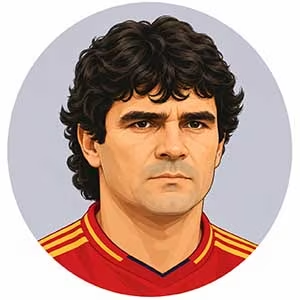
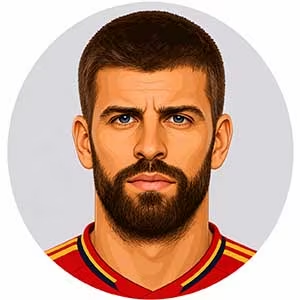
Spain - Centre-backPiqué, Gerard
Gerard Piqué Bernabéu was the ball-playing aristocrat and structural pillar of Pep Guardiola’s revolutionary machine and Spain’s golden era. Forged at La Masia before refining his physical fundamentals under Sir Alex Ferguson at Manchester United (where he lifted the 2007–08 Champions League), Piqué returned home in 2008 to redefine the modern center-half. Standing six-foot-four, he paired towering aerial supremacy with the distribution range of a central playmaker, breaking pressing lines with crisp ground passes, threading diagonal balls onto wingers’ boots, and initiating offside traps with immaculate positional timing. Over 616 appearances for Barcelona, he accumulated thirty major honors—including eight La Liga titles, seven Copas del Rey, and three Champions Leagues (completing two historic continental trebles in 2009 and 2015). For Spain, across 102 caps and five goals, he formed an impenetrable central partnership with Carles Puyol and Sergio Ramos, capturing the 2010 World Cup and Euro 2012.
Underneath the technical elegance, however, lay noticeable mechanical constraints. Piqué was never an explosive recovery sprinter; when exposed in 40-yard footraces against dynamic counter-attacking forwards without cover, his turning radius was slow. In his thirties, as knee injuries accumulated and his lateral mobility declined, his high-defensive-line exposure against hyper-athletic European sides became an evident liability whenever Barça lost possession in transition.
Irreverent, outspoken, and fueled by a provocative love for high-stakes theater, Piqué operated with absolute psychological immunity to pressure. Hostile whistles in opposing stadiums only sharpened his focus; he relished playing the villain in Madrid while serving as the emotional mouthpiece of Catalan pride. On the pitch, his body language was relaxed and authoritative, organizing the backline with calm, deliberate hand signals rather than frantic gestures. Inside the Camp Nou and Spanish national team dressing rooms, he was a magnetic, lighthearted leader whose prankster humor disarmed tension before major finals, while his sharp tactical brain made him Guardiola’s on-field coordinator. Match officials encountered an articulate, relentless conversationalist, cementing his legacy as one of the most decorated, cerebral, and influential defenders of the modern era.


 All Time BarcelonaClub