We use Google Analytics to understand how visitors use this site. Analytics cookies are only activated with your consent. For details, read our Privacy Policy.
Profile lensThe same player, read from a different angle.
Athletic82
Acceleration
81
Pace
85
Agility
79
Strength
81
Balance
78
Jumping
83
Stamina
87
Fitness
82
Technical79
Dribbling
80
Short Passing
80
Long Passing
77
Finishing
78
Shot Accuracy
75
Shot Power
83
Shooting Technique
78
Heading
88
Tackling
62
Crossing
82
Free Kick
72
Penalties
71
First Touch
81
Mental81
Composure
76
Aggression
73
Consistency
85
Creativity
75
Leadership
81
Work Rate
82
Tactical81
Vision
82
Off the Ball
79
Defensive Positioning
62
Teamwork
86
Anticipation
82
Marking
60
Player Traits
Attacking80
Crossing
82
Finishing
78
Heading Accuracy
88
Shot Accuracy
75
Off the Ball
79
Technique78
Dribbling
80
Free Kick
72
Short Passing
80
Long Passing
77
First Touch
81
Shot Technique
78
Movement81
Acceleration
81
Pace
85
Agility
79
Balance
78
Physicality83
Shot Power
83
Jumping
83
Stamina
87
Strength
81
Fitness
82
Defending61
Marking
60
Tackling
62
Def. Positioning
62
Mentality & Game Reading79
Aggression
73
Composure
76
Penalties
71
Vision
82
Leadership
81
Work Rate
82
Teamwork
86
Anticipation
82
Consistency
85
Creativity
75
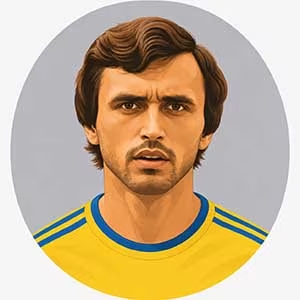
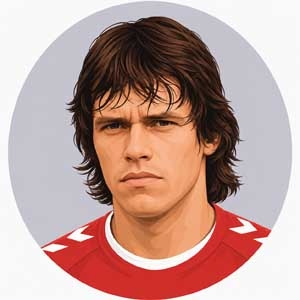
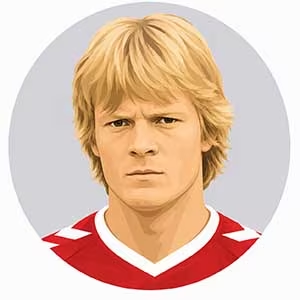
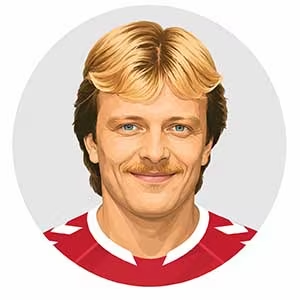
Denmark - Right MidfielderBerggreen, Klaus
An aerodynamic, tireless piston along the right flank whose boundless tactical discipline, physical robustness, and sudden penalty-box incursions made him an indispensable fixture of 1980s Calcio and the Danish national team, Klaus Berggreen was the quintessential modern functional winger before the term was even fully defined. Developing at Lyngby Boldklub before embarking on a highly successful Italian journey with Pisa, Roma, and Torino, Berggreen combined an imposing, athletic six-foot frame with a relentless cardiovascular engine. Rather than relying on tricky, stationary dribbling, his game was built on dynamic, off-the-ball timing: making surging vertical runs into the half-spaces, exploiting the blind sides of opposing full-backs, and arriving late inside the eighteen-yard box to finish with crisp, authoritative strikes with his right foot or powerful aerial headers. Under the charismatic Romeo Anconetani at Pisa, he attained bona fide cult-hero status by spearheading their promotions and Serie A stability, later providing vital tactical equilibrium to Sven-Göran Eriksson’s Roma and cementing his place as a core pillar of Sepp Piontek’s legendary Danish Dynamite side across Euro 1984, the 1986 World Cup in Mexico, and Euro 1988. Mentally and emotionally, Berggreen radiated a sparkling, infectious positivity paired with a deeply professional, analytical intelligence that set him apart from more volatile contemporaries. He played the game with genuine, sunny enthusiasm, greeting grueling physical tactical assignments not as tedious chores, but as exhilarating athletic challenges. Inside the locker room, he was a universally adored, cosmopolitan figure whose razor-sharp wit, fluent Italian, and effortless charisma made him the perfect cultural glue in Italian dressing rooms and a beloved morale-booster within the vibrant Danish national team camp. Under high-stakes tournament pressure, his competitive fire burned with absolute intensity; the defining emotional crucible of his career arrived in the Euro 1984 semi-final against Spain, where his devastating extra-time red card forced him to watch Denmark's agonizing penalty shootout defeat from the tunnel in tears, a heartbreak he absorbed with profound dignity and later channeled into a sensational 1986 World Cup campaign. Toward match officials and aggressive markers, Berggreen maintained an impeccably clean, gentlemanly posture: engaging in bruising physical duels along the touchline without diving or cynical malice, avoiding undignified protests, and earning unconditional respect across Italy and Scandinavia as a shining paragon of athletic integrity and joyful dedication.


 All Time DenmarkNT