We use Google Analytics to understand how visitors use this site. Analytics cookies are only activated with your consent. For details, read our Privacy Policy.
Profile lensThe same player, read from a different angle.
Athletic83
Acceleration
87
Pace
85
Agility
86
Strength
76
Balance
74
Jumping
84
Stamina
86
Fitness
86
Technical79
Dribbling
82
Short Passing
76
Long Passing
77
Finishing
82
Shot Accuracy
77
Shot Power
79
Shooting Technique
78
Heading
77
Tackling
56
Crossing
79
Free Kick
71
Penalties
70
First Touch
82
Mental79
Composure
76
Aggression
85
Consistency
76
Creativity
77
Leadership
82
Work Rate
85
Tactical78
Vision
79
Off the Ball
83
Defensive Positioning
48
Teamwork
78
Anticipation
82
Marking
45
Attacking80
Crossing
79
Finishing
82
Heading Accuracy
77
Shot Accuracy
77
Off the Ball
83
Technique78
Dribbling
82
Free Kick
71
Short Passing
76
Long Passing
77
First Touch
82
Shot Technique
78
Movement83
Acceleration
87
Pace
85
Agility
86
Balance
74
Physicality82
Shot Power
79
Jumping
84
Stamina
86
Strength
76
Fitness
86
Defending50
Marking
45
Tackling
56
Def. Positioning
48
Mentality & Game Reading79
Aggression
85
Composure
76
Penalties
70
Vision
79
Leadership
82
Work Rate
85
Teamwork
78
Anticipation
82
Consistency
76
Creativity
77
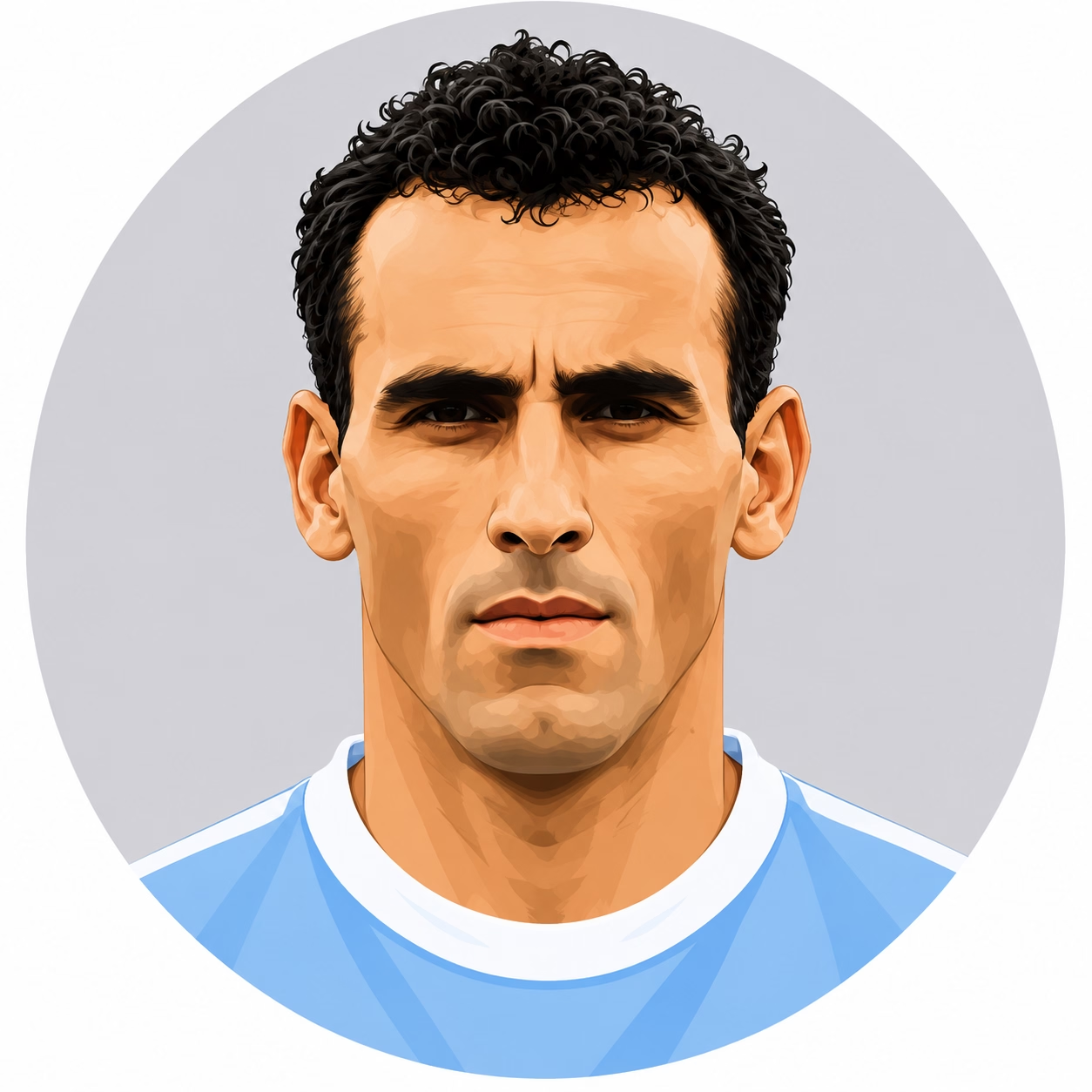
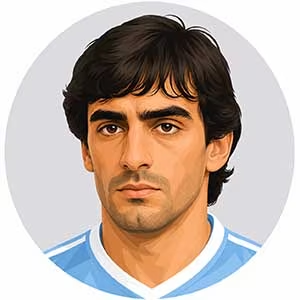
Uruguay - Right WingerAlzamendi, Antonio
Operating primarily as an outside-right or dynamic second striker, Alzamendi tore defensive backlines apart through pure, unadulterated verticality. He did not linger on the ball to showcase superfluous stepovers; instead, he specialized in sudden, devastating runs off the shoulder of the last defender, using a rapid first-yard burst to latch onto direct balls before dispatching crisp finishes across the goalkeeper or cutting back sharp deliveries from the byline. After establishing his pedigree in Uruguay with Wanderers and Nacional, followed by a prolific chapter at Independiente in Argentina and a stint in Mexico with Tecos, his career reached stratospheric heights during his second spell at River Plate (1986–1988) under Héctor Veira and Carlos Griguol. There, he became the spearhead of River's historic grand slam, capturing the 1985–86 Argentine Primera División, the 1986 Copa Libertadores, the 1986 Intercontinental Cup (where he was named Man of the Match), and the 1987 Copa Interamericana. His extraordinary year earned him the prestigious 1986 South American Footballer of the Year award. He later added European experience with CD Logroñés in La Liga alongside fellow countrymen Rubén Sosa and Nelson Gutiérrez. For Uruguay, across 31 caps and six goals between 1978 and 1990, his international highlight reel included lifting back-to-back Copa América crowns in 1983 and 1987, alongside scoring a memorable, thunderous equalizer against West Germany in the group stage of the 1986 World Cup in Mexico and appearing at Italia '90.
That hyper-direct, kinetic game, however, came with specific tactical trade-offs. Alzamendi was a creature of open green grass and transitional momentum; when matched against hyper-compact low blocks that denied him depth behind the full-backs, his ability to break down defenses via slow, intricate combination play in tight central pockets was noticeably less effective. He relied heavily on his right foot for both crossing and final-third execution, which clever defenders could exploit by shepherding him strictly onto his weaker side. Furthermore, because his game was so deeply tethered to explosive leg drive and sprinting stamina, any minor muscular strain or dip in fitness blunted the sharpness of his trademark diagonal runs.
Psychologically, Alzamendi was an infectious livewire of boundless street-fighter optimism, competitive audacity, and unshakeable self-belief. He possessed that quintessential South American knack for treating high-stakes, pressure-cooker finals as if they were neighborhood pickup games, showing zero deference to vaunted European defensive systems or menacing opposing stoppers. His nickname, La Hormiga, reflected not only his tireless physical output but also his humble, egalitarian approach to team dynamics: he was entirely free of prima-donna posturing, happily pressing opposition defenders for ninety minutes to force turnovers that benefited his teammates. On the pitch, his body language was perpetually dialed into high frequency—leaning aggressively forward on the balls of his feet, scanning the backline for a momentary lapse in concentration, and celebrating goals with an unbridled, childlike ecstasy that instantly bonded him to the supporters in the terraces. Inside the dressing rooms of El Monumental and the Celeste, his humor, camaraderie, and clutch heroics made him an immortal folk idol—a tireless, razor-sharp winger whose golden touch in Tokyo and Santiago etched his name into South American football immortality.