We use Google Analytics to understand how visitors use this site. Analytics cookies are only activated with your consent. For details, read our Privacy Policy.
Profile lensThe same player, read from a different angle.
Athletic82
Acceleration
76
Pace
85
Agility
74
Strength
87
Balance
82
Jumping
81
Stamina
84
Fitness
85
Technical84
Dribbling
82
Short Passing
81
Long Passing
79
Finishing
89
Shot Accuracy
84
Shot Power
85
Shooting Technique
77
Heading
85
Tackling
52
Crossing
75
Free Kick
77
Penalties
76
First Touch
84
Mental81
Composure
84
Aggression
82
Consistency
76
Creativity
74
Leadership
82
Work Rate
84
Tactical85
Vision
79
Off the Ball
87
Defensive Positioning
49
Teamwork
92
Anticipation
87
Marking
33
Attacking84
Crossing
75
Finishing
89
Heading Accuracy
85
Shot Accuracy
84
Off the Ball
87
Technique80
Dribbling
82
Free Kick
77
Short Passing
81
Long Passing
79
First Touch
84
Shot Technique
77
Movement79
Acceleration
76
Pace
85
Agility
74
Balance
82
Physicality84
Shot Power
85
Jumping
81
Stamina
84
Strength
87
Fitness
85
Defending45
Marking
33
Tackling
52
Def. Positioning
49
Mentality & Game Reading82
Aggression
82
Composure
84
Penalties
76
Vision
79
Leadership
82
Work Rate
84
Teamwork
92
Anticipation
87
Consistency
76
Creativity
74
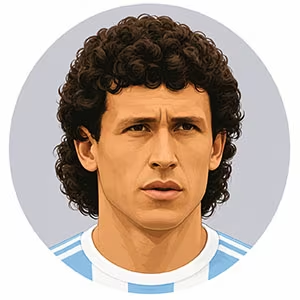
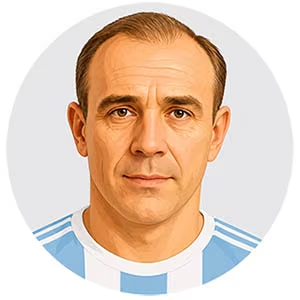
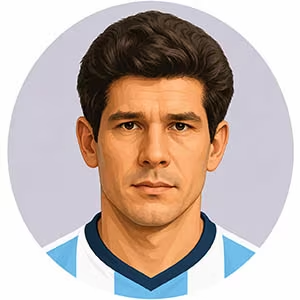
Argentina - StrikerValdano, Jorge
Sprinting sixty yards across the scorched grass of Mexico City to slot home Argentina's second goal in the 1986 World Cup final, a literate forward from Las Parejas completed one of the most intelligent international campaigns ever produced by a South American striker. Jorge Alberto Francisco Valdano Castellanos was the cerebral, versatile attacking partner who provided the dynamic tactical running, tactical intelligence, and spatial awareness that maximized Diego Maradona’s genius. Capable of operating as a mobile center-forward, a wide winger, or an auxiliary midfielder, Valdano combined long-striding running power with crisp combination play and cold-blooded finishing inside the area. After breaking through at Newell's Old Boys and proving his quality in Spain with Alavés and Real Zaragoza (winning the 1986 Copa del Rey), he became a key figure in Real Madrid’s front line alongside the Quinta del Buitre, collecting two La Liga titles and back-to-back UEFA Cups in 1985 and 1986. For Argentina, across 23 caps and seven goals, his crowning moment arrived in Mexico '86, where he started every match and scored four crucial goals on the way to the title.
His game, however, relied on high-intensity physical output that was vulnerable to medical setbacks. Valdano was not an explosive, lightning-quick dribbler who could weave through tight defenses in a phone booth, relying instead on open space and dynamic give-and-goes. His playing career at the top level was cut short at just 31 years of age after contracting hepatitis in 1987, followed by a failed, agonizing attempt to return for the 1990 World Cup after months of grueling individual training.
Articulate, philosophical, and viewing the game through a literary lens, Valdano was a thinker among athletes. He played with an analytical understanding of space and movement, constantly probing the opposition's structural weaknesses and communicating adjustments with his teammates. On the pitch, his body language was earnest and upright: pressing defenders relentlessly from the front, tracking back to plug midfield gaps, and celebrating goals with genuine joy. Inside the Real Madrid and Argentine locker rooms, he was an invaluable bridge between diverse personalities—an eloquent, reflective figure whose tactical clarity made him an indispensable lieutenant on the pitch and one of the sport's most insightful global voices.