We use Google Analytics to understand how visitors use this site. Analytics cookies are only activated with your consent. For details, read our Privacy Policy.
Profile lensThe same player, read from a different angle.
Athletic81
Acceleration
80
Pace
82
Agility
77
Strength
80
Balance
79
Jumping
82
Stamina
84
Fitness
81
Technical75
Dribbling
74
Short Passing
74
Long Passing
76
Finishing
64
Shot Accuracy
64
Shot Power
76
Shooting Technique
64
Heading
76
Tackling
77
Crossing
77
Free Kick
71
Penalties
68
First Touch
76
Mental79
Composure
75
Aggression
76
Consistency
79
Creativity
70
Leadership
82
Work Rate
84
Tactical76
Vision
73
Off the Ball
69
Defensive Positioning
77
Teamwork
80
Anticipation
80
Marking
77
Attacking70
Crossing
77
Finishing
64
Heading Accuracy
76
Shot Accuracy
64
Off the Ball
69
Technique73
Dribbling
74
Free Kick
71
Short Passing
74
Long Passing
76
First Touch
76
Shot Technique
64
Movement80
Acceleration
80
Pace
82
Agility
77
Balance
79
Physicality81
Shot Power
76
Jumping
82
Stamina
84
Strength
80
Fitness
81
Defending77
Marking
77
Tackling
77
Def. Positioning
77
Mentality & Game Reading77
Aggression
76
Composure
75
Penalties
68
Vision
73
Leadership
82
Work Rate
84
Teamwork
80
Anticipation
80
Consistency
79
Creativity
70
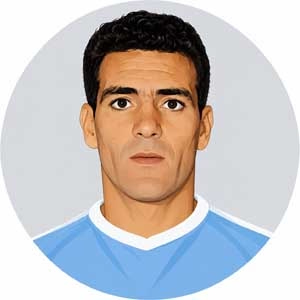
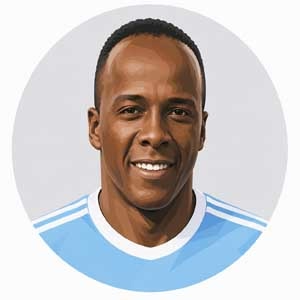
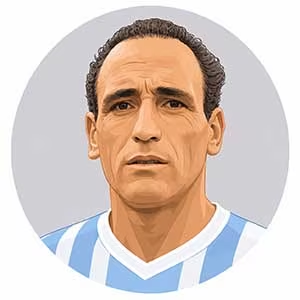
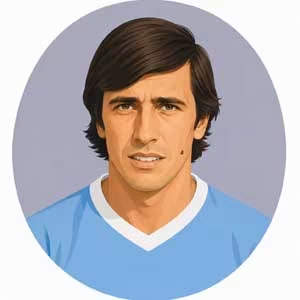
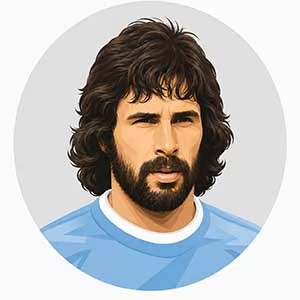
Uruguay - Right BackUbiña, Luis
Operating primarily as a classic, defense-first right-back or central marking stopper, Ubiña turned his flank into an impassable, high-friction zone. He did not chase the ball recklessly; he read the body language of opposing wingers, timed his lunges to strip possession cleanly before attackers could build momentum, and used a low center of gravity and broad upper body to physically shield clearances out of danger. After building his reputation at Rampla Juniors—helping them secure a historic runner-up finish in the Uruguayan Primera División in 1964—he joined Club Nacional de Football in 1967. Over seven dominant seasons in Tricolor colors, he captained the squad during its absolute domestic and continental peak, sweeping four consecutive Uruguayan Primera División championships (1969–1972), the 1971 Copa Libertadores over Estudiantes, the 1971 Intercontinental Cup against Panathinaikos, and the 1972 Copa Interamericana. For Uruguay, across 33 official caps between 1965 and 1973, he played every minute of their campaigns at both the 1966 World Cup in England and the 1970 World Cup in Mexico, where, as on-pitch captain, he marshaled the backline to a historic fourth-place finish.
That relentless defensive focus, however, existed alongside distinct structural and technical limitations. Ubiña was an old-school stopper-fullback rather than a progressive, attack-minded modern wing-back; his distribution under heavy pressure was purely utilitarian—designed to clear danger or play short ground balls into the feet of midfielders like Julio Montero Castillo—rather than orchestrating play with expansive diagonal switches. He rarely ventured deep into the final third to deliver dynamic, whipped crosses from the byline, meaning his team’s right-sided offensive width relied entirely on dedicated wingers like Luis Cubilla. Furthermore, his aggressive, physical marking could occasionally result in friction with strict European referees when matches became heated.
Psychologically, Ubiña was an unyielding, iron-willed leader who embodied the purest essence of garra charrúa: total self-sacrifice, fierce personal dignity, and absolute loyalty to his shirt. He was completely immune to the intimidating atmosphere of hostile stadiums, demanding uncompromising tactical discipline from his teammates while shielding younger players from pressure. On the pitch, his body language was all watchful, coiled intensity: chest thrust forward, tracking opposing forwards step-for-step with icy concentration, and organizing the defensive line with sharp, decisive commands. Inside the Nacional and Uruguayan dressing rooms, his moral authority was absolute—a revered captain and warrior whose defensive grit, tactical intelligence, and silverware-laden leadership cemented an eternal legacy as one of the most respected full-backs in South American football history.