We use Google Analytics to understand how visitors use this site. Analytics cookies are only activated with your consent. For details, read our Privacy Policy.
Profile lensThe same player, read from a different angle.
Athletic79
Acceleration
80
Pace
75
Agility
82
Strength
73
Balance
84
Jumping
80
Stamina
81
Fitness
76
Technical88
Dribbling
87
Short Passing
93
Long Passing
83
Finishing
91
Shot Accuracy
92
Shot Power
81
Shooting Technique
82
Heading
76
Tackling
44
Crossing
80
Free Kick
83
Penalties
90
First Touch
90
Mental84
Composure
92
Aggression
66
Consistency
83
Creativity
91
Leadership
78
Work Rate
79
Tactical90
Vision
90
Off the Ball
91
Defensive Positioning
46
Teamwork
95
Anticipation
92
Marking
38
Player Traits
Attacking86
Crossing
80
Finishing
91
Heading Accuracy
76
Shot Accuracy
92
Off the Ball
91
Technique86
Dribbling
87
Free Kick
83
Short Passing
93
Long Passing
83
First Touch
90
Shot Technique
82
Movement80
Acceleration
80
Pace
75
Agility
82
Balance
84
Physicality78
Shot Power
81
Jumping
80
Stamina
81
Strength
73
Fitness
76
Defending43
Marking
38
Tackling
44
Def. Positioning
46
Mentality & Game Reading86
Aggression
66
Composure
92
Penalties
90
Vision
90
Leadership
78
Work Rate
79
Teamwork
95
Anticipation
92
Consistency
83
Creativity
91
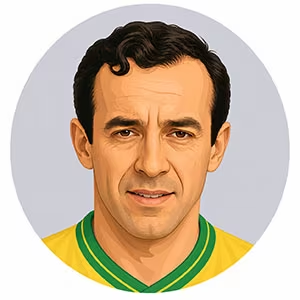
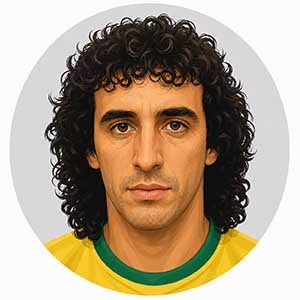
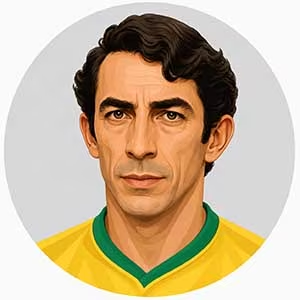
Brazil - ForwardTostão
An intellectual titan of spatial awareness and subtle technical execution, Tostão served as the supreme cerebral catalyst for Cruzeiro and Brazil’s immortal 1970 World Cup team. Naturally a classic number ten, Tostão sacrificed his own goalscoring instincts to occupy the false nine role in Mário Zagallo’s revolutionary side, pulling central defenders out of position through continuous, intelligent off-the-ball dropping movements. His technical execution was a masterclass in economy of touch: effortless first-time layoffs, delicate through-balls with millimeter weight, and a sharp, instinctive finishing touch inside the penalty box with either foot. He excelled at accelerating team play without needing to hold onto possession, acting as the ultimate facilitator for Pelé, Jairzinho, and Rivelino. On the flip side, Tostão possessed an extremely light physical frame, lacked explosive sprinting speed, and offered zero contribution to high-intensity defensive tackling or physical duels. On the pitch, Tostão led strictly through intellectual authority, quiet elegance, and flawless tactical execution. Within the dressing room, he was a thoughtful, soft-spoken figure who maintained a quiet, deeply respectful relationship with teammates and coaches, earning immense admiration through his selfless team-first play. Under severe high-stakes pressure—including playing the 1970 World Cup under the constant threat of permanent vision loss due to a severe eye injury sustained from a kicked ball—his emotional response was defined by astonishing mental fortitude and quiet courage, managing his condition without public complaint or performance drops. Toward match officials and opposition defenders, Tostão displayed flawless sportsmanship, absorbing heavy physical fouls with calm indifference, avoiding referee arguments, and relying on rapid decision-making rather than physical friction. Deeply professional in his training preparation and unswerved by fame, he retired prematurely at age 26 on medical advice, accepting his early exit from the sport with dignified, stoic resignation and shifting his life toward medicine and analytical writing.