We use Google Analytics to understand how visitors use this site. Analytics cookies are only activated with your consent. For details, read our Privacy Policy.
Profile lensThe same player, read from a different angle.
Athletic75
Acceleration
65
Pace
64
Agility
71
Strength
88
Balance
84
Jumping
76
Stamina
65
Fitness
84
Technical44
Dribbling
52
Short Passing
52
Long Passing
54
Shot Accuracy
40
Shot Power
86
Shooting Technique
40
Heading
47
Free Kick
48
Penalties
48
First Touch
54
Mental83
Composure
85
Consistency
78
Leadership
86
Goalkeeping89
Reflexes
90
Positioning
88
Handling
91
Kicking
87
Goalkeeping89
Reflexes
90
Positioning
88
Handling
91
Kicking
87
Attacking44
Heading Accuracy
47
Shot Accuracy
40
Technique50
Dribbling
52
Free Kick
48
Short Passing
52
Long Passing
54
First Touch
54
Shot Technique
40
Physicality80
Shot Power
86
Jumping
76
Stamina
65
Strength
88
Fitness
84
Movement71
Acceleration
65
Pace
64
Agility
71
Balance
84
Mentality & Game Reading74
Composure
85
Penalties
48
Leadership
86
Consistency
78
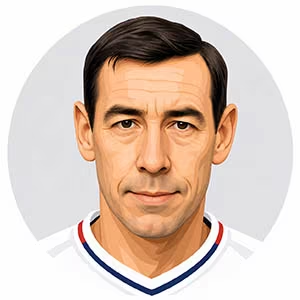
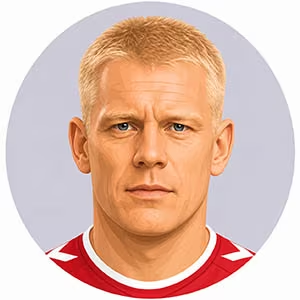
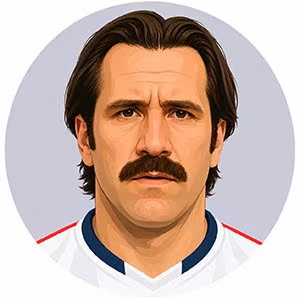
England - GoalkeeperSeaman, David
Unshakable positioning, massive hand span, and total aerial authority inside the six-yard box defined the twelve-year reign of David Andrew Seaman as the defensive backstop of George Graham's and Arsène Wenger’s Arsenal. Developed at Leeds United before building his professional foundation at Peterborough United, Birmingham City, and Queens Park Rangers, Seaman arrived at Highbury in 1990 as the most technically complete British goalkeeper of his generation. Standing six-foot-four, "Safe Hands" completely eschewed theatrical, diving acrobatics for the cameras; his craft was anchored in cutting down shooting angles early, staying tall on his feet to smother one-on-ones, and holding onto wet, driven strikes with adhesive handling. Under Graham's rigid Famous Back Four, he was the tranquil anchor of the 1990–91 title-winning side that conceded just 18 league goals all season. Later, under Wenger, his distribution improved with accurate, side-volley clearances to launch counter-attacks, securing domestic Doubles in both 1998 and 2002. Earning 75 caps for England, his international peak arrived at Euro 96 on home soil, where his penalty saves against Gary McAllister and Miguel Ángel Nadal carried England to the semi-finals. While his later career was occasionally shadowed by high-profile, looping goals—most notoriously Ronaldinho’s free-kick at the 2002 World Cup and Nayim’s 1995 Cup Winners' Cup strike—his extraordinary point-blank stop against Sheffield United’s Paul Peschisolido in the 2003 FA Cup semi-final remains one of the greatest saves in English football history.
Emotionally and psychologically, Seaman was the ultimate tranquilizer: an unshakeable Yorkshire stoic whose flatline pulse provided absolute psychological stability to an already seasoned, demanding defense. He treated high-voltage London derbies, cup finals, and international shootouts with the relaxed, understated calm of a Sunday afternoon fishing trip. On the pitch, he communicated through concise, booming commands, never berating his defenders publicly or displaying anxious body language when the backline was pinned under sustained pressure. In the locker room, he was a warm, universally adored presence—a dry-witted, easygoing character whose relaxed humor and mature perspective helped diffuse dressing-room tension between old-guard English veterans and incoming foreign stars under Wenger. When subjected to devastating media inquests following high-profile errors on the global stage, he refused to hide, deflect blame, or lash out; he faced the press with quiet dignity, absorbed the criticism, and returned to training with the same understated work ethic. Toward match officials and physical opposing center-forwards who tried to obstruct him on corners, Seaman was calm and unflappable: using his huge frame to command his territory without resorting to dirty tricks or retaliation, leaving an enduring legacy as one of the most reliable and iconic custodians in English football history.


 All Time ArsenalClub