We use Google Analytics to understand how visitors use this site. Analytics cookies are only activated with your consent. For details, read our Privacy Policy.
Profile lensThe same player, read from a different angle.
Athletic81
Acceleration
77
Pace
77
Agility
77
Strength
85
Balance
83
Jumping
78
Stamina
91
Fitness
76
Technical82
Dribbling
82
Short Passing
83
Long Passing
86
Finishing
81
Shot Accuracy
73
Shot Power
86
Shooting Technique
76
Heading
76
Tackling
79
Crossing
81
Free Kick
77
Penalties
74
First Touch
83
Mental81
Composure
82
Aggression
86
Consistency
81
Creativity
73
Leadership
82
Work Rate
82
Tactical81
Vision
84
Off the Ball
71
Defensive Positioning
76
Teamwork
86
Anticipation
82
Marking
77
Player Traits
Attacking76
Crossing
81
Finishing
81
Heading Accuracy
76
Shot Accuracy
73
Off the Ball
71
Technique81
Dribbling
82
Free Kick
77
Short Passing
83
Long Passing
86
First Touch
83
Shot Technique
76
Movement79
Acceleration
77
Pace
77
Agility
77
Balance
83
Physicality83
Shot Power
86
Jumping
78
Stamina
91
Strength
85
Fitness
76
Defending77
Marking
77
Tackling
79
Def. Positioning
76
Mentality & Game Reading81
Aggression
86
Composure
82
Penalties
74
Vision
84
Leadership
82
Work Rate
82
Teamwork
86
Anticipation
82
Consistency
81
Creativity
73
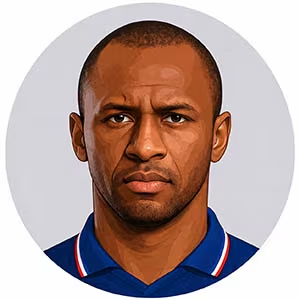
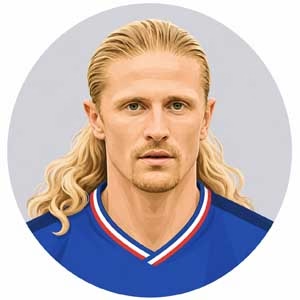
France - Defensive MidfielderPetit, Emmanuel
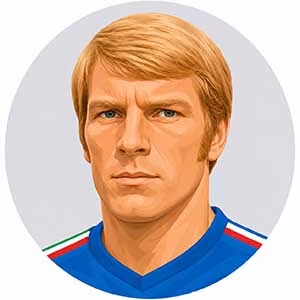
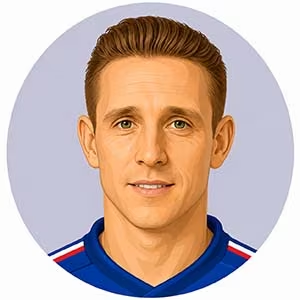
The Stade de France in Saint-Denis on July 12, 1998, provided the crowning image of a blonde-ponytail midfield warrior surging sixty yards in the 93rd minute to slot the third and final goal past Cláudio Taffarel, officially declaring France champions of the world. Emmanuel Laurent Petit was the tactical anchor and engine room foundation of Arsène Wenger’s historic 1997–98 Arsenal double winners and Aimé Jacquet’s global conquest. Operating as a combative left-sided central midfielder or defensive screen alongside Patrick Vieira, Petit possessed a lethal combination of bone-crunching physical ball-winning, supreme tactical discipline, and a cultured left foot capable of pinging 40-yard diagonal switches directly into the stride of wide runners. Across a top-flight career spanning AS Monaco (where he won the 1996–97 Ligue 1 title), Arsenal, FC Barcelona, and Chelsea, he was the archetype of the dominant modern box-to-box balancer. For France, across 63 caps and six goals, he achieved the mythic international double by lifting both the 1998 World Cup and Euro 2000.
Yet Petit’s combative style carried evident mechanical and positional limits. He was largely a one-footed operator who struggled to maneuver comfortably when forced onto his right side under heavy central pressing, and his lateral recovery speed in open-field footraces against dynamic dribblers was limited once his initial tackle was bypassed. Furthermore, his subsequent high-profile transfer to Barcelona in 2000 proved a tactical nightmare under Llorenç Serra Ferrer, who miscast him as a central defender, exposing his lack of deep positional agility before chronic knee problems curtailed his late-career rhythm at Chelsea.
Intense, outspoken, and governed by a fierce personal code of loyalty, Petit brought an uncompromising warrior spirit to every dressing room he entered. He had no patience for prima donnas or passive teammates; if someone neglected their defensive tracking, his sharp verbal rebukes were immediate and unfiltered. On the pitch, his body language was intimidating and purposeful: setting a bruising physical tone from the opening minute, flying into 50-50 challenges with complete disregard for personal safety, and celebrating crunching tackles with clenched fists. Inside the Highbury and French national team locker rooms, he was an essential emotional pillar who formed an unbreakable tactical brotherhood with Vieira, serving as Wenger's tactical lieutenant on the field. Match officials viewed him as a relentless, hard-hitting competitor who played on the physical edge without descending into sneaky cynicism, leaving behind an enduring legacy as one of the most complete, powerful, and iconic midfield balancers in modern French football history.


 All Time ArsenalClub