We use Google Analytics to understand how visitors use this site. Analytics cookies are only activated with your consent. For details, read our Privacy Policy.
Profile lensThe same player, read from a different angle.
Athletic82
Acceleration
75
Pace
77
Agility
76
Strength
86
Balance
82
Jumping
80
Stamina
88
Fitness
89
Technical79
Dribbling
74
Short Passing
78
Long Passing
84
Finishing
74
Shot Accuracy
78
Shot Power
92
Shooting Technique
70
Heading
76
Tackling
85
Crossing
81
Free Kick
85
Penalties
87
First Touch
75
Mental87
Composure
85
Aggression
83
Consistency
87
Creativity
72
Leadership
87
Work Rate
95
Tactical82
Vision
80
Off the Ball
76
Defensive Positioning
80
Teamwork
85
Anticipation
85
Marking
83
Player Traits
Attacking77
Crossing
81
Finishing
74
Heading Accuracy
76
Shot Accuracy
78
Off the Ball
76
Technique78
Dribbling
74
Free Kick
85
Short Passing
78
Long Passing
84
First Touch
75
Shot Technique
70
Movement78
Acceleration
75
Pace
77
Agility
76
Balance
82
Physicality87
Shot Power
92
Jumping
80
Stamina
88
Strength
86
Fitness
89
Defending83
Marking
83
Tackling
85
Def. Positioning
80
Mentality & Game Reading85
Aggression
83
Composure
85
Penalties
87
Vision
80
Leadership
87
Work Rate
95
Teamwork
85
Anticipation
85
Consistency
87
Creativity
72
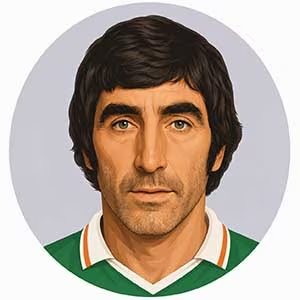
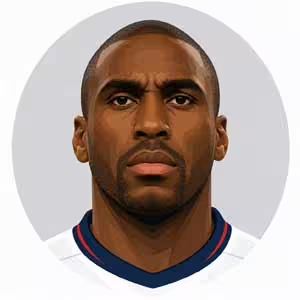
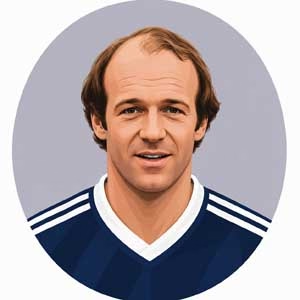
England - Left BackPearce, Stuart
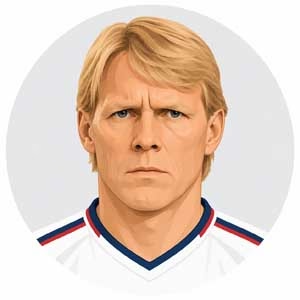
A blood-curdling, vein-popping scream of pure psychological release into the Nottingham sky on June 22, 1996, after burying a thunderous penalty against Spain at Euro '96, permanently exorcised the ghost of his 1990 World Cup semi-final shootout miss. Stuart Pearce—universally feared and revered as Psycho—stood as the definitive, terrifying archetype of the old-school English left-back. Forged under Brian Clough at Nottingham Forest, Pearce combined bone-crunching, ball-and-all slide tackles with an engine of endless stamina, punishing overlapping runs, and a sledgehammer left-foot strike that blasted free-kicks and penalties through goalkeepers' hands from 30 yards. Across 522 appearances and an astonishing 88 goals for Forest, he captained the side through two League Cup triumphs (1989, 1990) and an FA Cup final, before later lifting silverware with West Ham United and Manchester City. For England, across 78 caps and five goals, he served as the uncompromising defensive cornerstone across two World Cups (1990, 1998) and two European Championships (1992, 1996).
Nevertheless, Pearce’s high-friction, aggressive approach came with tactical limitations. He was an orthodox, linear touchline full-back rather than a subtle, inverted ball-playing orchestrator; his crossing was delivered with brute force rather than delicate curve, and his technical dribbling in congested central zones was basic. When matched against lightning-fast, agile wide forwards who avoided physical contact and used quick give-and-goes to bypass him, his aggressive front-foot diving into tackles could leave vast expanses behind him on the flank.
Unyielding, fiercely patriotic, and possessing an unbreakable pain threshold, Pearce approached football as a gladiatorial contest. He feared no opponent and gave no quarter: famously playing on with broken bones, strapping up horrific gashes, and glaring down opposing wingers with cold intimidation before the ball was even kicked. On the pitch, his body language was raw, aggressive, and utterly fearless, leading by example through crunching challenges and unstoppable work rate. Inside the Nottingham Forest and England dressing rooms, his captaincy was absolute; his unvarnished honesty, vocal leadership, and refusal to tolerate laziness made him an indispensable lieutenant for managers like Clough and Terry Venables. Opposing wingers universally dreaded the physical toll of facing him over ninety minutes, leaving an immortal legacy as one of the most passionate, hard-hitting, and iconic defenders in British football history.