We use Google Analytics to understand how visitors use this site. Analytics cookies are only activated with your consent. For details, read our Privacy Policy.
Profile lensThe same player, read from a different angle.
Athletic79
Acceleration
74
Pace
76
Agility
74
Strength
85
Balance
81
Jumping
76
Stamina
82
Fitness
80
Technical82
Dribbling
77
Short Passing
81
Long Passing
93
Finishing
78
Shot Accuracy
77
Shot Power
96
Shooting Technique
69
Heading
74
Tackling
85
Crossing
88
Free Kick
98
Penalties
88
First Touch
79
Mental82
Composure
88
Aggression
85
Consistency
76
Creativity
74
Leadership
86
Work Rate
78
Tactical81
Vision
85
Off the Ball
70
Defensive Positioning
83
Teamwork
82
Anticipation
78
Marking
83
Player Traits
Attacking77
Crossing
88
Finishing
78
Heading Accuracy
74
Shot Accuracy
77
Off the Ball
70
Technique83
Dribbling
77
Free Kick
98
Short Passing
81
Long Passing
93
First Touch
79
Shot Technique
69
Movement76
Acceleration
74
Pace
76
Agility
74
Balance
81
Physicality84
Shot Power
96
Jumping
76
Stamina
82
Strength
85
Fitness
80
Defending84
Marking
83
Tackling
85
Def. Positioning
83
Mentality & Game Reading82
Aggression
85
Composure
88
Penalties
88
Vision
85
Leadership
86
Work Rate
78
Teamwork
82
Anticipation
78
Consistency
76
Creativity
74
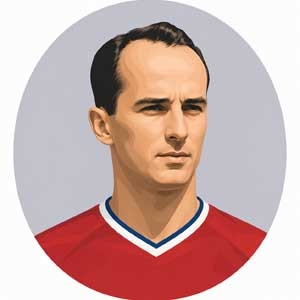
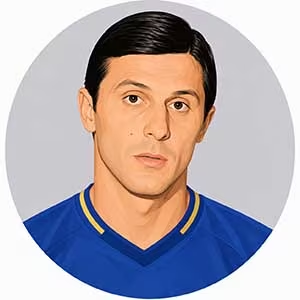
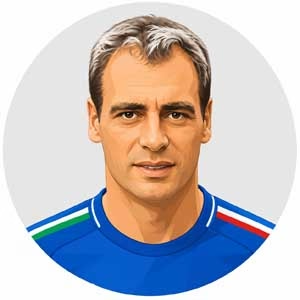
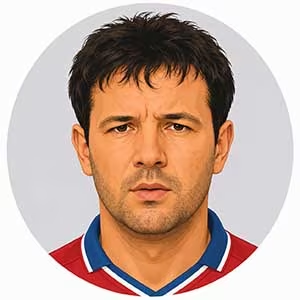
Serbia - Centre-backMihajlović, Sinisa
Left-footed ballistic trajectory, ferocious linear passing range, and a combative, antagonistic presence turned Siniša Mihajlović into the most lethal dead-ball specialist in the history of Serie A. Forged at Vojvodina and immortalized in Red Star Belgrade’s 1990–91 European Cup-winning triumph, the Yugoslavian defender found his tactical evolution on the Italian peninsula under Vujadin Boškov, Sven-Göran Eriksson, and Roberto Mancini across tenures with Roma, Sampdoria, Lazio, and Inter Milan. Mihajlović possessed a dynamic, curving strike that completely bypassed defensive walls: using the instep and laces of his left boot with exceptional velocity and dip, he still holds the Serie A record for free-kick goals (28), including an unprecedented single-match free-kick hat-trick against Sampdoria in 1998. Transitioning from a left midfielder and wing-back into a deep regista and sweeper inside a back four, his long-range diagonals into the channels were laser-guided, unlocking tight low blocks from sixty yards away. With Lazio, he was the emotional engine of their golden cycle, capturing the 1999–2000 Scudetto, the 1999 Cup Winners' Cup, and two Copas Italia. Nevertheless, his defensive craft possessed glaring liabilities: his lack of top-end sprint speed and lateral turning agility made him vulnerable against nimble, low-center-of-gravity forwards in open-field transitions, frequently forcing him to commit cynical, high-risk tactical fouls when caught out of position.
Combative, hyper-nationalistic, and relentlessly confrontational, Mihajlović played the sport as an ideological and physical battleground. He fed ravenously off hostile terrace abuse, whistling crowds, and personal friction, channeling rage into pinpoint dead-ball strikes with ice-cold execution. This volatile temperament, however, regularly crossed the line into extreme disciplinary disasters, marked by spitting incidents (most notoriously against Adrian Mutu), racial slurs aimed at Patrick Vieira during a European tie, and frequent red cards born out of sheer refusal to back down from physical vendettas. Inside the dressing rooms of Formello and Appiano Gentile, he was an imposing, fiercely protective alpha who demanded total loyalty and absolute physical sacrifice from his teammates, forming an unbreakable bond with coaches who matched his directness. When opposing attackers tried to exploit his lack of pace, Mihajlović met them with cynical shirt-pulls, hard forearm shivers, and aggressive verbal intimidation. Referees struggled to contain his combustible outbursts, yet adversaries universally feared his dead-ball lethalness, cementing a legacy as a fiercely divisive, flawed, but technically unmatched master of the set-piece art form.


 All Time SerbiaNT