We use Google Analytics to understand how visitors use this site. Analytics cookies are only activated with your consent. For details, read our Privacy Policy.
Profile lensThe same player, read from a different angle.
Athletic81
Acceleration
85
Pace
84
Agility
84
Strength
73
Balance
76
Jumping
72
Stamina
88
Fitness
87
Technical76
Dribbling
78
Short Passing
74
Long Passing
77
Finishing
68
Shot Accuracy
66
Shot Power
82
Shooting Technique
70
Heading
70
Tackling
73
Crossing
75
Free Kick
62
Penalties
66
First Touch
77
Mental80
Composure
82
Aggression
84
Consistency
78
Creativity
68
Leadership
80
Work Rate
85
Tactical75
Vision
74
Off the Ball
75
Defensive Positioning
72
Teamwork
82
Anticipation
77
Marking
69
Attacking71
Crossing
75
Finishing
68
Heading Accuracy
70
Shot Accuracy
66
Off the Ball
75
Technique73
Dribbling
78
Free Kick
62
Short Passing
74
Long Passing
77
First Touch
77
Shot Technique
70
Movement82
Acceleration
85
Pace
84
Agility
84
Balance
76
Physicality80
Shot Power
82
Jumping
72
Stamina
88
Strength
73
Fitness
87
Defending71
Marking
69
Tackling
73
Def. Positioning
72
Mentality & Game Reading78
Aggression
84
Composure
82
Penalties
66
Vision
74
Leadership
80
Work Rate
85
Teamwork
82
Anticipation
77
Consistency
78
Creativity
68
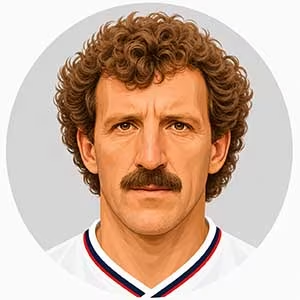
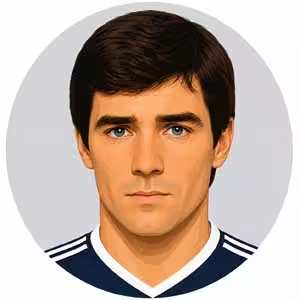
England - Left BackKennedy, Alan
Two European Cup finals, two winning goals, and an extraordinary knack for arriving at the back post when the lights were brightest. Alan Philip Kennedy—affectionately dubbed Barney Rubble by teammates for his clumsy training sessions—was Liverpool’s ultimate clutch left-back during their golden European apex in the late 1970s and 1980s.
A lung-busting, direct runner signed from Newcastle United in 1978, Kennedy patrolled the left touchline with relentless cardiovascular stamina. He blended hard-hitting defensive challenges with dynamic overlapping surges, driving into the penalty box to strike loose balls with ferocious power. His legendary status was forged in silverware: five First Division championships, four consecutive League Cups, and the decisive winning goals in both the 1981 European Cup final against Real Madrid in Paris and the 1984 final shootout against AS Roma in Rome. For England, he earned just two caps, crowded out by the steady presence of Kenny Sansom.
Kennedy was far from a refined, technical playmaker; his passing range was basic, his close control in tight spaces was heavy, and his crossing could be erratic when forced onto his weaker right foot. In open-field defensive isolations, fast, agile wingers who avoided physical contact could occasionally catch him leaning on the turn if he overcommitted forward.
Cheerful, fearless, and possessing an unyielding blue-collar resilience, Kennedy approached high-stakes football with total psychological freedom. Criticism of his technique rolled right off him; he thrived on big-game pressure, throwing his body into flying challenges and sprinting sixty yards to support an attack in the 90th minute. Inside the Anfield dressing room, his self-deprecating humor and ferocious competitive courage made him an adored figure, leaving an immortal legacy as one of the most clutch full-backs in European history.