We use Google Analytics to understand how visitors use this site. Analytics cookies are only activated with your consent. For details, read our Privacy Policy.
Profile lensThe same player, read from a different angle.
Athletic75
Acceleration
67
Pace
69
Agility
71
Strength
90
Balance
79
Jumping
82
Stamina
64
Fitness
80
Technical43
Dribbling
49
Short Passing
54
Long Passing
53
Shot Accuracy
44
Shot Power
84
Shooting Technique
43
Heading
46
Free Kick
50
Penalties
50
First Touch
48
Mental82
Composure
85
Consistency
77
Leadership
86
Goalkeeping89
Reflexes
92
Positioning
92
Handling
87
Kicking
85
Goalkeeping89
Reflexes
92
Positioning
92
Handling
87
Kicking
85
Attacking45
Heading Accuracy
46
Shot Accuracy
44
Technique50
Dribbling
49
Free Kick
50
Short Passing
54
Long Passing
53
First Touch
48
Shot Technique
43
Physicality80
Shot Power
84
Jumping
82
Stamina
64
Strength
90
Fitness
80
Movement72
Acceleration
67
Pace
69
Agility
71
Balance
79
Mentality & Game Reading75
Composure
85
Penalties
50
Leadership
86
Consistency
77
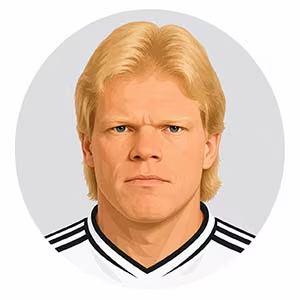
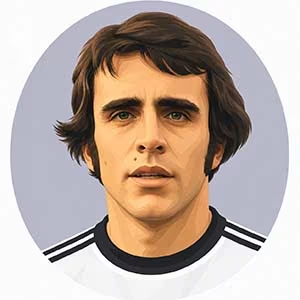
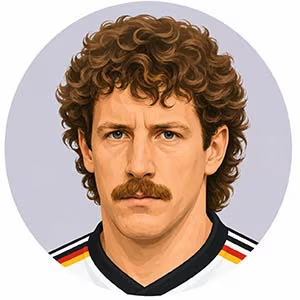
Germany - GoalkeeperIllgner, Bodo
Mechanical precision, disciplined angle management, and absolute sobriety on the goal line established Bodo Illgner as the premier German shot-stopper bridging the golden eras of Harald Schumacher and Oliver Kahn. Handpicked at 1. FC Köln as the immediate heir to Schumacher, Illgner made his Bundesliga breakthrough at just twenty years old, quickly developing a reputation for technical economy: standing six-foot-three with a balanced, upright stance, he eliminated unnecessary theatrical lunges, relying on clean footwork to ensure his body was set squarely behind every shot. In the summer of 1990, at the age of twenty-three, he became the youngest goalkeeper to lift the World Cup, anchoring Franz Beckenbauer’s West Germany in Italy by conceding only five goals in seven games and saving Stuart Pearce's spot-kick in the semi-final shootout against England. After a decade of immaculate domestic consistency in Cologne, he moved abroad in 1996 to Fabio Capello’s Real Madrid, stabilizing a fragile backline to win the 1996–97 La Liga title and starting between the posts in the 1998 UEFA Champions League final against Juventus, which ended Madrid's 32-year continental drought. Over 54 caps for Germany and four consecutive IFFHS European Goalkeeper of the Year awards (1989–1992), he chose a sudden, premature international retirement after the 1994 World Cup, choosing club stability over federal politics.
Emotionally and psychologically, Illgner was a cold, introverted pragmatist whose flatline composure provided an invaluable counterweight to the volatile, high-strung defenses he guarded. He had zero interest in media stardom or vocal grandstanding, approaching his profession with the analytical focus of an engineer. In high-leverage knockout ties, such as the tense 1990 final against Diego Maradona's Argentina or the 1998 Champions League decider in Amsterdam, his concentration remained immaculate; he never allowed hostile atmospheres or the historical magnitude of the occasion to alter his technical routine. However, his strong-willed, independent nature and total reliance on his wife and agent, Bianca, created friction with German FA officials and the German media, ultimately driving his decision to walk away from Die Mannschaft at just twenty-seven years old. When younger prodigy Iker Casillas emerged to take his starting spot in Madrid, Illgner handled the transition with quiet, professional dignity, continuing to train diligently without causing locker-room toxicity. Toward match officials and physical opposing center-forwards, Illgner was an absolute gentleman: calm, unshakeable, and entirely focused on positional purity, cementing his reputation as one of the most efficient, clutch, and unpretentious goalkeepers in modern European football history.