We use Google Analytics to understand how visitors use this site. Analytics cookies are only activated with your consent. For details, read our Privacy Policy.
Profile lensThe same player, read from a different angle.
Athletic76
Acceleration
73
Pace
72
Agility
78
Strength
82
Balance
76
Jumping
85
Stamina
63
Fitness
78
Technical43
Dribbling
50
Short Passing
56
Long Passing
58
Shot Accuracy
44
Shot Power
78
Shooting Technique
43
Heading
45
Free Kick
45
Penalties
48
First Touch
52
Mental79
Composure
82
Consistency
73
Leadership
82
Goalkeeping88
Reflexes
92
Positioning
87
Handling
87
Kicking
85
Goalkeeping88
Reflexes
92
Positioning
87
Handling
87
Kicking
85
Attacking45
Heading Accuracy
45
Shot Accuracy
44
Technique51
Dribbling
50
Free Kick
45
Short Passing
56
Long Passing
58
First Touch
52
Shot Technique
43
Physicality77
Shot Power
78
Jumping
85
Stamina
63
Strength
82
Fitness
78
Movement75
Acceleration
73
Pace
72
Agility
78
Balance
76
Mentality & Game Reading71
Composure
82
Penalties
48
Leadership
82
Consistency
73
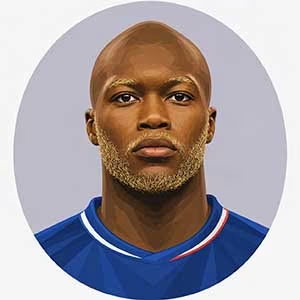
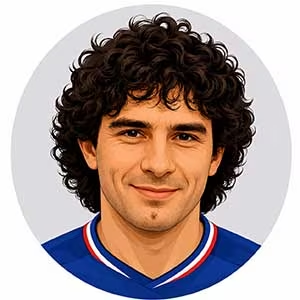
France - GoalkeeperBats, Joël
Stepping into the national spotlight during the vibrant golden era of French football in the mid-1980s, Joël Bats was an athletic, agile, and technically immaculate goalkeeper whose composure provided the essential defensive safety net for Michel Platini's Carré Magique. Developed at FC Sochaux and establishing his top-flight credentials with AJ Auxerre under Guy Roux, Bats moved to Paris Saint-Germain in 1985, anchoring the capital club to their historic first-ever French Division 1 championship in 1986. Standing just under six feet tall, he lacked the towering physical frame of northern European keepers, compensating with lightning-fast lateral footwork, exceptional diving reflexes, and an extraordinary sense of timing when coming off his line to smother loose balls. Rather than attempting flashy, risky maneuvers, his craft was centered on compact positioning, firm handling, and clean parries away from danger zones. Earning 50 caps for France between 1983 and 1989, his international pinnacle arrived during the historic Euro 1984 triumph on home soil—conceding just four goals in the tournament—and the 1986 World Cup in Mexico, where his heroics reached legendary status in the quarter-final against Brazil: saving a regular-time penalty from Zico before stopping Sócrates in the decisive shootout to send Les Bleus to the semi-finals. Mentally and emotionally, Bats was a deeply sensitive, poetic, and philosophical individual whose career was shaped by profound personal resilience. Having successfully overcome a diagnosis of testicular cancer in 1982 while still fighting for his professional breakthrough, he emerged from the ordeal with an altered perspective on life and sport, writing poetry to process his emotions and approaching high-stakes football matches with remarkable inner tranquility. On the pitch, his demeanor was calm, reassuring, and completely devoid of erratic panic; he did not scream hysterically at his backline, relying instead on concise, steady organizational calls that instilled absolute confidence in his central defenders. In the dressing room, he was a gentle, highly articulate, and universally loved teammate—a thoughtful presence who offered mature counsel and diffused locker-room tension with dry wit and genuine empathy. In the suffocating psychological pressure of World Cup penalty shootouts against global icons, his pulse remained remarkably steady, trusting his homework, reading body angles, and executing saves with quiet certainty. Toward match officials and aggressive opposing forwards, Bats was a model of sporting dignity: he avoided gamesmanship, never feigned injury, and conducted himself with a quiet, honorable grace that made him one of the most respected figures in modern French football history.


 All Time FranceNT