We use Google Analytics to understand how visitors use this site. Analytics cookies are only activated with your consent. For details, read our Privacy Policy.
Profile lensThe same player, read from a different angle.
Athletic81
Acceleration
91
Pace
84
Agility
82
Strength
76
Balance
77
Jumping
75
Stamina
79
Fitness
85
Technical83
Dribbling
92
Short Passing
77
Long Passing
80
Finishing
83
Shot Accuracy
77
Shot Power
85
Shooting Technique
81
Heading
75
Tackling
48
Crossing
86
Free Kick
83
Penalties
76
First Touch
90
Mental79
Composure
78
Aggression
75
Consistency
81
Creativity
86
Leadership
75
Work Rate
78
Tactical79
Vision
82
Off the Ball
84
Defensive Positioning
46
Teamwork
81
Anticipation
78
Marking
42
Player Traits
Attacking81
Crossing
86
Finishing
83
Heading Accuracy
75
Shot Accuracy
77
Off the Ball
84
Technique84
Dribbling
92
Free Kick
83
Short Passing
77
Long Passing
80
First Touch
90
Shot Technique
81
Movement84
Acceleration
91
Pace
84
Agility
82
Balance
77
Physicality80
Shot Power
85
Jumping
75
Stamina
79
Strength
76
Fitness
85
Defending45
Marking
42
Tackling
48
Def. Positioning
46
Mentality & Game Reading79
Aggression
75
Composure
78
Penalties
76
Vision
82
Leadership
75
Work Rate
78
Teamwork
81
Anticipation
78
Consistency
81
Creativity
86
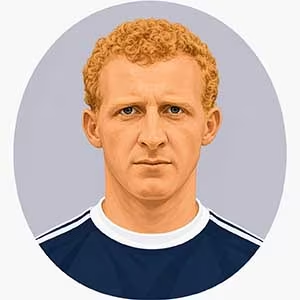
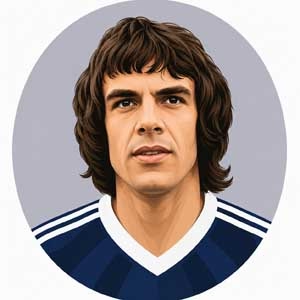
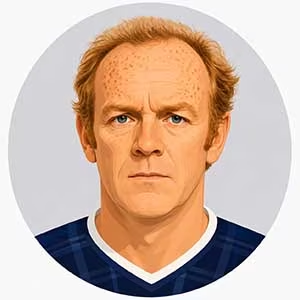
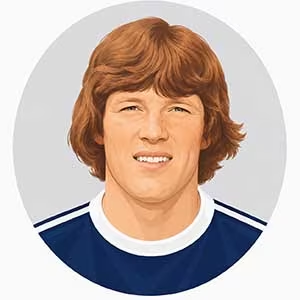
Scotland - Left WingerGray, Eddie
Gliding across mud-caked winter pitches with an almost weightless grace that stood in stark contrast to the bruising, hyper-aggressive ethos of Don Revie’s Leeds United, Edwin "Eddie" Gray was one of the purest, most mesmerizing natural dribblers in British post-war football. Signed out of Glasgow as a schoolboy, Gray was a silky outside-left blessed with impeccable balance, sharp lateral deceleration, and an instinctive mastery of the body swerve. Unlike classic speed-merchants who relied on kicking and chasing into open grass, Gray manipulated defenders in confined half-spaces: dropping his left shoulder to freeze a right-back, dragging the ball with the outside of his boot, and turning back inside before delivering laser-guided crosses or curling finishes. His technical genius was permanently etched into English football lore in April 1970 against Burnley at Elland Road—first chipping the goalkeeper from 35 yards, then scoring an iconic solo goal where he twisted three defenders in and out of the penalty box without anyone laying a tackle on him. A central protagonist throughout Leeds' golden era across 577 appearances, he won two First Division titles (1969, 1974), the 1972 FA Cup, the 1968 League Cup, and two Inter-Cities Fairs Cups. Though chronic hamstring and groin issues severely limited his international career to just 12 caps for Scotland, his tactical intelligence allowed him to seamlessly reinvent himself as a cultured left-back and central midfielder in his later Elland Road years. Mentally and emotionally, Gray was a quiet, modest purist whose supreme artistry provided the aesthetic conscience for an otherwise feared and uncompromising Leeds dressing room. Surrounded by ferocious enforcers like Billy Bremner, Norman Hunter, and Johnny Giles, Gray never adopted their confrontational edge; instead, he commanded unconditional respect through his sheer technical supremacy and unselfish tactical discipline. He carried a deep, lifelong loyalty to Leeds United, enduring agonizing years of recurring muscular breakdowns and invasive treatments without public grievance or loss of enthusiasm for the club. On the pitch, his temperament was placid and unshakeable; he absorbed brutal, chest-high hacking from frustrated full-backs without seeking retribution or engaging in theatrical retaliation, immediately dusting himself off to demand the ball again. Inside the locker room, he was a gentle, unifying, and articulate presence—eventually transitioning naturally into player-management and mentorship to guide younger generations through the club's turbulent transitions. Toward match officials and aggressive markers, Gray was a consummate sportsman whose quiet dignity and breathtaking aesthetic brilliance left an eternal mark as one of the most gifted Scottish wingers ever to grace the English game.


 All Time ScotlandNT