We use Google Analytics to understand how visitors use this site. Analytics cookies are only activated with your consent. For details, read our Privacy Policy.
Profile lensThe same player, read from a different angle.
Athletic74
Acceleration
68
Pace
68
Agility
72
Strength
82
Balance
77
Jumping
81
Stamina
60
Fitness
86
Technical43
Dribbling
51
Short Passing
56
Long Passing
63
Shot Accuracy
44
Shot Power
74
Shooting Technique
44
Heading
45
Free Kick
45
Penalties
45
First Touch
52
Mental82
Composure
82
Consistency
80
Leadership
85
Goalkeeping87
Reflexes
90
Positioning
87
Handling
87
Kicking
82
Goalkeeping87
Reflexes
90
Positioning
87
Handling
87
Kicking
82
Attacking45
Heading Accuracy
45
Shot Accuracy
44
Technique52
Dribbling
51
Free Kick
45
Short Passing
56
Long Passing
63
First Touch
52
Shot Technique
44
Physicality77
Shot Power
74
Jumping
81
Stamina
60
Strength
82
Fitness
86
Movement71
Acceleration
68
Pace
68
Agility
72
Balance
77
Mentality & Game Reading73
Composure
82
Penalties
45
Leadership
85
Consistency
80
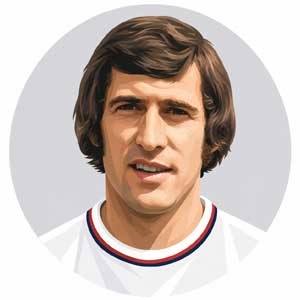
England - GoalkeeperBonetti, Peter
León, 14 June 1970, World Cup quarter-final against West Germany. England lead 2-0 with twenty minutes remaining, Gordon Banks — the best goalkeeper in the world — is in his hotel room with food poisoning, and Peter Bonetti, his replacement, concedes three goals in the second half as England collapse to a 3-2 defeat that ended their defence of the trophy. He had played only seven times for England in eight years behind Banks. The one match that mattered most to the entire country's memory of him became the only one anyone discussed.
Born in Putney in 1941, Bonetti was among the most naturally athletic goalkeepers English football produced, earning the nickname "The Cat" for a combination of agility, quick reflexes and acrobatic shot-stopping that made spectacular saves look instinctive rather than practised. He was not physically imposing and relied on speed off his line and exceptional reaction time rather than commanding presence, a style suited to close-range stops and low, driven shots more than to dominating crosses in a crowded box. He joined Chelsea as a teenager and remained there for his entire career, an unusually long single-club tenure for the era, making over 700 appearances across two decades. He won the 1965 League Cup, the 1970 FA Cup — including a decisive performance in the final replay against Leeds United — and the 1971 European Cup Winners' Cup, becoming one of the most decorated goalkeepers in the club's history. For England he won only seven caps across eight years, a modest total explained entirely by the presence of Banks, considered by many the finest goalkeeper of his generation, ahead of him in the national pecking order for almost the whole of Bonetti's international career.
His limitations were less technical than circumstantial, and the balance of evidence suggests his reputation suffered disproportionately from a single afternoon. Bonetti's agile, reflex-based style occasionally left him vulnerable on crosses and set pieces against physically dominant opposition, a genuine if secondary weakness relative to his shot-stopping. But the 1970 quarter-final, played after a long injury-affected buildup and against opponents who had specifically targeted a goalkeeper they knew to be undercooked for the occasion, became the single data point by which an entire international career was subsequently judged, obscuring a club record that was, by any reasonable measure, exceptional.
Temperamentally he was reserved, modest and notably calm — a contrast, teammates and journalists frequently noted, to the flamboyant nickname his goalkeeping style had earned him. Bonetti led by consistency and understated professionalism rather than vocal command, rarely sought public attention, and responded to the sustained criticism following the 1970 tournament with a private dignity rather than public defense or visible bitterness, a restraint that meant the scapegoating largely went unanswered by the man it targeted. He maintained a clean disciplinary record throughout a two-decade career, rarely disputed decisions with officials, and continued performing at a high level for Chelsea for years after the international disappointment without any evident change in his demeanour or application. He remained loyal to a single club for his entire playing career, a rare commitment even by the standards of his era, and stayed involved in football coaching, including goalkeeping work with the England set-up, long after retiring. Away from the pitch he lived without controversy, and his own public reflections on 1970, when he offered them decades later, remained measured rather than aggrieved. Gifted, unassuming and permanently associated with a single afternoon that undersold two decades of excellence, Bonetti carried an unfair verdict with a composure that never demanded correction.


 All Time ChelseaClub