We use Google Analytics to understand how visitors use this site. Analytics cookies are only activated with your consent. For details, read our Privacy Policy.
Profile lensThe same player, read from a different angle.
Athletic80
Acceleration
77
Pace
76
Agility
75
Strength
83
Balance
82
Jumping
83
Stamina
81
Fitness
85
Technical79
Dribbling
75
Short Passing
77
Long Passing
82
Finishing
54
Shot Accuracy
58
Shot Power
76
Shooting Technique
66
Heading
86
Tackling
87
Crossing
74
Free Kick
66
Penalties
65
First Touch
75
Mental84
Composure
85
Aggression
82
Consistency
83
Creativity
66
Leadership
87
Work Rate
85
Tactical83
Vision
76
Off the Ball
60
Defensive Positioning
87
Teamwork
84
Anticipation
86
Marking
86
Attacking66
Crossing
74
Finishing
54
Heading Accuracy
86
Shot Accuracy
58
Off the Ball
60
Technique74
Dribbling
75
Free Kick
66
Short Passing
77
Long Passing
82
First Touch
75
Shot Technique
66
Movement78
Acceleration
77
Pace
76
Agility
75
Balance
82
Physicality82
Shot Power
76
Jumping
83
Stamina
81
Strength
83
Fitness
85
Defending87
Marking
86
Tackling
87
Def. Positioning
87
Mentality & Game Reading80
Aggression
82
Composure
85
Penalties
65
Vision
76
Leadership
87
Work Rate
85
Teamwork
84
Anticipation
86
Consistency
83
Creativity
66
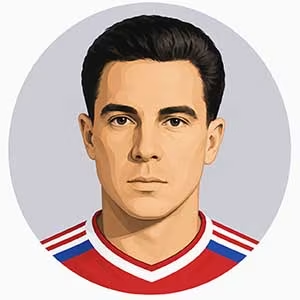
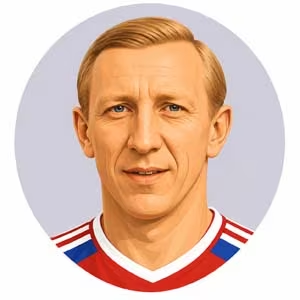
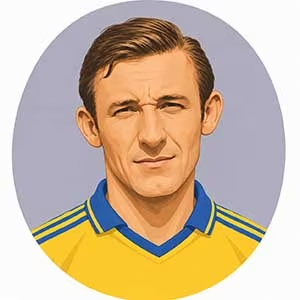
Russia - Centre-backBashashkin, Anatoli
Anatoli Bashashkin was not the kind of defender who existed only to win collisions and clear his lines. Strong, stern and physically imposing, he also had a level of comfort on the ball that made him stand out in early Soviet football. From the centre of defence, he could break pressure with long passes and turn a recovery into the first act of a counterattack, giving his game a more constructive edge than the usual old-school stopper label suggests. At CDKA and CDSA Moscow, he became a key figure in one of the dominant Soviet sides of the late 1940s and 1950s, while his national-team career carried both honour and political cruelty. Captain of the USSR in 1952, Olympic champion in 1956, Bashashkin was a defender of authority, strength and distribution. More defensive libero than blunt marker, and much more interesting than the dusty label of central defender allows.