We use Google Analytics to understand how visitors use this site. Analytics cookies are only activated with your consent. For details, read our Privacy Policy.
Profile lensThe same player, read from a different angle.
Athletic80
Acceleration
75
Pace
78
Agility
71
Strength
88
Balance
87
Jumping
85
Stamina
79
Fitness
80
Technical75
Dribbling
72
Short Passing
77
Long Passing
73
Finishing
45
Shot Accuracy
54
Shot Power
77
Shooting Technique
66
Heading
82
Tackling
92
Crossing
65
Free Kick
54
Penalties
57
First Touch
73
Mental86
Composure
86
Aggression
90
Consistency
82
Creativity
65
Leadership
91
Work Rate
90
Tactical79
Vision
70
Off the Ball
55
Defensive Positioning
93
Teamwork
76
Anticipation
84
Marking
93
Player Traits
Attacking60
Crossing
65
Finishing
45
Heading Accuracy
82
Shot Accuracy
54
Off the Ball
55
Technique69
Dribbling
72
Free Kick
54
Short Passing
77
Long Passing
73
First Touch
73
Shot Technique
66
Movement78
Acceleration
75
Pace
78
Agility
71
Balance
87
Physicality82
Shot Power
77
Jumping
85
Stamina
79
Strength
88
Fitness
80
Defending93
Marking
93
Tackling
92
Def. Positioning
93
Mentality & Game Reading79
Aggression
90
Composure
86
Penalties
57
Vision
70
Leadership
91
Work Rate
90
Teamwork
76
Anticipation
84
Consistency
82
Creativity
65
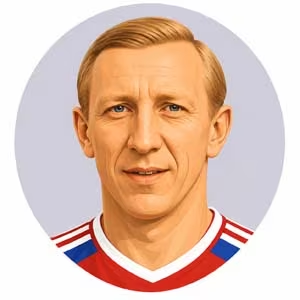
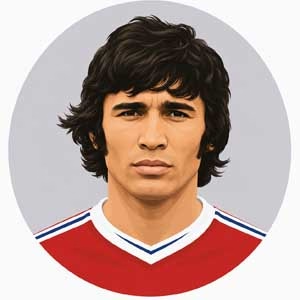
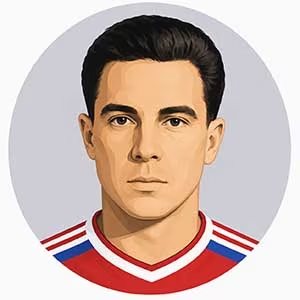
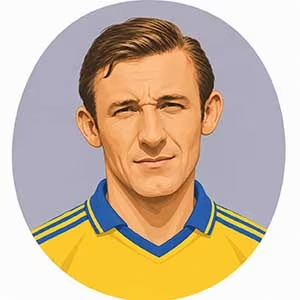
Russia - SweeperShesternyov, Albert
Soviet defensive architecture throughout the 1960s found its supreme, unshakeable cornerstone in Albert Alekseyevich Shesternyov. An Olympic sprinter in his youth who seamlessly translated straight-line velocity into elite defensive recovery, the Moscow-born sweeper (chistilshchik) and center-half spent his entire club career marshalling CSKA Moscow, where his impassable stature earned him the iconic moniker Ivan the Terrible. Shesternyov combined a towering six-foot frame with exceptional burst over forty yards: he possessed the rare athletic capability to sweep behind a high defensive line, track explosive wingers into the channels, and execute sliding interceptions with surgical, foul-free cleanliness. Captaining CSKA to the historic 1970 Soviet Top League title—defeating Dynamo Moscow in an epic championship playoff—his international stature across 90 caps for the Soviet Union was monumental. Shesternyov captained the USSR at the 1966 World Cup to their historic fourth-place finish, anchored the backline to the Euro 1964 and Euro 1968 finals/semi-finals (famously suffering elimination in 1968 only via a coin toss against Italy), and was named Soviet Footballer of the Year in 1970, alongside earning multiple nominations in the top-ten voting for the Ballon d'Or.
Tactically, Shesternyov's primary limits stemmed from the conservative structural duties of his era: his game was strictly focused on destruction, spatial coverage, and immediate, low-risk side-foot recycling, lacking modern playmaking vision to step into midfield as a deep conductor. Furthermore, severe chronic knee damage prematurely brought his elite playing days to an abrupt halt at just thirty years old.
Authoritative, dignified, and radiating a calm, patriarchal presence, Shesternyov controlled the defensive third through absolute positional mastery rather than vocal screaming or crude violence. He was a cerebral commander whose cold reading of the match neutralized transitions before danger could materialize. On the pitch, his body language was upright and noble; he never engaged in dirty tactical fouls or theatrical gamesmanship, relying on his clean recovery pace and immaculate timing to strip possession cleanly. Inside the Soviet and CSKA locker rooms, he was an untouchable captain and the supreme moral authority—a unifying leader respected equally by Russian, Ukrainian, and Caucasian teammates for his fairness, monastic training habits, and protective nature. When matched against dynamic world-class forwards like Pelé, Uwe Seeler, or Ferenc Bene, Shesternyov maintained total focus, using his athletic range and upper-body balance to absorb contact without yielding an inch. Referees viewed him as a paragon of fair play, leaving behind an immortal legacy as the fastest, cleanest, and most tactically commanding central defender in the history of Eastern European football.