We use Google Analytics to understand how visitors use this site. Analytics cookies are only activated with your consent. For details, read our Privacy Policy.
Profile lensThe same player, read from a different angle.
Athletic82
Acceleration
91
Pace
85
Agility
90
Strength
73
Balance
76
Jumping
75
Stamina
85
Fitness
83
Technical89
Dribbling
96
Short Passing
88
Long Passing
83
Finishing
86
Shot Accuracy
91
Shot Power
80
Shooting Technique
92
Heading
73
Tackling
52
Crossing
80
Free Kick
76
Penalties
77
First Touch
93
Mental84
Composure
84
Aggression
78
Consistency
84
Creativity
91
Leadership
80
Work Rate
87
Tactical85
Vision
86
Off the Ball
88
Defensive Positioning
54
Teamwork
85
Anticipation
82
Marking
47
Player Traits
Attacking84
Crossing
80
Finishing
86
Heading Accuracy
73
Shot Accuracy
91
Off the Ball
88
Technique88
Dribbling
96
Free Kick
76
Short Passing
88
Long Passing
83
First Touch
93
Shot Technique
92
Movement86
Acceleration
91
Pace
85
Agility
90
Balance
76
Physicality79
Shot Power
80
Jumping
75
Stamina
85
Strength
73
Fitness
83
Defending51
Marking
47
Tackling
52
Def. Positioning
54
Mentality & Game Reading83
Aggression
78
Composure
84
Penalties
77
Vision
86
Leadership
80
Work Rate
87
Teamwork
85
Anticipation
82
Consistency
84
Creativity
91
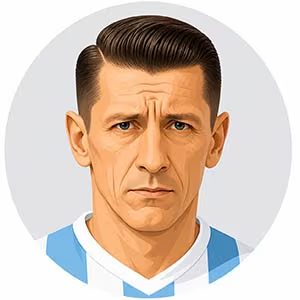
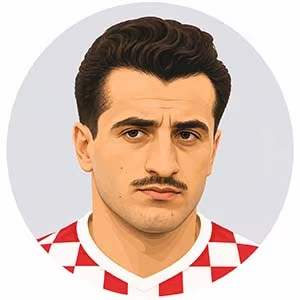
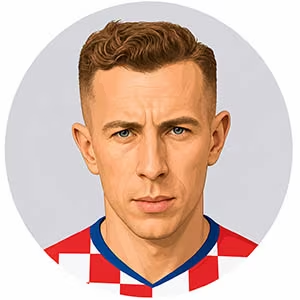
Croatia - Attacking MidfielderVukas, Bernard
A hypnotic drop of the shoulder, razor-sharp close control in the mud, and an improvisational genius rooted in the street-football culture of Zagreb established Bernard "Bajdo" Vukas as the definitive golden standard of Yugoslavian football in the 1950s. While born in Zagreb and initially developing at Concordia and Amater, Vukas found his spiritual and sporting empire at Hajduk Split, becoming the undisputed icon of the Dalmatian coast. Operating primarily as an inside-left or fluid left winger, he possessed a low center of gravity and extraordinary bilateral coordination: he could freeze full-backs on the spot with deceptive hip feints, burst through central gaps with sudden three-yard accelerations, and deliver curled, weighted passes with either foot. Under his talismanic leadership, Hajduk captured three Yugoslav First League titles (1950, 1952, 1955), notably spearheading the historic undefeated 1950 campaign alongside the newly founded Torcida. His continental reputation was immense: in 1953, he was selected for the Rest of the World XI against England at Wembley (earning the decisive penalty in a 4–4 draw), and in 1955 he scored a breathtaking hat-trick for UEFA against Great Britain in Belfast. For Yugoslavia, across 59 caps and 22 goals, he claimed two Olympic silver medals (1948 in London, 1952 in Helsinki) and was the creative spearhead at both the 1950 and 1954 World Cups, finishing third in the 1955 Ballon d'Or poll conducted retroactively by major European publications.
Independent, fiercely proud, and deeply bohemian in his outlook on life, Vukas approached football as an art form that could never be subordinated to totalitarian directives or rigid tactical straitjackets. When the state apparatus attempted to engineer his transfer to state-favored Belgrade clubs like Partizan or Red Star, Vukas flatly refused, displaying an ironclad personal loyalty to Hajduk Split that elevated him to near-religious status among the Dalmatian working class. On the pitch, his competitive character was vibrant and theatrical; he thrived on the adulation of roaring terraces, using his breathtaking dribbling runs to lift the entire collective psyche of his team when trailing. Inside the dressing room, he was an untouchable, generous patriarch—a charismatic figure whose warmth and quick wit diffused tension, but who demanded high technical execution from his attacking partners like Frane Matošić. Even when subjected to brutal, bone-crunching hackings on rough post-war pitches, Vukas never retaliated with violence; he rose, adjusted his shorts, and humiliated his markers on the very next sequence with an audacious nutmeg. Referees and international defenders revered him as a clean, sporting virtuoso, cementing an immortal legacy as Croatia’s and Yugoslavia’s greatest footballing artist of the mid-20th century.


 All Time CroatiaNT