We use Google Analytics to understand how visitors use this site. Analytics cookies are only activated with your consent. For details, read our Privacy Policy.
Profile lensThe same player, read from a different angle.
Athletic84
Acceleration
92
Pace
90
Agility
90
Strength
72
Balance
80
Jumping
81
Stamina
85
Fitness
80
Technical87
Dribbling
92
Short Passing
84
Long Passing
86
Finishing
84
Shot Accuracy
77
Shot Power
82
Shooting Technique
91
Heading
72
Tackling
44
Crossing
83
Free Kick
77
Penalties
76
First Touch
95
Mental82
Composure
81
Aggression
82
Consistency
79
Creativity
93
Leadership
84
Work Rate
82
Tactical82
Vision
85
Off the Ball
82
Defensive Positioning
47
Teamwork
79
Anticipation
80
Marking
42
Player Traits
Attacking80
Crossing
83
Finishing
84
Heading Accuracy
72
Shot Accuracy
77
Off the Ball
82
Technique88
Dribbling
92
Free Kick
77
Short Passing
84
Long Passing
86
First Touch
95
Shot Technique
91
Movement88
Acceleration
92
Pace
90
Agility
90
Balance
80
Physicality80
Shot Power
82
Jumping
81
Stamina
85
Strength
72
Fitness
80
Defending44
Marking
42
Tackling
44
Def. Positioning
47
Mentality & Game Reading82
Aggression
82
Composure
81
Penalties
76
Vision
85
Leadership
84
Work Rate
82
Teamwork
79
Anticipation
80
Consistency
79
Creativity
93
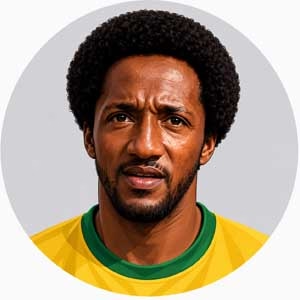
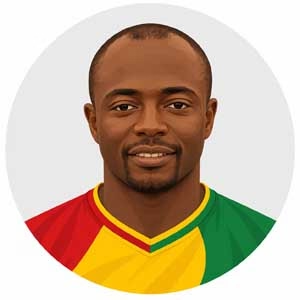
Ghana - Attacking MidfielderPelé, Abedi
Abedi Pelé
Street pitches in Dome, a suburb of Accra, earned an uncontainable teenage prodigy a nickname paying homage to the Brazilian King of Football before he had even set foot on a European training ground. Abedi Ayew, forever celebrated across the globe as Abedi Pelé, arrived in France to establish himself as the undisputed creative catalyst of Olympique de Marseille’s golden, turbulent era. Deployed as a free-roaming trequartista, second striker, or inverted winger under Raymond Goethals, he combined explosive hip flexibility with velcro-like close control, slaloming through congested midfield corridors with sudden changes of direction. He picked defensive lines apart with disguise passes, drawing double-teams before releasing runners into wide channels. Between 1989 and 1993 at the Stade Vélodrome, he claimed three consecutive Division 1 titles and orchestrated the 1992–93 UEFA Champions League triumph against AC Milan—famously whipping in the match-winning corner for Basile Boli's header and earning Man of the Match honors. Crowned African Footballer of the Year three consecutive times (1991, 1992, 1993), he captained Ghana across 73 caps and 19 goals, lifting the 1982 Africa Cup of Nations at just seventeen and dragging the Black Stars to the 1992 AFCON final.
That sparkling attacking output, however, coexisted with classic positional vulnerabilities. Abedi offered virtually zero contribution to defensive tracking or mid-block containment, forcing teammates like Didier Deschamps and Jean Tigana to shoulder the collective ball-winning burden. In matches where intense, physical midfields denied him turning space on the half-turn, his high-risk dribbling could result in dangerous turnovers in the central third, and his temper occasionally flared when man-markers subjected him to systematic, cynical fouling.
Charismatic, fiercely proud, and driven by an intense desire to elevate African football onto the global stage, Abedi played with pure competitive swagger. Hostile away crowds and aggressive defensive hacks never subdued his spirit; he embraced high-voltage European knockout ties with the joyful defiance of a playground virtuoso. On the pitch, his body language was expressive and commanding, demanding the ball in tight pockets and gesturing runners forward with sharp urgency. Inside the Marseille and Ghanaian locker rooms, he was an untouchable leader and cultural icon, earning the absolute respect of tempestuous stars like Chris Waddle and Rudi Völler. Match officials encountered an intense, vocal competitor who vigorously contested rough challenges, cementing an eternal legacy as the trailblazing pioneer and greatest Ghanaian playmaker in football history.


 All-Time AfricaAfrica