We use Google Analytics to understand how visitors use this site. Analytics cookies are only activated with your consent. For details, read our Privacy Policy.
Profile lensThe same player, read from a different angle.
Athletic79
Acceleration
75
Pace
76
Agility
73
Strength
85
Balance
82
Jumping
80
Stamina
81
Fitness
80
Technical83
Dribbling
81
Short Passing
83
Long Passing
77
Finishing
88
Shot Accuracy
83
Shot Power
82
Shooting Technique
87
Heading
86
Tackling
52
Crossing
73
Free Kick
77
Penalties
88
First Touch
84
Mental81
Composure
86
Aggression
75
Consistency
77
Creativity
76
Leadership
76
Work Rate
84
Tactical84
Vision
78
Off the Ball
89
Defensive Positioning
52
Teamwork
86
Anticipation
86
Marking
48
Attacking84
Crossing
73
Finishing
88
Heading Accuracy
86
Shot Accuracy
83
Off the Ball
89
Technique82
Dribbling
81
Free Kick
77
Short Passing
83
Long Passing
77
First Touch
84
Shot Technique
87
Movement77
Acceleration
75
Pace
76
Agility
73
Balance
82
Physicality82
Shot Power
82
Jumping
80
Stamina
81
Strength
85
Fitness
80
Defending51
Marking
48
Tackling
52
Def. Positioning
52
Mentality & Game Reading81
Aggression
75
Composure
86
Penalties
88
Vision
78
Leadership
76
Work Rate
84
Teamwork
86
Anticipation
86
Consistency
77
Creativity
76
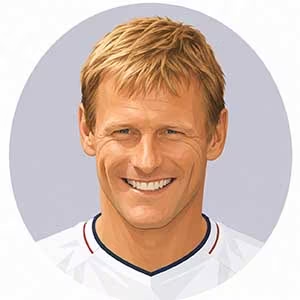
England - StrikerSheringham, Teddy
Teddy Sheringham was a centre-forward who played as if he had been given tomorrow’s newspaper before kick-off. He was never quick, never explosive, and absolutely not the striker you sent into space hoping for a sprinting miracle. His genius lived elsewhere: first touch, disguise, timing, layoffs, calm finishing and that extraordinary ability to connect attacks before defenders understood where the danger had moved. At Tottenham he was the elegant reference point, at Manchester United he became the veteran who still knew exactly how to hurt a match, including the 1999 Champions League final, where subtle players apparently also enjoy writing history with a sledgehammer. For England, too, he offered intelligence rather than noise, often making others more dangerous around him. A slow forward only on paper, Sheringham was mentally two steps ahead, and that is usually the step that matters.