We use Google Analytics to understand how visitors use this site. Analytics cookies are only activated with your consent. For details, read our Privacy Policy.
Profile lensThe same player, read from a different angle.
Athletic83
Acceleration
88
Pace
83
Agility
86
Strength
76
Balance
82
Jumping
85
Stamina
82
Fitness
85
Technical83
Dribbling
80
Short Passing
72
Long Passing
68
Finishing
91
Shot Accuracy
88
Shot Power
88
Shooting Technique
95
Heading
90
Tackling
40
Crossing
72
Free Kick
78
Penalties
82
First Touch
78
Mental84
Composure
85
Aggression
86
Consistency
86
Creativity
73
Leadership
82
Work Rate
82
Tactical83
Vision
74
Off the Ball
90
Defensive Positioning
33
Teamwork
76
Anticipation
91
Marking
38
Player Traits
Attacking86
Crossing
72
Finishing
91
Heading Accuracy
90
Shot Accuracy
88
Off the Ball
90
Technique79
Dribbling
80
Free Kick
78
Short Passing
72
Long Passing
68
First Touch
78
Shot Technique
95
Movement85
Acceleration
88
Pace
83
Agility
86
Balance
82
Physicality83
Shot Power
88
Jumping
85
Stamina
82
Strength
76
Fitness
85
Defending37
Marking
38
Tackling
40
Def. Positioning
33
Mentality & Game Reading82
Aggression
86
Composure
85
Penalties
82
Vision
74
Leadership
82
Work Rate
82
Teamwork
76
Anticipation
91
Consistency
86
Creativity
73
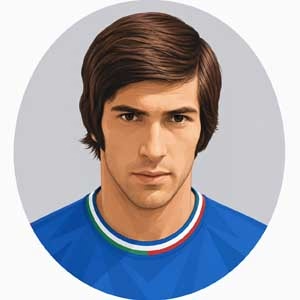
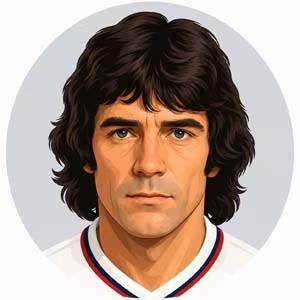
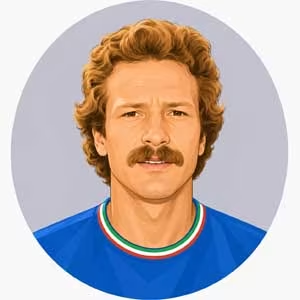
Italy - StrikerPulici, Paolo
A feral, acrobatic diving header launched six inches off the muddy turf of the Stadio Comunale to beat the goalkeeper amidst a flying thicket of opposing boots captured the fearless, primal soul of a warrior from Roncello who became the eternal idol of Il Toro. Paolo Pulici—canonized forever across the terraces of Turin as Paolino or Puliciclone for the sheer, whirlwind physical violence of his play—was the ultimate explosive, gladiatorial center-forward: a muscular force of nature who combined lethal finishing off either foot with ferocious aerial elevation and an unyielding, street-fighting hunger for the goal.
Pulici was a relentless direct predator whose movement inside the eighteen-yard box was pure kinetic fury. Blessed with a low center of gravity, extraordinary upper-body strength that allowed him to physically bully towering stoppers, and a thunderous first-time strike, he turned every loose ball inside the penalty area into a life-or-death contest. As the talismanic spearhead and emotional engine of Torino FC between 1967 and 1982, he scored 172 goals in 437 appearances—becoming the all-time leading goalscorer in the club’s post-Superga history. Forming the legendary I Gemelli del Gol (The Goal Twins) partnership alongside Francesco Graziani, he drove Torino to their historic, emotional 1975–76 Scudetto triumph—the club’s first league title since the Superga air disaster—and the 1970–71 Coppa Italia, while winning the Serie A Capocannoniere top-scorer crown three times (1972–73, 1974–75, 1975–76). He later concluded his career with spells at Udinese and Fiorentina. For Italy, across 19 caps and five goals, his international opportunities were famously constrained by tactical conservatism and internal competition, though he was part of the Azzurri squads at both the 1974 and 1978 World Cups.
That violent, high-friction style, however, carried natural technical and structural trade-offs. Pulici was an unapologetic penalty-box finisher and channel-runner rather than a refined playmaker who dropped deep into midfield to orchestrate possession through delicate passing triangles; his passing in tight, conservative buildup was functional and purely designed to set up return passes. When isolated against ultra-cautious defensive low blocks that denied him service from wide channels and doubled him physically in the air, his involvement in open-play circulation could look peripheral.
Fierce, unvarnished, and carrying the unyielding blue-collar pride of the Granata faithful, Pulici played with an electric, passionate rage that made him an immortal folk hero. He had zero vanity, diving into flying studs, colliding with goalposts, and battling through physical pain without a second thought because he felt the weight of Torino’s tragic history as a personal sacred mission. On the pitch, his body language was a spectacle of raw, combative energy: snarling at markers, contesting every ball with total disregard for personal safety, and celebrating clutch derby goals with wild, roaring sprints toward the Curva Maratona. Inside the locker room, he was an adored, intensely loyal brother-in-arms whose courage, explosive goalscoring, and unshakeable connection to the soul of the club cemented an immortal legacy as the defining symbol of Torino's modern pride and fighting spirit.