We use Google Analytics to understand how visitors use this site. Analytics cookies are only activated with your consent. For details, read our Privacy Policy.
Profile lensThe same player, read from a different angle.
Athletic77
Acceleration
69
Pace
66
Agility
79
Strength
84
Balance
82
Jumping
86
Stamina
63
Fitness
85
Technical43
Dribbling
53
Short Passing
54
Long Passing
55
Shot Accuracy
44
Shot Power
77
Shooting Technique
44
Heading
50
Free Kick
45
Penalties
45
First Touch
52
Mental88
Composure
85
Consistency
92
Leadership
88
Goalkeeping91
Reflexes
97
Positioning
91
Handling
87
Kicking
87
Goalkeeping91
Reflexes
97
Positioning
91
Handling
87
Kicking
87
Attacking47
Heading Accuracy
50
Shot Accuracy
44
Technique51
Dribbling
53
Free Kick
45
Short Passing
54
Long Passing
55
First Touch
52
Shot Technique
44
Physicality79
Shot Power
77
Jumping
86
Stamina
63
Strength
84
Fitness
85
Movement74
Acceleration
69
Pace
66
Agility
79
Balance
82
Mentality & Game Reading78
Composure
85
Penalties
45
Leadership
88
Consistency
92
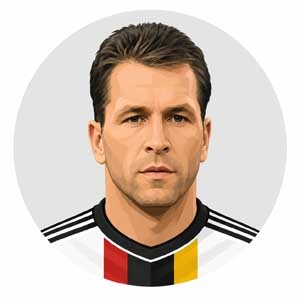
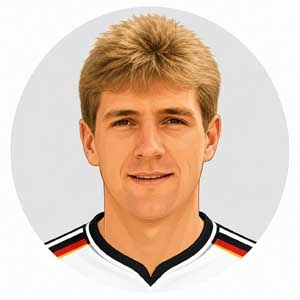
Germany - GoalkeeperKöpke, Andreas
The feverish atmosphere of Wembley Stadium on June 26, 1996, reached its climax when a razor-sharp German shot-stopper dove full-length to his right in sudden death to push away Gareth Southgate’s penalty, propelling Germany into the final of Euro '96. Andreas Köpke was the unflappable, hyper-concentrated goalkeeping rock who stepped out from the massive historical shadow of Bodo Illgner to dominate the European stage. Operating with textbook positional discipline, lightning-fast lateral reactions, and safe, sticky hands on wet surfaces, Köpke was a master of making difficult saves look remarkably straightforward. He built his domestic reputation across 375 Bundesliga matches with 1. FC Nürnberg and Eintracht Frankfurt before a standout spell at Olympique de Marseille, winning the IFFHS World's Best Goalkeeper award and German Footballer of the Year in 1996. Across 59 caps for Germany, his international apex arrived at Euro '96 in England, where he conceded just three goals in six matches, saved a crucial Gianfranco Zola penalty in the group stage, and backstopped Die Mannschaft to the continental championship.
Yet Köpke’s traditional, penalty-box-centric profile had its era-bound limitations. Standing six feet tall, he lacked the towering aerial reach of a Peter Schmeichel, occasionally requiring strong physical protection from stoppers like Jürgen Kohler and Thomas Helmer when defending crowded six-yard boxes on high inswingers. Furthermore, he was an orthodox goal-line guardian rather than an adventurous sweeper-keeper, keeping his positioning conservative and relying on long, pragmatic drop-kicks under back-pass pressure.
Quiet, disciplined, and possessing absolute psychological composure, Köpke was the definitive picture of German efficiency under pressure. He never indulged in erratic, theatrical outbursts or hysterical reprimands toward his back four, resetting his defensive shape with calm, focused instructions. On the pitch, his body language was steady and reassuring, narrowing shooting angles with rapid, measured footwork that forced strikers into rushed attempts. Inside the German national team and club dressing rooms, he was a universally respected elder statesman whose quiet dignity and immaculate training standards earned the total trust of Berti Vogts and his teammates, cementing an enduring legacy as one of the most clutch, dependable, and technically pure goalkeepers of the 1990s.