We use Google Analytics to understand how visitors use this site. Analytics cookies are only activated with your consent. For details, read our Privacy Policy.
Profile lensThe same player, read from a different angle.
Athletic80
Acceleration
79
Pace
83
Agility
77
Strength
83
Balance
77
Jumping
74
Stamina
87
Fitness
83
Technical78
Dribbling
81
Short Passing
76
Long Passing
78
Finishing
72
Shot Accuracy
74
Shot Power
85
Shooting Technique
78
Heading
75
Tackling
73
Crossing
85
Free Kick
85
Penalties
78
First Touch
82
Mental80
Composure
82
Aggression
76
Consistency
77
Creativity
72
Leadership
81
Work Rate
84
Tactical78
Vision
81
Off the Ball
78
Defensive Positioning
70
Teamwork
82
Anticipation
83
Marking
71
Attacking77
Crossing
85
Finishing
72
Heading Accuracy
75
Shot Accuracy
74
Off the Ball
78
Technique80
Dribbling
81
Free Kick
85
Short Passing
76
Long Passing
78
First Touch
82
Shot Technique
78
Movement79
Acceleration
79
Pace
83
Agility
77
Balance
77
Physicality82
Shot Power
85
Jumping
74
Stamina
87
Strength
83
Fitness
83
Defending71
Marking
71
Tackling
73
Def. Positioning
70
Mentality & Game Reading80
Aggression
76
Composure
82
Penalties
78
Vision
81
Leadership
81
Work Rate
84
Teamwork
82
Anticipation
83
Consistency
77
Creativity
72
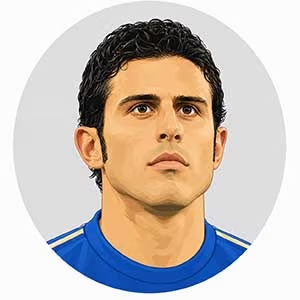
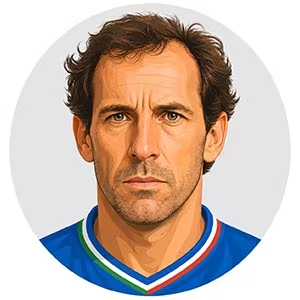
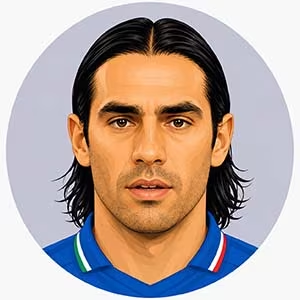
Italy - Left BackGrosso, Fabio
The unheralded archetypal late bloomer whose career trajectory defied conventional footballing logic, Fabio Grosso transformed from an obscure lower-league attacking midfielder into the ultimate, ice-cold protagonist of Italy’s 2006 World Cup triumph. Developing his foundational technical instincts in the Italian fourth and fifth tiers with Renato Curi and Chieti before Serse Cosmi converted him into a left-back at Perugia, Grosso combined an imposing, six-foot-three frame with the fluid, languid touch of a classic playmaker. Lacking explosive burst acceleration, he compensated with deceptive stride length, intelligent overlapping timing, and a cultured left foot capable of delivering whipped, pinpoint crosses from the byline. Following a breakout spell in Francesco Guidolin’s vibrant Palermo side, he secured a move to Inter Milan and later claimed domestic league titles with Olympique Lyonnais and Juventus. Yet, his club longevity was ultimately overshadowed by six unforgettable summer weeks in Germany under Marcello Lippi: winning the stoppage-time penalty against Australia in the round of 16, curling in the sublime 119th-minute extra-time winner against the hosts in Dortmund, and burying the decisive, tournament-winning fifth spot-kick in the Berlin final against France. Mentally and emotionally, Grosso was an understated, remarkably grounded professional who approached his sudden elevation into sporting immortality with absolute humility and a serene, almost detached emotional clarity. Unlike more volatile, theatrical full-backs of his era, he never allowed ego or erratic temper to disrupt his tactical discipline, playing with the quiet gratitude of someone who had spent his early twenties riding battered team buses across Serie C2. On the pitch, his demeanor was calm and composed; he rarely engaged in heated altercations or aggressive histrionics, channeling his energy into patient wide containment and clinical execution in the final third. When thrust into the most suffocating, career-defining psychological crucibles imaginable—stepping up to take the penalty that would decide a World Cup final in front of tens of millions—his nervous system was built of ice, converting high-stakes moments with astonishing self-belief. In the dressing room, he was a universally well-liked, low-maintenance teammate whose quiet professionalism and good-natured warmth made him a beloved figure across Perugia, Palermo, Lyon, and Turin. Toward match officials and opponents, Grosso maintained an honorable, respectful standard: avoiding cynical off-the-ball antics and petulant dissent, leaving an immortal legacy as the humble, clutch hero who authored the most euphoric fairytale in modern Italian football history.