We use Google Analytics to understand how visitors use this site. Analytics cookies are only activated with your consent. For details, read our Privacy Policy.
Profile lensThe same player, read from a different angle.
Athletic75
Acceleration
70
Pace
66
Agility
76
Strength
82
Balance
77
Jumping
83
Stamina
62
Fitness
80
Technical43
Dribbling
52
Short Passing
55
Long Passing
56
Shot Accuracy
44
Shot Power
74
Shooting Technique
44
Heading
45
Free Kick
45
Penalties
45
First Touch
55
Mental77
Composure
80
Consistency
75
Leadership
70
Goalkeeping87
Reflexes
93
Positioning
86
Handling
85
Kicking
84
Goalkeeping87
Reflexes
93
Positioning
86
Handling
85
Kicking
84
Attacking45
Heading Accuracy
45
Shot Accuracy
44
Technique51
Dribbling
52
Free Kick
45
Short Passing
55
Long Passing
56
First Touch
55
Shot Technique
44
Physicality76
Shot Power
74
Jumping
83
Stamina
62
Strength
82
Fitness
80
Movement72
Acceleration
70
Pace
66
Agility
76
Balance
77
Mentality & Game Reading68
Composure
80
Penalties
45
Leadership
70
Consistency
75
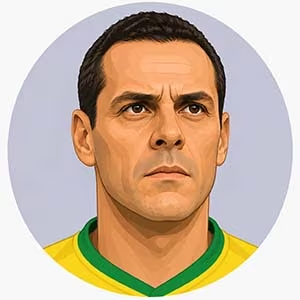
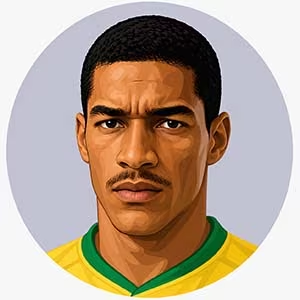
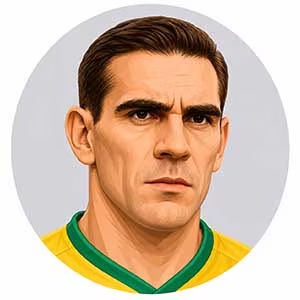
Brazil - GoalkeeperFélix
Félix Miéli Venerando was the agile, reactive goalkeeper of Mário Zagallo’s legendary 1970 Brazil side and the defensive foundation of Fluminense’s Máquina Tricolor. Standing five-foot-nine with a slender frame, O Gato (The Cat) relied on cat-like reflexes on the goal line, rapid lateral repositioning, and brave low dives directly at the feet of onrushing forwards. Across nearly four hundred appearances for Fluminense between 1968 and 1978, he won five Campeonato Carioca titles and the 1970 Torneio Roberto Gomes Pedrosa, following an earlier standout decade with Portuguesa. For Brazil, across 39 caps, his international zenith was absolute, playing all six matches in Mexico 1970—producing a string of vital, acrobatic point-blank saves against England, Uruguay, and Italy to silence his critics.
His compact physical stature, however, created inescapable aerial vulnerabilities. Lacking the physical height and muscular bulk of contemporary European shot-stoppers, Félix struggled to dominate the six-yard box on high, curving crosses through crowded traffic, often relying on his central defenders like Piazza and Brito to provide aerial shielding. Furthermore, his handling in wet, skidding conditions could occasionally be erratic, choosing to parry or punch balls rather than catching them cleanly.
Stoic, resilient, and possessing an unbreakable mental fortitude, Félix absorbed relentless media criticism with quiet dignity. He knew that in a team containing Pelé, Jairzinho, Tostão, Gérson, and Rivelino, any conceded goal would be laid squarely at his feet, yet he never buckled under the immense psychological weight. On the pitch, his body language was alert, kinetic, and focused: adjusting his angles constantly and directing his back four with sharp, unhurried calls. Inside the 1970 Seleção dressing room, he was an indispensable, calming veteran presence whose humor, professionalism, and quiet courage earned the total trust of Zagallo and Pelé. Match officials respected his clean, honest sportsmanship, leaving an enduring legacy as the agile, triumphant guardian behind football’s greatest masterpiece.