We use Google Analytics to understand how visitors use this site. Analytics cookies are only activated with your consent. For details, read our Privacy Policy.
Profile lensThe same player, read from a different angle.
Athletic78
Acceleration
73
Pace
70
Agility
81
Strength
80
Balance
78
Jumping
89
Stamina
61
Fitness
92
Technical43
Dribbling
51
Short Passing
54
Long Passing
58
Shot Accuracy
44
Shot Power
72
Shooting Technique
42
Heading
48
Free Kick
46
Penalties
44
First Touch
55
Mental89
Composure
88
Consistency
90
Leadership
87
Goalkeeping88
Reflexes
91
Positioning
88
Handling
87
Kicking
86
Goalkeeping88
Reflexes
91
Positioning
88
Handling
87
Kicking
86
Attacking46
Heading Accuracy
48
Shot Accuracy
44
Technique51
Dribbling
51
Free Kick
46
Short Passing
54
Long Passing
58
First Touch
55
Shot Technique
42
Physicality79
Shot Power
72
Jumping
89
Stamina
61
Strength
80
Fitness
92
Movement76
Acceleration
73
Pace
70
Agility
81
Balance
78
Mentality & Game Reading77
Composure
88
Penalties
44
Leadership
87
Consistency
90
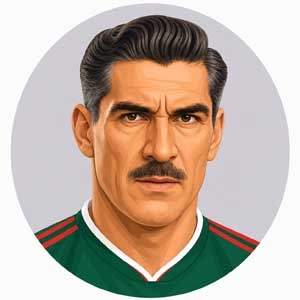
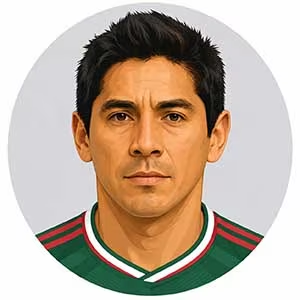
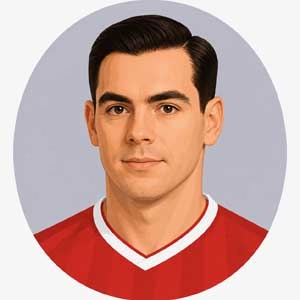
Mexico - GoalkeeperCarbajal, Antonio
A heroic twenty-year international marathon spanning five consecutive FIFA World Cup tournaments (1950, 1954, 1958, 1962, 1966) made an unyielding shot-stopper from Mexico City the original global benchmark for athletic longevity. Antonio Félix Carbajal Rodríguez—immortalized across world football as El Cinco Copas (The Five Cups)—was the legendary guardian and moral spine of Mexican football during its formative international era. Operating with exceptional bravery on low dives, outstanding positional anticipation, and soft hands without the luxury of modern padded goalkeeping gloves, Carbajal made his domestic legend across 364 league appearances for Club León between 1950 and 1966, lifting two Mexican Primera División titles (1951–52, 1955–56) and the 1958 Copa México. For Mexico, across 48 official caps, he captained El Tri across fifteen World Cup finals matches, famously keeping a clean sheet in his farewell World Cup appearance against Uruguay at Wembley Stadium in 1966 at the age of 37.
Yet Carbajal’s international journey was naturally defined by the harsh competitive realities of facing world-class global dynasties in an era when Mexico was an emerging footballing nation. Constantly subjected to heavy shooting sieges from Pelé’s Brazil, Ferenc Puskás’s Hungary, and Raymond Kopa’s France, Carbajal conceded 25 goals across his five tournaments. Tactically, he was an orthodox goal-line custodian whose sweeping range outside the box was conservative, and playing out from the back with his feet under heavy pressing was entirely absent from his tactical repertoire.
Noble, intensely disciplined, and governed by an unshakeable sense of national duty, Carbajal approached goalkeeping as a sacred calling. He never complained about playing behind outmatched defensive units, taking immense personal pride in throwing his body into the mud to block point-blank strikes from the greatest attackers on the planet. On the pitch, his presence was commanding and paternal: organizing his back four with steady, booming instructions and refusing to show pain even when battling broken fingers and torn muscles. Inside the León and Mexican dressing rooms, he was an untouchable, revered patriarch whose strict work ethic and monastic lifestyle set the standard for Mexican football for decades. Match officials respected his spotless sporting dignity, leaving behind an immortal legacy as the trailblazing pioneer and greatest goalkeeper in Mexican football history.