We use Google Analytics to understand how visitors use this site. Analytics cookies are only activated with your consent. For details, read our Privacy Policy.
Profile lensThe same player, read from a different angle.
Athletic79
Acceleration
72
Pace
74
Agility
72
Strength
86
Balance
83
Jumping
85
Stamina
80
Fitness
78
Technical74
Dribbling
73
Short Passing
68
Long Passing
63
Finishing
52
Shot Accuracy
60
Shot Power
80
Shooting Technique
65
Heading
85
Tackling
89
Crossing
57
Free Kick
66
Penalties
63
First Touch
72
Mental80
Composure
82
Aggression
88
Consistency
78
Creativity
61
Leadership
80
Work Rate
82
Tactical78
Vision
69
Off the Ball
58
Defensive Positioning
85
Teamwork
74
Anticipation
81
Marking
85
Player Traits
Attacking62
Crossing
57
Finishing
52
Heading Accuracy
85
Shot Accuracy
60
Off the Ball
58
Technique68
Dribbling
73
Free Kick
66
Short Passing
68
Long Passing
63
First Touch
72
Shot Technique
65
Movement75
Acceleration
72
Pace
74
Agility
72
Balance
83
Physicality82
Shot Power
80
Jumping
85
Stamina
80
Strength
86
Fitness
78
Defending86
Marking
85
Tackling
89
Def. Positioning
85
Mentality & Game Reading76
Aggression
88
Composure
82
Penalties
63
Vision
69
Leadership
80
Work Rate
82
Teamwork
74
Anticipation
81
Consistency
78
Creativity
61
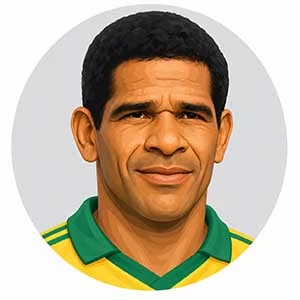
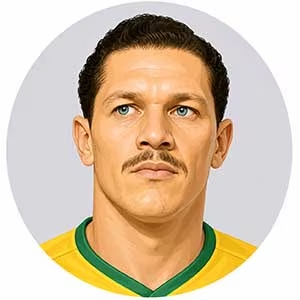
Brazil - Centre-backBrito
A sculpted, gladiatorial physique and an unyielding warrior's glare turned a towering defender from Rio de Janeiro into the most feared physical enforcer of South American football throughout the 1960s and 1970s. Hércules de Brito Ruas was the bruising, man-marking defensive powerhouse who supplied the raw muscle and aerial supremacy behind Brazil’s 1970 World Cup conquest. Standing over six-foot-one with immense upper-body strength, an exceptional vertical leap, and bone-jarring tackling power, Brito was a master of the physical duel: suffocating world-class forwards through relentless close-contact marking, clearing dangerous crosses with thunderous headers, and protecting his penalty box with uncompromising aggression. Across a storied domestic career spanning Vasco da Gama (where he won three Torneio Rio-São Paulo titles), Botafogo, Flamengo, Cruzeiro, and Corinthians, he was widely regarded as the ultimate physical specimen, famously winning fitness and conditioning tests across every squad he joined. For Brazil, across 45 caps between 1964 and 1972, he started at the 1966 World Cup in England before playing every single minute of the triumphant 1970 campaign in Mexico.
Yet Brito’s ferocious, destructive style walked a permanent tightrope with disciplinary and technical limitations. He was an orthodox defensive stopper rather than an elegant distributor; his passing was strictly pragmatic clearances, and his technical execution under high-intensity pressing was rudimentary. Furthermore, his fiery, combative temperament occasionally resulted in explosive confrontations with opponents, referees, and club directors—culminating in a infamous suspension for striking a referee in 1971 that accelerated his departure from Botafogo.
Fierce, outspoken, and possessing an unbending competitive pride, Brito approached defending as gladiatorial warfare. He relished physical intimidation: staring down opposing strikers in the tunnel, delivering bruising body checks on the opening play, and screaming tactical orders to maintain defensive intensity. On the pitch, his presence was imposing and fearless, throwing his body into flying boots without a shred of hesitation. Inside the 1970 Seleção dressing room, he was an indispensable emotional sparkplug and physical shield—the enforcer who ensured that artistic virtuosos like Pelé, Tostão, and Rivelino were never physically bullied by cynical opponents, leaving behind an immortal legacy as the definitive, hard-hitting defensive warrior of Brazil's golden era.