We use Google Analytics to understand how visitors use this site. Analytics cookies are only activated with your consent. For details, read our Privacy Policy.
Profile lensThe same player, read from a different angle.
Athletic81
Acceleration
75
Pace
76
Agility
77
Strength
86
Balance
82
Jumping
86
Stamina
80
Fitness
88
Technical76
Dribbling
71
Short Passing
74
Long Passing
72
Finishing
50
Shot Accuracy
52
Shot Power
81
Shooting Technique
64
Heading
86
Tackling
89
Crossing
67
Free Kick
52
Penalties
57
First Touch
72
Mental86
Composure
88
Aggression
86
Consistency
82
Creativity
68
Leadership
90
Work Rate
90
Tactical81
Vision
70
Off the Ball
54
Defensive Positioning
87
Teamwork
78
Anticipation
85
Marking
89
Player Traits
Attacking62
Crossing
67
Finishing
50
Heading Accuracy
86
Shot Accuracy
52
Off the Ball
54
Technique68
Dribbling
71
Free Kick
52
Short Passing
74
Long Passing
72
First Touch
72
Shot Technique
64
Movement78
Acceleration
75
Pace
76
Agility
77
Balance
82
Physicality84
Shot Power
81
Jumping
86
Stamina
80
Strength
86
Fitness
88
Defending88
Marking
89
Tackling
89
Def. Positioning
87
Mentality & Game Reading79
Aggression
86
Composure
88
Penalties
57
Vision
70
Leadership
90
Work Rate
90
Teamwork
78
Anticipation
85
Consistency
82
Creativity
68
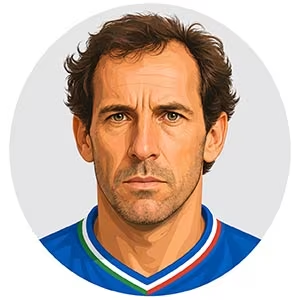
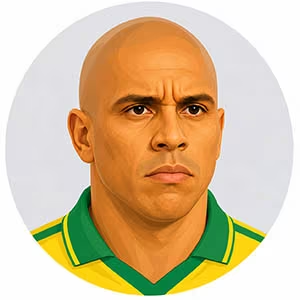
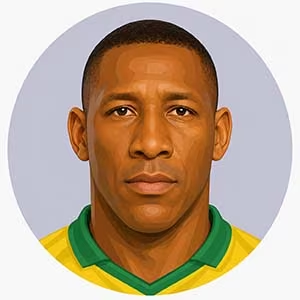
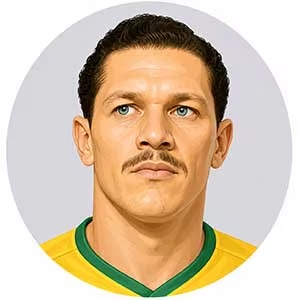
Brazil - Centre-backBellini, Hilderaldo
Statuesque physical presence, ruthless aerial dominance, and an unbending sense of territorial defense established Hideraldo Luís Bellini as the foundational captain of Brazil's golden era. Breaking through at Vasco da Gama during the golden twilight of the Expresso da Vitória, Bellini formed an impassable central barrier alongside Orlando Peçanha throughout the 1950s, winning three Campeonato Carioca titles and the 1957 Torneio Rio-São Paulo before later stabilizing the defenses of São Paulo and Atlético Paranaense. Standing nearly six feet tall with broad, square shoulders and exceptional upper-body leverage, he was an old-school zagueiro central: uncompromising in 50-50 challenges, dominant on high balls inside the penalty area, and solely dedicated to eliminating danger rather than over-elaborating in possession. His definitive historical moment occurred at the 1958 World Cup in Sweden, where, as captain across 51 caps for the Seleção, he anchored a defensive unit that did not concede a single goal until the semi-finals; upon receiving the Jules Rimet trophy, Bellini hoisted it high above his head with two hands to satisfy the photographers—inventing an iconic sporting gesture that became the global standard for celebrating champions.
Uncompromising dignity, stoic courage, and a natural paternal authority defined Bellini’s persona on and off the pitch. He was the undisputed moral bedrock of Vicente Feola’s squad, serving as the steady, protective shield that allowed teenage prodigies like Pelé and volatile artists like Garrincha to express their genius without fear or distraction. In hostile away grounds across South America, his pulse remained remarkably steady; he led through fierce eye contact, unwavering physical commitment, and disciplined positioning rather than frantic screaming or cheap histrionics. Inside the locker room, he commanded absolute respect through his monastic lifestyle and spotless work ethic, setting an unbreakable standard of physical conditioning for his teammates. When opposing center-forwards attempted to intimidate Brazil’s backline through brutal physical friction, Bellini met force with immovable force, absorbing violent challenges without flinching or seeking retaliatory revenge. Toward match officials and opponents, he was a severe, hard, but fundamentally honorable warrior, leaving behind an immortal legacy as the heroic captain who transformed Brazil from tragic underachievers into confident world champions.



 All-Time 1950s1950s