
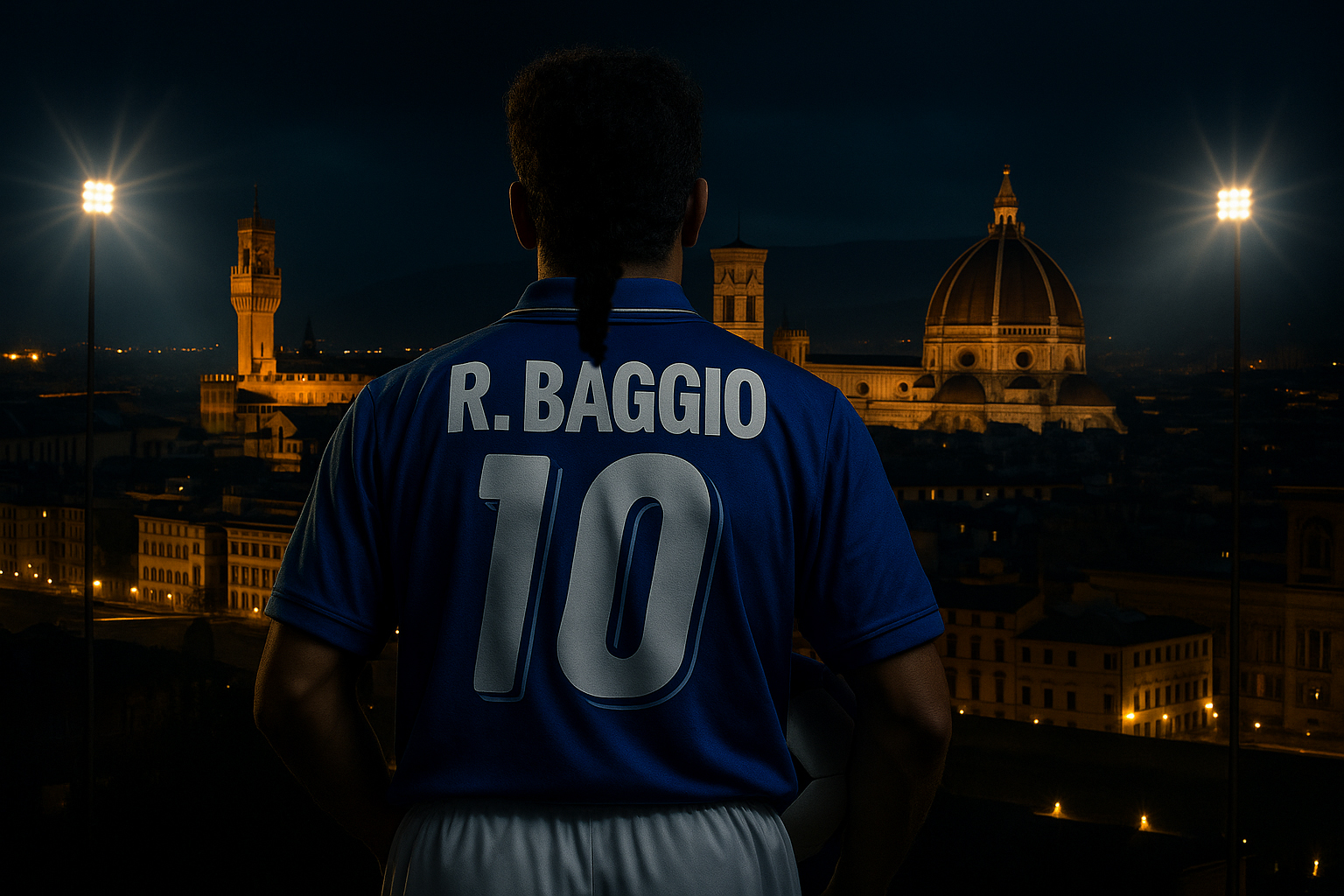
Football is a cultural phenomenon. And like all cultural phenomena, it is nothing more than a mirror of the society that plays it, reflecting a nation's values, historical experiences, and collective mentality.
Italy, with its incredible and turbulent millennia-long history of invasions, foreign dominations, and struggles for independence, has inevitably shaped a mentality that has been transposed onto the football pitch. The country's long history of being invaded — by the Goths, Normans, Arabs, and French, among many others — taught Italians the art of resistance and defense. It is no coincidence, then, that the Italian national team has built its identity on the principle of "defend first, then strike."
Just as in the Middle Ages and the Renaissance, Italian city-states relied on solid defensive walls — both literally and metaphorically — for survival, so too has the Italian national team built its international success on an unshakable defensive foundation. The famous catenaccio, which dominated Italian football for decades, was not merely about parking the bus. It was a highly sophisticated system, based on perfect organization and tactical intelligence, designed to make the opponent play on Italy's terms.
Legends like Paolo Maldini, Franco Baresi, Gaetano Scirea, and Claudio Gentile were not just exceptional defenders — they were on-field strategists, capable of reading the game at lightning speed, anticipating every move, and leading the defensive line with a Garibaldian spirit.
Italy has rarely produced flamboyant strikers, but it has consistently produced highly efficient ones. Paolo Rossi and Filippo Inzaghi embody this philosophy. Both possessed a rare instinct for goalscoring — a cunning and opportunism that reflects the Italian mentality, a nation that has had to adapt, make the most of limited resources, and exploit every opportunity to its advantage.
Paolo Rossi, the top scorer of the 1982 World Cup, had a supernatural ability to be in the right place at the right time. Filippo Inzaghi, on the other hand, lived permanently on the edge of the offside line, turning even a half-chance into a goal.
Yet, Italy is not just about defense and opportunistic strikers. It is also a land of creativity, artistry, and visionaries. The Renaissance was a cultural explosion that placed human intellect and creativity at the center of the universe — a movement that celebrated ingenuity, art, science, and the freedom of thought.
This same cultural heritage explains why, despite its defensive tradition, Italy has been a cradle of fantasy players, the "number 10s" who have enchanted the world with their brilliance. Consider the contrast with England: unlike Italy, England never truly experienced a Renaissance in the same way. The direct transition from the Middle Ages to the Industrial Revolution fostered a pragmatic, mechanical approach to football, where physicality and athleticism were prioritized over improvisation and creativity.
These players are proof that football, when nurtured by a culture that values intellect and artistry, can produce talent that transcends the game itself.
There is an apparent paradox in the idea that a country with such a deep-rooted defensive tradition has also produced some of the most creative players in history. But this paradox disappears when we acknowledge the influence of the Renaissance on the Italian mindset.
Football in Italy has never been just about physicality or tactical discipline. It has also been, and perhaps above all, a form of artistic expression — a canvas for individual ingenuity. Even in moments when an Italian team sits deep in defense, there is always room for a stroke of genius, a moment of inspiration that changes the course of a match.