We use Google Analytics to understand how visitors use this site. Analytics cookies are only activated with your consent. For details, read our Privacy Policy.
Profile lensThe same player, read from a different angle.
Athletic77
Acceleration
68
Pace
67
Agility
85
Strength
84
Balance
82
Jumping
88
Stamina
67
Fitness
76
Technical43
Dribbling
49
Short Passing
52
Long Passing
55
Shot Accuracy
44
Shot Power
78
Shooting Technique
42
Heading
47
Free Kick
45
Penalties
48
First Touch
56
Mental83
Composure
87
Consistency
77
Leadership
83
Goalkeeping90
Reflexes
95
Positioning
91
Handling
89
Kicking
85
Goalkeeping90
Reflexes
95
Positioning
91
Handling
89
Kicking
85
Attacking46
Heading Accuracy
47
Shot Accuracy
44
Technique50
Dribbling
49
Free Kick
45
Short Passing
52
Long Passing
55
First Touch
56
Shot Technique
42
Physicality79
Shot Power
78
Jumping
88
Stamina
67
Strength
84
Fitness
76
Movement76
Acceleration
68
Pace
67
Agility
85
Balance
82
Mentality & Game Reading74
Composure
87
Penalties
48
Leadership
83
Consistency
77
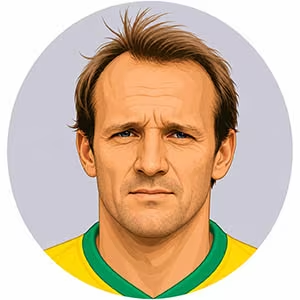
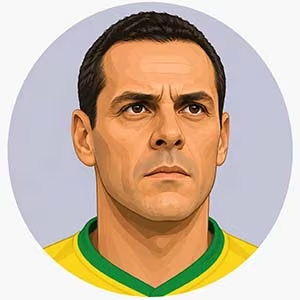
Brazil - GoalkeeperTaffarel, Cláudio
For decades, the Brazilian goalkeeper was historically viewed through a lens of skepticism and cultural prejudice—often treated as a necessary tactical liability behind dazzling forward lines—until Cláudio André Mergen Taffarel stepped into the international arena and dismantled that bias with quiet, structural reliability. Developed at Internacional before breaking European ground as the first foreign goalkeeper to play regularly in Serie A with Parma and Reggiana, Taffarel was not an explosive, showy acrobat in the mold of his South American peers. Standing at six feet tall, his technical baseline relied heavily on exceptional balance, short lateral footwork, and a disciplined positional geometry that eliminated the need for desperate, diving theatrics. He possessed secure, clean handling on low driven shots and a rare calmness on crosses, but his defining tactical attribute was his penalty-box psychology during shootouts: reading hip rotations, holding his ground until the absolute final microsecond, and springing with clean, decisive hand strength. An indispensable hero across 104 caps for Brazil spanning three World Cups (1990, 1994, 1998), Taffarel was the defensive rock of Carlos Alberto Parreira’s 1994 triumph in the United States—famously saving Daniele Massaro's spot-kick in the Pasadena final—and repeated his shootout heroics against the Netherlands in 1998, later securing cult status in Turkey by leading Galatasaray to the 2000 UEFA Cup. Psychologically, Taffarel was anchored by a deep Christian faith, an unshakeable inner serenity, and an extraordinary capacity to absorb national hysteria without letting it penetrate his emotional baseline. Carrying the weight of Brazil's complex, often cruel goalkeeping legacy, he never displayed self-pity or nervous agitation; instead, he treated the immense pressure of a World Cup penalty shootout with the calm detachment of routine training. On the pitch, his leadership was non-confrontational and soothing; rather than screaming at his central defenders like Aldair and Márcio Santos, he maintained constant, quiet eye contact and simple verbal cues that grounded the backline during tournament crises. In the dressing room, he was a universally adored figure—warm, deeply grounded, humble, and devoid of the vanity that often accompanied Brazilian superstars, acting as a crucial spiritual and emotional anchor for the squad. Toward referees and opposing strikers, Taffarel carried himself with immaculate gentlemanly dignity: he never engaged in trash talk, time-wasting theatrics, or cynical gamesmanship, letting his steady hands and icy nerves write a transformative chapter for Brazilian goalkeepers on the world stage.