We use Google Analytics to understand how visitors use this site. Analytics cookies are only activated with your consent. For details, read our Privacy Policy.
Profile lensThe same player, read from a different angle.
Athletic75
Acceleration
75
Pace
82
Agility
73
Strength
82
Balance
71
Jumping
73
Stamina
74
Fitness
72
Technical92
Dribbling
93
Short Passing
95
Long Passing
91
Finishing
89
Shot Accuracy
82
Shot Power
91
Shooting Technique
88
Heading
78
Tackling
54
Crossing
89
Free Kick
84
Penalties
91
First Touch
93
Mental84
Composure
90
Aggression
66
Consistency
73
Creativity
94
Leadership
88
Work Rate
83
Tactical86
Vision
93
Off the Ball
87
Defensive Positioning
60
Teamwork
88
Anticipation
74
Marking
33
Player Traits
Attacking85
Crossing
89
Finishing
89
Heading Accuracy
78
Shot Accuracy
82
Off the Ball
87
Technique91
Dribbling
93
Free Kick
84
Short Passing
95
Long Passing
91
First Touch
93
Shot Technique
88
Movement75
Acceleration
75
Pace
82
Agility
73
Balance
71
Physicality78
Shot Power
91
Jumping
73
Stamina
74
Strength
82
Fitness
72
Defending49
Marking
33
Tackling
54
Def. Positioning
60
Mentality & Game Reading84
Aggression
66
Composure
90
Penalties
91
Vision
93
Leadership
88
Work Rate
83
Teamwork
88
Anticipation
74
Consistency
73
Creativity
94
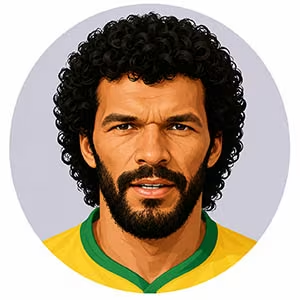
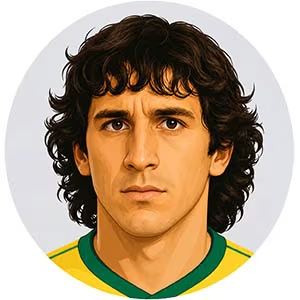
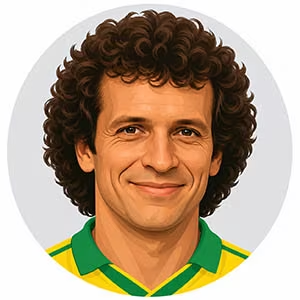
Brazil - Attacking MidfielderSócrates
Standing over six feet four inches tall with an elegant, upright posture, the doctor-turned-midfielder redefined spatial control and playmaking artistry for Corinthians and Brazil’s legendary 1982 World Cup team. Operating as a deep or central attacking playmaker, Sócrates governed match tempo not through sprinting speed, but through supernatural field vision, delicate touch execution, and his iconic, blind backheel passes that shredded compressed defensive blocks without requiring him to turn his body. His technical profile was purely cerebral: sublime first-time weight of pass, long-range shooting accuracy, and a cool penalty-taking technique that relied on a short, casual run-up to send goalkeepers the wrong way. On the pitch, Sócrates exercised a unique, highly intellectual leadership that transcended purely tactical matters, famously leading the Democracia Corinthiana movement where players collectively voted on club decisions, training schedules, and team lineups. Within the dressing room, he was an articulate, charismatic, and unpretentious figure who championed player freedom, treating his teammates as equals and maintaining a quiet, philosophical authority. Under high-stakes pressure, his emotional posture was completely detached and stoic; he operated with an ice-cold pulse, viewing football as an artistic and social expression rather than a life-or-death battle. Toward match officials, opponents, and club executives, Sócrates maintained an assertive, highly principled stance, fearlessly voicing political and administrative critiques while displaying flawless sportsmanship on the pitch, rarely engaging in cheap fouls or referee dissent. Treating physical training with a relaxed, unconventional attitude that prioritized mental balance over rigid athletic conditioning, he absorbed victories and defeats with stoic, philosophical calm, remaining an immortal, unconventional symbol of Brazilian football culture.