We use Google Analytics to understand how visitors use this site. Analytics cookies are only activated with your consent. For details, read our Privacy Policy.
Profile lensThe same player, read from a different angle.
Athletic78
Acceleration
82
Pace
81
Agility
81
Strength
77
Balance
74
Jumping
72
Stamina
76
Fitness
81
Technical84
Dribbling
85
Short Passing
77
Long Passing
82
Finishing
91
Shot Accuracy
90
Shot Power
93
Shooting Technique
79
Heading
66
Tackling
35
Crossing
80
Free Kick
80
Penalties
85
First Touch
85
Mental78
Composure
87
Aggression
76
Consistency
74
Creativity
76
Leadership
74
Work Rate
76
Tactical73
Vision
75
Off the Ball
88
Defensive Positioning
35
Teamwork
65
Anticipation
73
Marking
33
Player Traits
Attacking83
Crossing
80
Finishing
91
Heading Accuracy
66
Shot Accuracy
90
Off the Ball
88
Technique81
Dribbling
85
Free Kick
80
Short Passing
77
Long Passing
82
First Touch
85
Shot Technique
79
Movement80
Acceleration
82
Pace
81
Agility
81
Balance
74
Physicality80
Shot Power
93
Jumping
72
Stamina
76
Strength
77
Fitness
81
Defending34
Marking
33
Tackling
35
Def. Positioning
35
Mentality & Game Reading76
Aggression
76
Composure
87
Penalties
85
Vision
75
Leadership
74
Work Rate
76
Teamwork
65
Anticipation
73
Consistency
74
Creativity
76
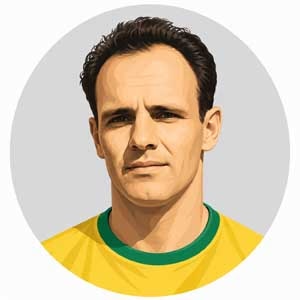
Brazil - Left WingerPepe, José Macia
Pelé once quipped that he would have scored hundreds of additional goals had a stocky outside-left from Santos not insisted on blasting them in first with a left boot nicknamed A Canhão da Vila (The Vila Cannon). José Macia, universally known as Pepe, was the thunderous goalscoring machine on the left wing of Santos FC’s mythical 1960s dynasty, netting an astonishing 403 goals in 741 matches—a tally that places him second only to Pelé in the club’s entire history.
Blessed with immense upper-body power, sharp diagonal off-the-ball runs, and a direct free-kick that terrified defensive walls with its raw velocity, Pepe was an auxiliary striker wearing a winger's shirt. With Santos between 1954 and 1969, he swept eleven Campeonato Paulista titles, five consecutive Taça Brasil crowns (1961–1965), two Copas Libertadores (1962, 1963), and two Intercontinental Cups, scoring twice in the brutal 1963 playoff against AC Milan at the Maracanã. For Brazil, across 40 caps and 22 goals, he was a member of two World Cup-winning squads (1958 and 1962), though cruel, ill-timed muscular injuries on the eve of both tournaments forced him to watch Mário Zagallo and Amarildo take the starting spots.
Pepe’s hyper-direct game, however, had little in common with the delicate, jinking wing play typical of traditional Brazilian wide men. He was not an elusive dribbler who bamboozled full-backs in telephone booths; his approach was physical and vertical, relying on explosive forward surges and early shooting angles. When isolated against deep, cynical defensive units that denied him space to drop his shoulder and strike with his favored left foot, his involvement in patient build-up play could become peripheral.
Cheerful, self-deprecating, and fiercely loyal to the black-and-white shirt of Santos, Pepe embraced his role in the greatest attacking line in history with unvarnished joy. He never resented playing in the global slipstream of O Rei, taking pride in the devastating chemistry they shared on the pitch. His demeanor was grounded and approachable, celebrating screamer goals with simple, wide smiles rather than theatrical self-promotion. Inside the Vila Belmiro locker room, he was an indispensable elder statesman and locker-room glue guy whose humility, sharp wit, and staggering goal output earned the lifelong reverence of his peers, leaving an immortal legacy as one of the most prolific and hardest-hitting wingers the sport has ever seen.