We use Google Analytics to understand how visitors use this site. Analytics cookies are only activated with your consent. For details, read our Privacy Policy.
Profile lensThe same player, read from a different angle.
Athletic78
Acceleration
76
Pace
77
Agility
75
Strength
82
Balance
80
Jumping
75
Stamina
82
Fitness
80
Technical82
Dribbling
77
Short Passing
82
Long Passing
84
Finishing
84
Shot Accuracy
82
Shot Power
88
Shooting Technique
86
Heading
76
Tackling
52
Crossing
81
Free Kick
81
Penalties
82
First Touch
82
Mental80
Composure
79
Aggression
82
Consistency
80
Creativity
74
Leadership
81
Work Rate
80
Tactical81
Vision
82
Off the Ball
84
Defensive Positioning
55
Teamwork
79
Anticipation
82
Marking
47
Attacking81
Crossing
81
Finishing
84
Heading Accuracy
76
Shot Accuracy
82
Off the Ball
84
Technique82
Dribbling
77
Free Kick
81
Short Passing
82
Long Passing
84
First Touch
82
Shot Technique
86
Movement77
Acceleration
76
Pace
77
Agility
75
Balance
80
Physicality81
Shot Power
88
Jumping
75
Stamina
82
Strength
82
Fitness
80
Defending51
Marking
47
Tackling
52
Def. Positioning
55
Mentality & Game Reading80
Aggression
82
Composure
79
Penalties
82
Vision
82
Leadership
81
Work Rate
80
Teamwork
79
Anticipation
82
Consistency
80
Creativity
74
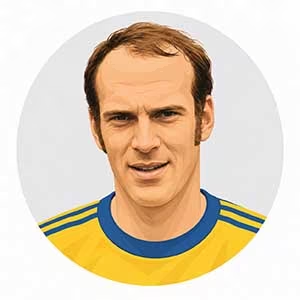
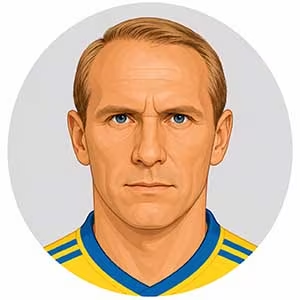
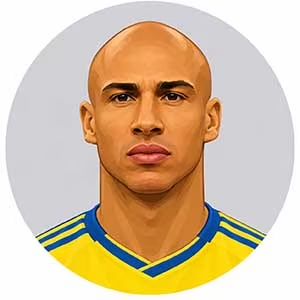
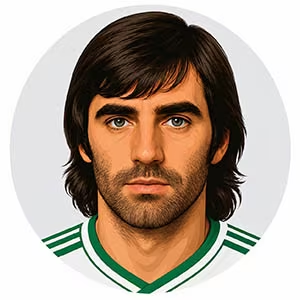
Sweden - ForwardGrahn, Ove
Operating at the crossroads between the classic Swedish center-forward tradition and the emerging total versatility of modern European football, Jan-Olof "Ove" Grahn was one of Scandinavia’s most complete and tactically adaptable offensive weapons across the 1960s and 1970s. Emerging from IF Elfsborg before embarking on an extensive, pioneering decade in Switzerland with Grasshopper Club Zürich and Lausanne-Sports, Grahn possessed a commanding, athletic physical frame that made him practically unmovable with his back to goal. Yet, unlike static penalty-box targets of his era, his game was defined by dynamic spatial intuition: dropping deep into the inside-forward channels, linking play with crisp two-touch wall passes, and making sudden, explosive diagonal runs into the penalty area to finish with either foot or through his formidable aerial leap. Crowned Swiss champion and league top scorer with Grasshoppers in 1971, he was an indispensable tactical pillar for the Swedish national team under Orvar Bergmark and Georg Ericson, earning 45 caps and leaving an indelible mark at two World Cups: scoring Sweden's famous, desperate late winner against Uruguay in Mexico 1970 and netting the decisive strike against Uruguay once again in 1974 to propel the Blågult into the second phase. Psychologically, Grahn was fueled by a quiet, determined ambition and a restless competitive drive that pushed him to seek challenges beyond the comfortable domestic confines of Swedish football. He possessed an understated, professional resilience; transitioning into professional leagues abroad during an era when Scandinavian players often struggled with the culture shock of foreign demands, Grahn adapted through sheer work ethic, tactical intelligence, and linguistic immersion. On the pitch, his leadership was purely utilitarian and functional—he did not waste energy on theatrical gestures or self-serving acrobatics, leading instead through continuous off-the-ball runs, selfless physical hold-up battles against bruising central defenders, and a relentless focus on team efficiency. Inside the locker room, he was a steady, calm, and respected figure whose worldly European experience provided crucial reassurance to younger domestic-based teammates during grueling international tournaments. Under high-friction World Cup conditions, his emotional pulse remained remarkably stable, converting high-leverage half-chances with calm, uncluttered execution. Toward match officials and aggressive markers, Grahn maintained an honorable, stoic posture: absorbing heavy physical targeting without theatrical simulation or retaliation, letting his devastating penalty-box efficiency stand as his ultimate reply.