We use Google Analytics to understand how visitors use this site. Analytics cookies are only activated with your consent. For details, read our Privacy Policy.
Profile lensThe same player, read from a different angle.
Athletic80
Acceleration
86
Pace
80
Agility
85
Strength
77
Balance
85
Jumping
74
Stamina
78
Fitness
72
Technical90
Dribbling
95
Short Passing
89
Long Passing
87
Finishing
86
Shot Accuracy
83
Shot Power
84
Shooting Technique
91
Heading
74
Tackling
52
Crossing
84
Free Kick
82
Penalties
79
First Touch
95
Mental73
Composure
78
Aggression
82
Consistency
70
Creativity
94
Leadership
60
Work Rate
83
Tactical81
Vision
85
Off the Ball
87
Defensive Positioning
54
Teamwork
77
Anticipation
76
Marking
38
Player Traits
Attacking83
Crossing
84
Finishing
86
Heading Accuracy
74
Shot Accuracy
83
Off the Ball
87
Technique90
Dribbling
95
Free Kick
82
Short Passing
89
Long Passing
87
First Touch
95
Shot Technique
91
Movement84
Acceleration
86
Pace
80
Agility
85
Balance
85
Physicality77
Shot Power
84
Jumping
74
Stamina
78
Strength
77
Fitness
72
Defending48
Marking
38
Tackling
52
Def. Positioning
54
Mentality & Game Reading78
Aggression
82
Composure
78
Penalties
79
Vision
85
Leadership
60
Work Rate
83
Teamwork
77
Anticipation
76
Consistency
70
Creativity
94
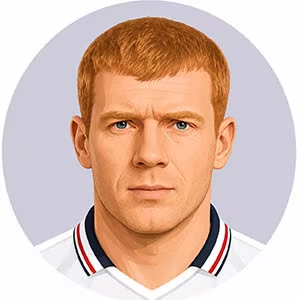
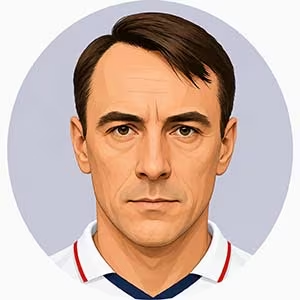
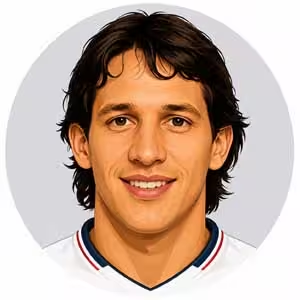
England - Attacking MidfielderGascoigne, Paul
Flicking the ball over Colin Hendry’s head with the outside of his left foot before hammering a first-time right-footed volley into the bottom corner at Wembley—followed by the iconic "Dentist's Chair" celebration with his teammates squirting water into his mouth—captured the incandescent, tragic, and uncontainable genius of a boy from Dunston. Paul John Gascoigne—immortalized across global culture simply as Gazza—was an anarchic footballing savant whose breathtaking dribbling, low-center-of-gravity balance, panoramic vision, and explosive creativity made him the most naturally gifted English footballer of the modern era.
Operating as a central attacking midfielder, free-roaming mezzala, or dynamic number ten, Gascoigne played with a joyous, instinctual freedom that dismantled rigid defensive structures. He possessed the physical power of a middleweight boxer combined with the delicate touch of a concert pianist: driving through midfield challenges with sudden bursts of acceleration, dropping his shoulders to send stoppers sliding the wrong way, and threading disguise passes through non-existent channels. After exploding at Newcastle United (winning the 1987–88 PFA Young Player of the Year), his sensational £2.2 million move to Tottenham Hotspur yielded the 1990–91 FA Cup, highlighted by an unforgettable 35-yard free-kick against Arsenal in the semi-final. He later became a cult idol at SS Lazio in Serie A despite severe injuries, before dominating Scottish football with Rangers, scoring 39 goals in 104 matches to win two Scottish Premier Division titles, the 1995–96 Scottish Cup, and the 1996–97 League Cup. For England, across 57 caps and ten goals, his international pinnacle remains legendary: his tears in Turin at the 1990 World Cup semi-final captured the heart of a nation, followed by his electric, talismanic performances at Euro '96.
The tragic, heartbreaking paradox of Gascoigne’s genius, however, was a total lack of emotional equilibrium and self-preservation. A volatile, manic energy on the pitch frequently crossed into dangerous recklessness—most catastrophically illustrated in the opening minutes of the 1991 FA Cup final, where an uncontrolled, wild lunge at Gary Charles ruptured his own cruciate ligaments and permanently compromised his explosive lateral mobility. Off the pitch, an agonizing battle with mental health, severe alcoholism, and the suffocating circus of British tabloid culture repeatedly derailed his career and shortened his time at the absolute summit of the sport.
Vulnerable, childlike, and blessed with an infectious, chaotic warmth, Gazza played the game purely for the love of the crowd and the thrill of human connection. He had zero tactical vanity or corporate polish, treating football as a playground game where he could escape his inner demons through audacious brilliance. On the pitch, his body language was raw, kinetic poetry: charging at defenders with wild eyes, winking at the crowd after outrageous nutmegs, and weeping openly when confronted by personal heartbreak. Inside the dressing rooms of Newcastle, Spurs, Lazio, Rangers, and England, he was an adored, protected mascot whose otherworldly talent, deeply flawed humanity, and magnetic soul made him an immortal folk hero in the pantheon of global football.