We use Google Analytics to understand how visitors use this site. Analytics cookies are only activated with your consent. For details, read our Privacy Policy.
Profile lensThe same player, read from a different angle.
Athletic79
Acceleration
73
Pace
76
Agility
68
Strength
91
Balance
82
Jumping
79
Stamina
81
Fitness
83
Technical80
Dribbling
75
Short Passing
77
Long Passing
78
Finishing
52
Shot Accuracy
55
Shot Power
80
Shooting Technique
68
Heading
86
Tackling
92
Crossing
73
Free Kick
64
Penalties
60
First Touch
77
Mental84
Composure
84
Aggression
88
Consistency
78
Creativity
60
Leadership
92
Work Rate
91
Tactical83
Vision
68
Off the Ball
63
Defensive Positioning
90
Teamwork
85
Anticipation
84
Marking
88
Player Traits
Attacking66
Crossing
73
Finishing
52
Heading Accuracy
86
Shot Accuracy
55
Off the Ball
63
Technique73
Dribbling
75
Free Kick
64
Short Passing
77
Long Passing
78
First Touch
77
Shot Technique
68
Movement75
Acceleration
73
Pace
76
Agility
68
Balance
82
Physicality83
Shot Power
80
Jumping
79
Stamina
81
Strength
91
Fitness
83
Defending90
Marking
88
Tackling
92
Def. Positioning
90
Mentality & Game Reading79
Aggression
88
Composure
84
Penalties
60
Vision
68
Leadership
92
Work Rate
91
Teamwork
85
Anticipation
84
Consistency
78
Creativity
60
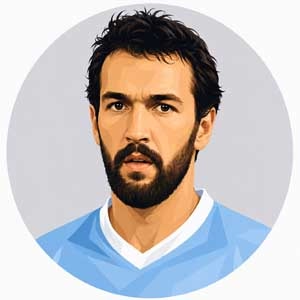
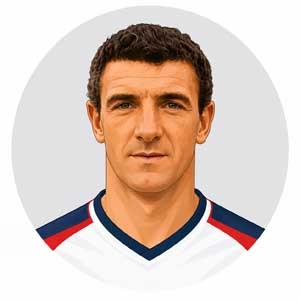
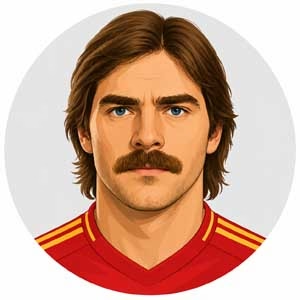
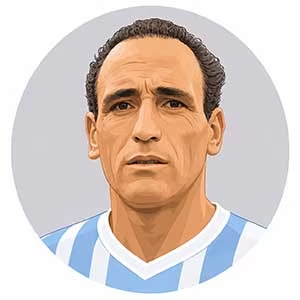
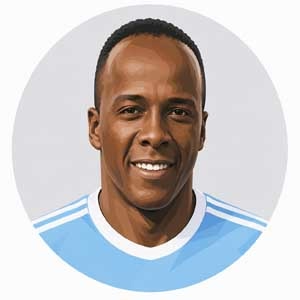
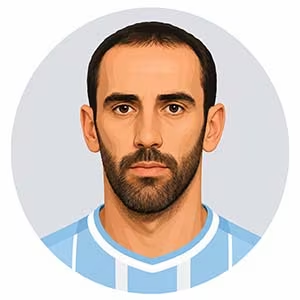
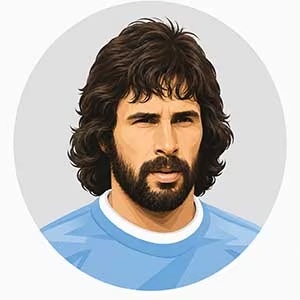
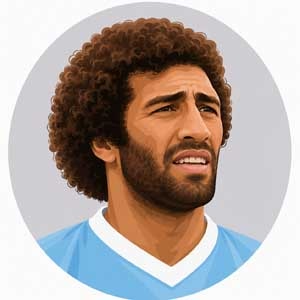
Uruguay - Centre-backDe León, Hugo
Lifting the Copa Libertadores trophy at the Estadio Centenario while blood poured from a split forehead and soaked his blue jersey created the definitive, iconic image of an unyielding Uruguayan warrior. Hugo Eduardo de León Rodríguez was the imposing, charismatic defensive general who dominated South American and global club football throughout the late 1970s and 1980s, achieving the rare feat of captaining two different clubs to the Intercontinental Cup title.
Operating as an intelligent, man-marking stopper or sweeping líbero, De León paired towering aerial dominance with ruthless tackling mechanics and a clean, cultured left foot that allowed him to initiate attacks with accurate diagonal distribution. Forged at Nacional, he captained the club to the 1980 Copa Libertadores and the 1980 Intercontinental Cup against Nottingham Forest in Tokyo. Crossing the border into Brazil, he became a mythic cult icon at Grêmio, captaining the Porto Alegre side to the 1981 Campeonato Brasileiro, the 1983 Copa Libertadores, and the 1983 Intercontinental Cup against Hamburger SV, before returning to Nacional in 1988 to lift a third Libertadores and Intercontinental Cup double against PSV Eindhoven. For Uruguay, across 48 caps between 1979 and 1990, he was a key figure at the 1990 World Cup in Italy and won the 1980 Mundialito on home soil.
De León’s game, however, operated strictly on physical intimidation, timing, and structural containment. He lacked explosive linear sprint speed; when pulled into 40-yard footraces against lightning-fast transitional forwards in open grass without defensive cover, his heavy turning radius could be tested. Furthermore, his aggressive, physical brand of defending constantly skirted the absolute boundaries of referee tolerance, risking bookings against evasive dribblers who looked to draw contact.
Fierce, intensely vocal, and carrying an aura of absolute moral authority, De León was the ultimate dressing-room patriarch and on-pitch commander. He thrived on hostile away grounds in the Copa Libertadores, staring down rival forwards and turning penalty boxes into impenetrable fortresses through sheer force of will. On the pitch, his presence was commanding and resolute: organizing his back four with booming instructions, absorbing physical violence without flinching, and leading by raw physical sacrifice. Inside the dressing rooms of Nacional and Grêmio, his word was unquestioned law, cementing an eternal legacy as one of the most fearsome, successful, and decorated defensive captains in South American history.