We use Google Analytics to understand how visitors use this site. Analytics cookies are only activated with your consent. For details, read our Privacy Policy.
Profile lensThe same player, read from a different angle.
Athletic80
Acceleration
85
Pace
79
Agility
83
Strength
77
Balance
77
Jumping
73
Stamina
84
Fitness
78
Technical85
Dribbling
86
Short Passing
86
Long Passing
88
Finishing
88
Shot Accuracy
86
Shot Power
85
Shooting Technique
83
Heading
77
Tackling
62
Crossing
85
Free Kick
91
Penalties
87
First Touch
87
Mental80
Composure
86
Aggression
78
Consistency
76
Creativity
85
Leadership
79
Work Rate
74
Tactical82
Vision
85
Off the Ball
86
Defensive Positioning
60
Teamwork
85
Anticipation
81
Marking
49
Player Traits
Attacking84
Crossing
85
Finishing
88
Heading Accuracy
77
Shot Accuracy
86
Off the Ball
86
Technique87
Dribbling
86
Free Kick
91
Short Passing
86
Long Passing
88
First Touch
87
Shot Technique
83
Movement81
Acceleration
85
Pace
79
Agility
83
Balance
77
Physicality79
Shot Power
85
Jumping
73
Stamina
84
Strength
77
Fitness
78
Defending57
Marking
49
Tackling
62
Def. Positioning
60
Mentality & Game Reading82
Aggression
78
Composure
86
Penalties
87
Vision
85
Leadership
79
Work Rate
74
Teamwork
85
Anticipation
81
Consistency
76
Creativity
85
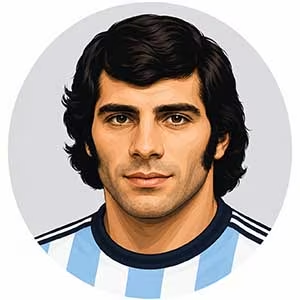
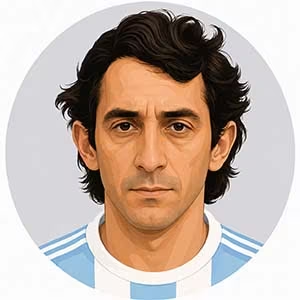
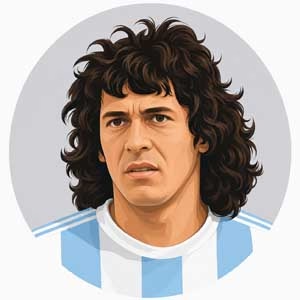
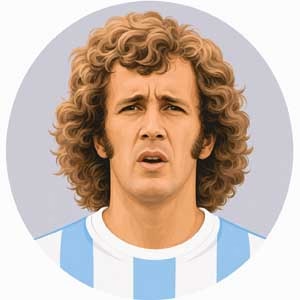
Argentina - Centre MidfielderBrindisi, Miguel Ángel
A delicate chip from the edge of the area that floated into the top corner captured the effortless, aristocratic vision of a playmaker who remains one of the most complete midfielders in Argentine history. Miguel Ángel Brindisi was the elegant tactical brain and scoring engine of César Luis Menotti’s historic 1973 Huracán side, later cementing his legendary status as Diego Maradona’s premier creative partner at Boca Juniors.
Operating as a roving central midfielder, inside-forward, or attacking playmaker, Brindisi possessed panoramic vision, sublime close control, and a lethal scoring instinct from deep arrivals. With Huracán, he captured the mythic 1973 Metropolitano championship—a team widely regarded as the aesthetic blueprint for Argentina's 1978 World Cup victory—before moving to Spain to star for UD Las Palmas, reaching the 1978 Copa del Rey final. Returning to Argentina in 1981, he joined Boca Juniors, forming a devastating tandem with Maradona and scoring 16 goals to claim the 1981 Metropolitano. For Argentina, across 46 caps and 17 goals between 1969 and 1974, he featured at the 1974 World Cup in West Germany, famously scoring a stunning long-range goal against Brazil.
His refined, expansive game, however, required specific tactical insulation. Brindisi was not a combative ball-winner who relished sliding into muddy tackles or tracking opposing runners into his own defensive corner flags; he needed disciplined destroyers like Francisco Russo or Roberto Mouzo behind him to handle the physical dirty work. In chaotic, high-tempo matches where opponents turned the middle third into an aggressive physical dogfight, his measured rhythm could be disrupted if denied space on the turn.
Dignified, articulate, and deeply respected across the footballing landscape, Brindisi played with the serene poise of a classical artist. He never resorted to underhanded gamesmanship or volatile outbursts, letting his spotless technical execution and tactical intelligence command the pitch. On the field, his presence was upright and composed, organizing attacking sequences with understated hand gestures and finding space in the most congested corridors. Inside the Huracán, Boca, and national team locker rooms, he was an untouchable senior figure whose tactical maturity and quiet leadership earned the deep admiration of demanding managers and superstar teammates alike.