We use Google Analytics to understand how visitors use this site. Analytics cookies are only activated with your consent. For details, read our Privacy Policy.
Profile lensThe same player, read from a different angle.
Athletic84
Acceleration
82
Pace
84
Agility
86
Strength
73
Balance
85
Jumping
74
Stamina
92
Fitness
94
Technical82
Dribbling
84
Short Passing
84
Long Passing
84
Finishing
77
Shot Accuracy
77
Shot Power
80
Shooting Technique
79
Heading
72
Tackling
64
Crossing
80
Free Kick
74
Penalties
74
First Touch
84
Mental84
Composure
84
Aggression
85
Consistency
84
Creativity
76
Leadership
85
Work Rate
86
Tactical85
Vision
84
Off the Ball
85
Defensive Positioning
60
Teamwork
85
Anticipation
85
Marking
52
Player Traits
Attacking78
Crossing
80
Finishing
77
Heading Accuracy
72
Shot Accuracy
77
Off the Ball
85
Technique82
Dribbling
84
Free Kick
74
Short Passing
84
Long Passing
84
First Touch
84
Shot Technique
79
Movement84
Acceleration
82
Pace
84
Agility
86
Balance
85
Physicality83
Shot Power
80
Jumping
74
Stamina
92
Strength
73
Fitness
94
Defending59
Marking
52
Tackling
64
Def. Positioning
60
Mentality & Game Reading83
Aggression
85
Composure
84
Penalties
74
Vision
84
Leadership
85
Work Rate
86
Teamwork
85
Anticipation
85
Consistency
84
Creativity
76
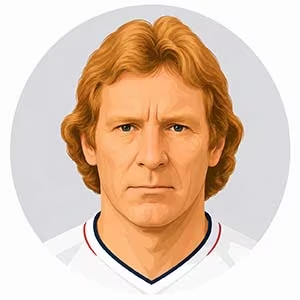
England - Attacking MidfielderBall, Alan
Alan James Ball MBE was the manic, high-tempo midfield sparkplug and ultimate pressing machine of England’s World Cup-winning side and Harry Catterick’s iconic Everton Holy Trinity alongside Colin Harvey and Howard Kendall. Operating as an energetic right-sided midfielder, box-to-box engine, or central orchestrator, Ball combined boundless cardiovascular stamina with razor-sharp passing vision, aggressive ball-winning tackles, and a venomous delivery on the sprint. After being named Man of the Match in the 1966 World Cup final, he moved to Goodison Park for a then-British record fee of £112,000, making 251 appearances and scoring 79 goals to claim the 1969–70 First Division championship, before later captaining Arsenal and Southampton. For England, across 72 caps and eight goals, he featured across two World Cups (1966, 1970) and was handed the national captaincy in the mid-1970s.
His hyper-kinetic, aggressive approach, however, carried natural tactical and physical boundaries. Standing just five-foot-six, Ball offered virtually zero aerial presence inside the eighteen-yard box, relying on ground-level hustle to win second balls. Furthermore, his fiercely combative nature and high-pitched verbal barking frequently landed him in hot water with referees, racking up bookings for dissent and fiery confrontations against rough opposing enforcers who tried to intimidate him out of matches.
Combative, hyper-vocal, and utterly intolerant of laziness, Ball was an absolute firebrand on the pitch. He played with a furious competitive edge: chasing lost causes into the corner flags, barking demands at veteran teammates, and refusing to concede an inch of grass to anyone. On the pitch, his body language was a constant blur of motion and urgency, directing plays with sharp hand gestures and celebrating crucial tackles with raw defiance. Inside the Everton, Arsenal, and England locker rooms, he was an indispensable culture-driver whose infectious passion and relentless pursuit of victory dragged whole squads through grueling winter fixtures, leaving behind an immortal legacy as one of the most tenacious, dynamic, and beloved English midfielders of the 20th century.


 All Time EnglandNT