We use Google Analytics to understand how visitors use this site. Analytics cookies are only activated with your consent. For details, read our Privacy Policy.
Profile lensThe same player, read from a different angle.
Athletic79
Acceleration
95
Pace
86
Agility
92
Strength
68
Balance
77
Jumping
74
Stamina
75
Fitness
68
Technical86
Dribbling
97
Short Passing
86
Long Passing
84
Finishing
85
Shot Accuracy
85
Shot Power
77
Shooting Technique
91
Heading
66
Tackling
30
Crossing
80
Free Kick
87
Penalties
76
First Touch
95
Mental73
Composure
81
Aggression
72
Consistency
71
Creativity
97
Leadership
66
Work Rate
66
Tactical76
Vision
83
Off the Ball
87
Defensive Positioning
33
Teamwork
60
Anticipation
74
Marking
33
Player Traits
Attacking81
Crossing
80
Finishing
85
Heading Accuracy
66
Shot Accuracy
85
Off the Ball
87
Technique90
Dribbling
97
Free Kick
87
Short Passing
86
Long Passing
84
First Touch
95
Shot Technique
91
Movement88
Acceleration
95
Pace
86
Agility
92
Balance
77
Physicality72
Shot Power
77
Jumping
74
Stamina
75
Strength
68
Fitness
68
Defending32
Marking
33
Tackling
30
Def. Positioning
33
Mentality & Game Reading75
Aggression
72
Composure
81
Penalties
76
Vision
83
Leadership
66
Work Rate
66
Teamwork
60
Anticipation
74
Consistency
71
Creativity
97
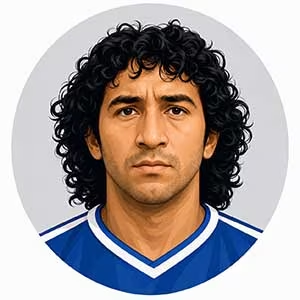
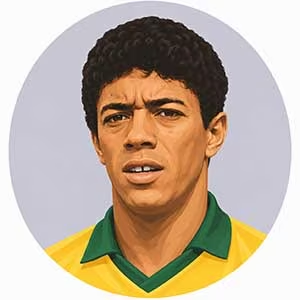
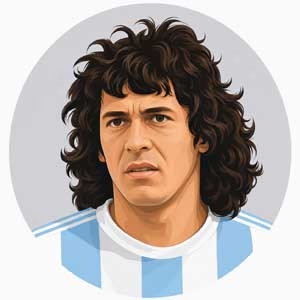
El Salvador - ForwardMágico González
Diego Maradona once famously declared that there was only one player on the planet who was definitively more talented than himself, and that man spent his afternoons sleeping through team meetings and dancing past defenders in Cádiz. Jorge Alberto González Barillas—canonized across world football as El Mágico—was a bohemian sorcerer whose hypnotic close control, trademark culebrita macheteada (his own invented reverse-elastico), and effortless dribbling turned football into pure romantic poetry.
Operating as a second striker, free-roaming number ten, or wide virtuoso, González possessed balance, ankle flexibility, and panoramic improvisation that made defenders look like statues. Rising through ANTEL and FAS in El Salvador, his dazzling performances at the 1982 World Cup in Spain—where he single-handedly dismantled defenses despite El Salvador’s collective struggles—prompted a move to Cádiz CF. In Andalusia, he became an immortal folk hero across two spells spanning over 200 matches and 60 goals, transforming a modest club into a La Liga sensation with jaw-dropping chips, rabonas, and solo runs that stunned Real Madrid and Barcelona. For El Salvador, across 62 caps and 26 goals, he remains the undisputed sporting deity of the country, leading them to their historic 1982 World Cup qualification.
The paradox of El Mágico’s genius was an absolute, joyful refusal to conform to professional discipline. He despised rigorous training, openly preferred the vibrant nightlife and flamenco bars of Cádiz over match preparation, and frequently arrived late or fell asleep on the bench during team talks. He rejected lucrative offers to join European powerhouses like Barcelona and Paris Saint-Germain simply because he refused to give up his relaxed, carefree lifestyle in southern Spain. On the pitch, if a tactical setup required relentless defensive tracking, pressing without the ball, or rigid positional discipline, his participation was practically zero.
Unapologetic, warm, and driven solely by a desire to bring pure joy to the terraces, González viewed football not as a profession, but as a game to be played with friends. He had zero interest in wealth, personal glory, or corporate marketing, famously stating, "I only want to play, I don't care about anything else." On the pitch, his body language was effortless and languid until he touched the ball, at which point he exploded into breathtaking sequences of feints and delicate lobs that brought standing ovations even from rival supporters. Inside the Cádiz locker room, he was an adored, protected treasure whose otherworldly talent and infectious warmth earned the unconditional love of managers, teammates, and an entire city, leaving behind an immortal legacy as the game's ultimate romantic rebel.