We use Google Analytics to understand how visitors use this site. Analytics cookies are only activated with your consent. For details, read our Privacy Policy.
Profile lensThe same player, read from a different angle.
Athletic79
Acceleration
75
Pace
78
Agility
76
Strength
83
Balance
82
Jumping
75
Stamina
87
Fitness
78
Technical79
Dribbling
79
Short Passing
78
Long Passing
85
Finishing
73
Shot Accuracy
71
Shot Power
93
Shooting Technique
75
Heading
67
Tackling
68
Crossing
88
Free Kick
84
Penalties
80
First Touch
80
Mental77
Composure
82
Aggression
78
Consistency
76
Creativity
70
Leadership
75
Work Rate
77
Tactical73
Vision
78
Off the Ball
77
Defensive Positioning
66
Teamwork
75
Anticipation
78
Marking
65
Player Traits
Attacking75
Crossing
88
Finishing
73
Heading Accuracy
67
Shot Accuracy
71
Off the Ball
77
Technique80
Dribbling
79
Free Kick
84
Short Passing
78
Long Passing
85
First Touch
80
Shot Technique
75
Movement78
Acceleration
75
Pace
78
Agility
76
Balance
82
Physicality83
Shot Power
93
Jumping
75
Stamina
87
Strength
83
Fitness
78
Defending66
Marking
65
Tackling
68
Def. Positioning
66
Mentality & Game Reading77
Aggression
78
Composure
82
Penalties
80
Vision
78
Leadership
75
Work Rate
77
Teamwork
75
Anticipation
78
Consistency
76
Creativity
70
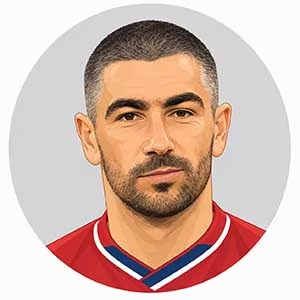
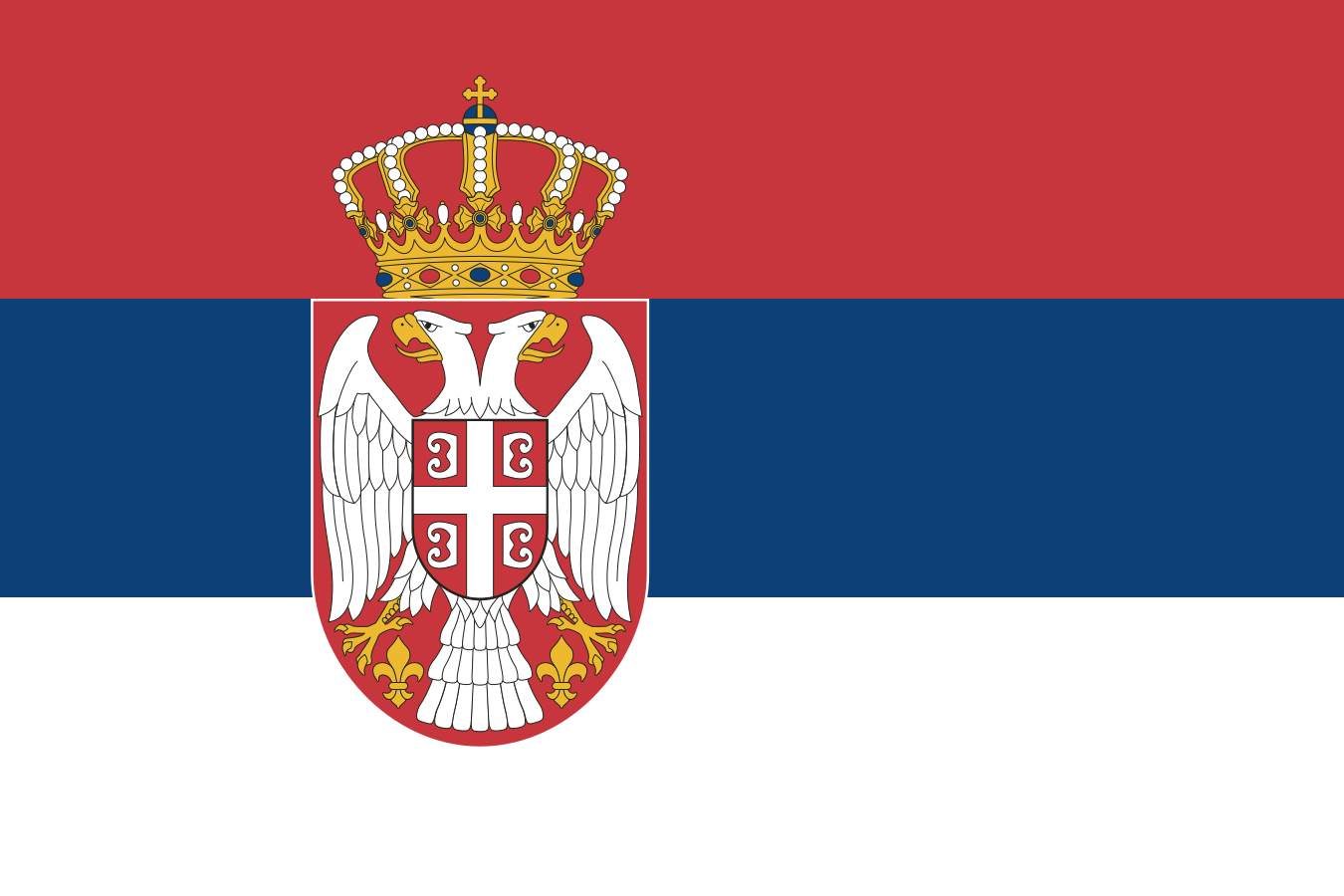
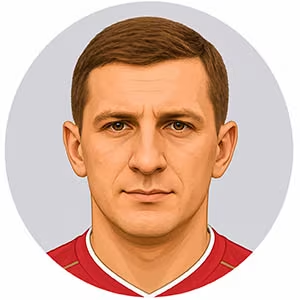
Serbia - Left BackKolarov, Aleksandar
There is a moment from Kolarov's Lazio years that opposing players still bring up: a free kick struck from outside the box with such force that it caught the referee square on, knocked him to the ground, and sent players from both sides rushing over to check whether the man in the middle was seriously hurt. It wasn't the only official casualty of that shot — a rival forward had already gone down jumping to block an earlier Kolarov strike in the same fixture. He never described any secret behind the power. It was, he said plainly, just years of practice.
Born in Belgrade in 1985, Kolarov came through Red Star Belgrade's academy before breaking through at Čukarički and OFK Beograd, then Lazio in 2007, where his combination of physical presence, defensive versatility and a genuinely fearsome left foot from dead-ball situations made him one of Serie A's most dangerous full-backs. Manchester City signed him in 2010, and across seven seasons he became a key figure in the club's transformation into a genuine Premier League power, winning two league titles and two League Cups while developing a reputation as one of the finest free-kick specialists in England, scoring memorable strikes against Real Madrid and converting a decisive penalty against Bayern Munich in the Champions League. In 2017 he returned to Serie A with Roma, scoring the winner on his debut against Atalanta and eventually holding, at one point, the record for the most direct free-kick goals across Europe's major leagues outside of Messi. He later moved crosstown to Roma's fiercest rival, Lazio's own capital derby opponent, closing his career with a final stint at Inter. For Serbia he won extensive caps, captained the national team, and was central to the country's qualification for the 2018 World Cup.
His limitations were tied to physical wear as his career extended into its mid-to-late thirties, and to a game whose value depended heavily on set-piece situations and direct physical confrontation rather than the kind of technical subtlety that ages more gracefully; against faster, more mobile wide players in his final seasons, his recovery pace became a more exploitable weakness than it had been earlier in his career.
Temperamentally he was direct, vocal and unapologetically confident, a leader who rallied teammates through visible energy rather than quiet example. He described his own competitive philosophy in terms that matched his playing style exactly — that winning, in football as in life, requires fighting until the very end — and he was consistently credited by teammates and observers with fostering genuine cohesion in dressing rooms through humor and approachability as much as through tactical seriousness. When he left Manchester City for Roma, joining a club whose fiercest rival was the team where he had made his name in Italy, he addressed the switch with blunt honesty rather than diplomatic hedging: he would not deny his past at Lazio, he said, but Roma had his full commitment now and Lazio were simply his rivals from that day forward — a directness that mirrored the same uncomplicated confidence he brought to a penalty spot or a free kick. He was trusted with his national team's captaincy, a role that fit a personality several observers compared to a natural challenger — assertive, fearless, and comfortable with confrontation rather than avoiding it. Physically imposing, vocally present, and entirely straightforward about switching institutional loyalties when his career required it, Kolarov built a long, decorated career on confidence that never seemed to require external validation.