We use Google Analytics to understand how visitors use this site. Analytics cookies are only activated with your consent. For details, read our Privacy Policy.
Profile lensThe same player, read from a different angle.
Athletic81
Acceleration
82
Pace
79
Agility
83
Strength
80
Balance
78
Jumping
75
Stamina
89
Fitness
85
Technical84
Dribbling
86
Short Passing
87
Long Passing
84
Finishing
83
Shot Accuracy
77
Shot Power
82
Shooting Technique
81
Heading
74
Tackling
66
Crossing
84
Free Kick
75
Penalties
76
First Touch
87
Mental83
Composure
82
Aggression
82
Consistency
83
Creativity
84
Leadership
84
Work Rate
86
Tactical85
Vision
86
Off the Ball
83
Defensive Positioning
70
Teamwork
91
Anticipation
85
Marking
76
Attacking80
Crossing
84
Finishing
83
Heading Accuracy
74
Shot Accuracy
77
Off the Ball
83
Technique83
Dribbling
86
Free Kick
75
Short Passing
87
Long Passing
84
First Touch
87
Shot Technique
81
Movement81
Acceleration
82
Pace
79
Agility
83
Balance
78
Physicality82
Shot Power
82
Jumping
75
Stamina
89
Strength
80
Fitness
85
Defending71
Marking
76
Tackling
66
Def. Positioning
70
Mentality & Game Reading84
Aggression
82
Composure
82
Penalties
76
Vision
86
Leadership
84
Work Rate
86
Teamwork
91
Anticipation
85
Consistency
83
Creativity
84
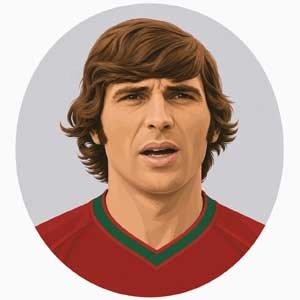
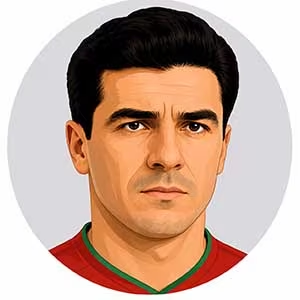
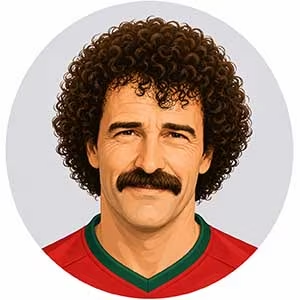
Portugal - Centre MidfielderGraça, Jaime
Operating as a complete, two-way central midfielder, defensive screen, or dynamic mezzala, Graça was the engine room that allowed virtuosos to operate with freedom. He combined exceptional positional discipline with relentless ball-winning tenacity, timing standing tackles to perfection before initiating attacking transitions with crisp, incisive passing off both feet. After launching his career at Vitória de Setúbal—playing a decisive role alongside Jacinto João to capture the historic 1964–65 Taça de Portugal over Benfica—he completed a high-profile transfer to SL Benfica in 1966. Over nine dominant seasons in Lisbon spanning 229 matches and 29 goals, he was an indispensable tactical pillar, sweeping seven Primeira Divisão championships (including three consecutive titles from 1971 to 1973) and three Taças de Portugal. On the European stage, he cemented his legacy in the 1967–68 European Cup campaign, scoring Benfica’s crucial equalizer against Manchester United in the final at Wembley to force extra time. For Portugal, across 36 caps and four goals, he played every minute of their historic run to third place at the 1966 World Cup in England, providing the defensive balance and midfield muscle that underpinned the Magriços.
Graça’s pragmatic, functional style, however, lived within distinct creative boundaries. He was not an elusive, line-breaking playmaker who unlocked defenses through solo dribbling in congested central channels; his game was built strictly on rapid ball-recovery, spatial containment, and swift, low-risk distribution to advanced playmakers like Mário Coluna and Eusébio. When his team was tasked with breaking down ultra-compact low blocks on heavy pitches where opponents sat deep and denied space between the lines, his offensive contributions from open play were limited to occasional long-range strikes and late runs into the box.
Humble, deeply courageous, and governed by an unshakeable sense of collective duty, Graça approached football as an absolute commitment to his brothers-in-arms. He possessed zero personal vanity, actively shunning media attention and taking quiet pride in the grueling, invisible defensive shifts that allowed others to capture the headlines. On the pitch, his presence was steady, alert, and relentlessly combative: tracking midfield runners with laser focus, throwing himself into 50-50 duels without regard for injury, and maintaining team shape with subtle vocal cues. Inside the dressing rooms of Setúbal, Benfica, and the Portuguese national team, his moral authority was monumental—an adored, fearless guardian whose heroic rescue off the pitch and flawless tactical discipline on it earned him an immortal, revered place in Portuguese football history.