
Coach Dossier
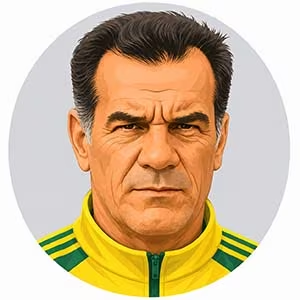
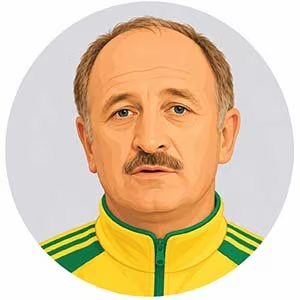
Telê Santana
Telê Santana gave structure to joy. His best teams played with technical purity, short passing, positional rotations and moral discipline, proving that beauty could be trained rather than merely improvised.
Preferred structures
Shape before dogma.
Playing Philosophy
Tactical fingerprint
Tactical Reading
How his football thinks
Santana’s football was built on joyful collectivism: the idea that flair becomes stronger when shared. He wanted movement, support angles, one-touch combinations and players brave enough to express themselves inside a disciplined collective map. Freedom was not chaos; it was rehearsed connection.
The Santana profile leans heavily toward attacking tendency and technical focus. His Brazil 1982 side used a nominal 4-2-2-2 that could become a 2-3-5 or 2-4-2-2 in possession, with full-backs pushing high and midfielders creating constant triangles. The press was positional rather than all-out: guide play, compress space, recover through anticipation and restart attacks cleanly. At São Paulo, the same ideas became slightly more balanced, with better transition control but the same taste for combinations, third-man runs and full-back involvement.
Touchline profile
Coaching Skills
Authority profile
Mental Skills
Traits
Managerial personality
Legacy
Why he matters
Santana is remembered partly because he did not bend easily. The World Cup defeats remain part of the story, but so does the imprint: Brazil 1982 became a global reference for technical harmony, while his São Paulo confirmed that discipline and beauty could win together.
Profile based on the archived DX84Tech coach dossier and adapted to the Legends Database coaching model.
See also
Explore more
Three coaching routes to keep the tactical thread alive.Brazil coaching line
Follow coaches from the same football culture and compare how differently they interpret authority.
Similar fingerprints
Nearby profiles by pressing, structure, mentality, risk and preferred game model.
The elite table
Return to the full coaches index and sort by OVR, psychology, tactical focus or preparation.