

Coach Dossier
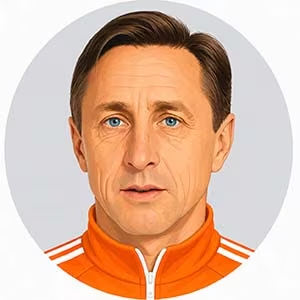
Marcelo Bielsa
Marcelo Bielsa is the great obsessive of modern coaching: brave, demanding and visionary, with football built on pressing, tempo, possession and a stubborn belief in attacking responsibility.
Preferred structures
Shape before dogma.
Playing Philosophy
Tactical fingerprint
Tactical Reading
How his football thinks
Bielsa wants his teams to play as if courage can be trained. The ball must move quickly, the pitch must be stretched, the opponent must be pressed and every player must understand his reference points. His football is physically punishing because the idea is physically punishing: attack with numbers, recover immediately, repeat.
The Bielsa profile is elite in pressing, fitness preparation, tactical focus and tactical knowledge. The famous 3-3-3-1 is less a fixed formation than a way to create width, central occupation and man-oriented pressure. His sides often defend forward, mark aggressively, overload flanks and attack with full-backs or wide players arriving high. The risk is space behind the press; the reward is rhythm, territorial control and emotional momentum.
Touchline profile
Coaching Skills
Authority profile
Mental Skills
Traits
Managerial personality
Legacy
Why he matters
Bielsa has fewer trophies than some peers, but his influence is immense. Guardiola, Pochettino and many others have absorbed parts of his courage, training intensity and obsession with collective detail. He is a coach people study, not just remember.
Profile compiled from cross-checked historical records, contemporary reports and Legends Database editorial methodology.
See also

Explore more
Three coaching routes to keep the tactical thread alive.Argentina coaching line
Follow coaches from the same football culture and compare how differently they interpret authority.
Similar fingerprints
Nearby profiles by pressing, structure, mentality, risk and preferred game model.
The elite table
Return to the full coaches index and sort by OVR, psychology, tactical focus or preparation.