
In the English language, there is a widely used saying: "Every cloud has a silver lining." The origin is attributed to the renowned English poet John Milton, who first used it in his 1634 work, Comus. The meaning: just as a dark cloud, when illuminated by the sun, reveals a bright silver outline, it is possible to find positive aspects even in the darkest and most tragic situations.
In our language, there is a word — recently overused, perhaps even excessively so — that encapsulates this concept well: resilience.
When I think of Bobby Charlton, the first word that comes to mind is precisely that.
In 1958, Bobby Charlton was just 21 years old — a promising young talent like many others. He had already been with Manchester United for five years, signed at the direct request of the legendary Matt Busby, who spotted him as a young boy playing for an East Northumberland schools' representative team.
Manchester United was on a return flight from Belgrade, where they had played a European Cup match against Red Star. That United squad was young, immensely talented, and full of potential — the Busby Babes.
Charlton only learned about the deaths of his teammates and close friends while in the hospital. This moment became a turning point in his life. Psychologically, he never fully recovered. He considered himself a miracle survivor, but he never came to terms with the fact that he had lived while his friends had not.
And this is where resilience came into play. Instead of falling into despair, instead of being consumed by darkness, the "miner's son" rolled up his sleeves, gritted his teeth, and vowed to carry on — for the friends and teammates who were no longer there.
Bobby Charlton embodied the very essence of the English gentleman — a man from another era. Calm, reserved, composed, yet also tenacious, determined, and relentlessly professional. Loved by his teammates and respected by his opponents.
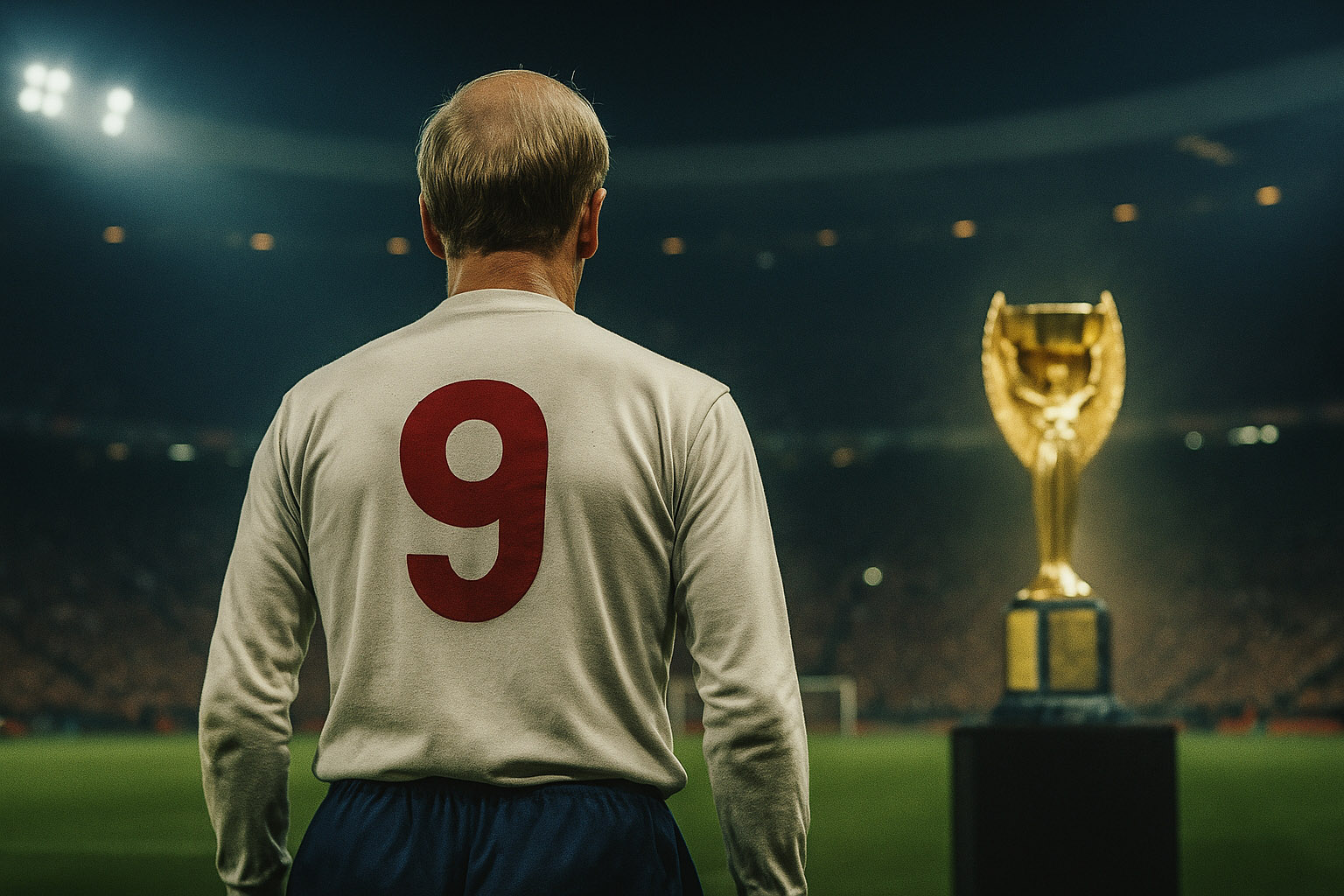
As Charlton himself later revealed in an interview, his sole motivation in life became winning an international trophy for the teammates who had not made it. This desire burned like an eternal flame, driving him to give 100% in every match — but in true English fashion, like a true gentleman.
Charlton was the complete opposite of his brother, Jack Charlton. Jack was a tough, rugged, and uncompromising centre-back — blunt, direct, and hard-edged. A stark contrast to Bobby's temperament. The relationship between the two brothers was notoriously turbulent, with tensions exacerbated by difficult relations between their wives.
After Jack Charlton's passing in 2020, Bobby openly expressed his grief and affection for his brother, revealing a bond that — despite the difficulties — remained significant to both of them. And let's be honest: how many brothers can say they won a World Cup playing for the same national team?
His combination play with the magnificent George Best is the stuff of legend. Together with Denis Law, they formed what became known as the Holy Trinity — the three greatest players in Manchester United history, united in a single era.
Bobby Charlton was not just a symbol of Manchester United or English football — he was an emblem of resilience and dignity. His career and his life offer a lesson in greatness, proving that it is not defined solely by trophies won, but also by integrity, courage, and perseverance in the face of adversity.
He was a miner's son from Northumberland who survived a plane crash, carried the weight of fallen friends for a decade, and fulfilled his promise on the greatest stages in world football. He did it with grace, with dignity, and without ever raising his voice.