
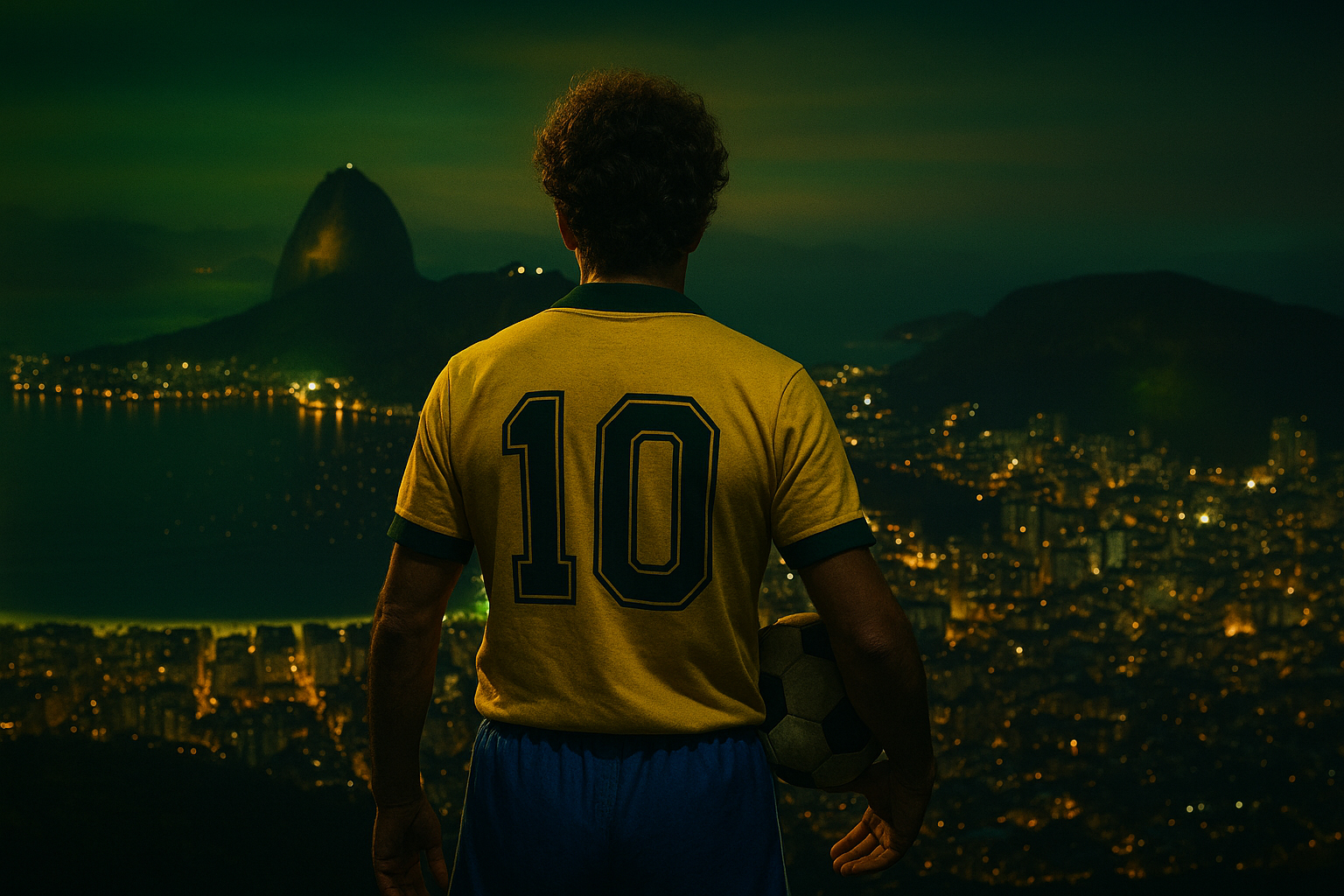
In Lignano Sabbiadoro, a place I've been visiting regularly for years, there's a Brazilian restaurant with a framed photograph on the wall — signed and dedicated to the owner by none other than Arthur Antunes Coimbra, better known as Zico. No words are needed to explain the love that Udine and its surrounding province still hold for the Brazilian maestro.
His brief yet legendary spell at Udinese secured his place among the greats in Italian football folklore. Italy's football fans, notoriously critical of players who haven't faced the country's renowned defensive dark arts, were won over by his brilliance. However, as unforgettable as his time in Udine was, it was only a small chapter in his illustrious career — and certainly not the most significant one.
When Zico arrived in Italy in 1983, the excitement from the press was accompanied by skepticism. He was already 30 years old, accustomed to the warmth of Rio and the "loose" defenses of South America — an outdated stereotype then as it is now. But any doubts were quickly buried beneath an avalanche of goals and dazzling plays.
Zico was the product of a South America still plagued by malnutrition — much like Garrincha, or Messi, whose growth hormone deficiency nearly ended his career before it began. He was skinny, barely had any muscle mass, and was small even by footballing standards. And yet, like the greatest of underdogs, he lifted the world on his shoulders through sheer quality.
Standing at just 170 cm, he seemed utterly unsuited for the brutal football of the 1970s. And yet, he floated — effortlessly defying physics with his grace, balance, and technique.
Much like Iniesta — almost a midfield version of Zico — he played a type of football that seemed to transcend physicality. He abandoned the traditional notions of grit and tenacity in favor of a higher abstraction of the game, one built entirely on technique and finesse. His dominance was almost illogical, yet undeniable — whether as a prolific goal-scorer, a masterful playmaker, or a set-piece specialist whose free kicks were treated like penalty kicks, such was the inevitability of their accuracy.
Perhaps no team seized a moment in time quite like Brazil in 1982 — the team that embodied football as an art form, preached and perfected under Telê Santana. It hardly matters that Brazil's greatest post-war footballing moment carries, for them, a tragic name — the Disaster of Sarrià. Because even now, over 40 years later, football lovers around the world still have Zico's genius imprinted in their minds.
Four years earlier, in Argentina, he had endured a disappointing tournament — his free-flowing football clashing with the rigid, militaristic discipline of manager Cláudio Coutinho. But in Spain, Zico redeemed himself completely. Not only did he score, but he recited football, painting masterpieces with every touch.
Nicknamed "Galinho" — Little Rooster — for his thick, youthful curls but also for the graceful flamboyance of his game, Zico was a footballing aesthete's dream. His slight touch of narcissism, his poetic relationship with the ball, and his almost theatrical elegance made him a gift to lovers of football's beauty.
To borrow a brilliant phrase from David Foster Wallace, he was at once more real and less real than the others. His style, his pure aesthetic joy, made this contradiction not just possible, but inevitable. Zico looked ethereal, as if devoted purely to beauty — yet, paradoxically, he was also one of the most clinically decisive players of his era.
This is one of those paradoxes that only the greatest can embody without contradiction. In football, we often divide players into two rigid categories: the practical and the artistic. But I believe this is a very European way of thinking — one that Brazilian football, at least in Zico's era, would have dismissed outright.
From the moment he was a skinny little kid, playing in the streets of Rio in a Juventude jersey, surrounded by his brothers, he dominated the game through pure skill alone. He was blessed with talent, but also with passion, determination, and discipline — the things that turned an unlikely physique into one of the most beautiful players the game has ever seen.
Without his stint in Udine, Zico might have been remembered as an incomplete genius by the generalist fan — someone who never fully conquered Europe, who never lifted an international trophy, who never reached a World Cup final. That perception would have been a mistake. But thankfully, Zico defied the cold logic of result-driven football.
He was one of the few who could fill the world with beauty, almost effortlessly. And in his case, that's all that should ever matter.